Fire, mind reading and a dog named Ninja: BGT Series 19 blasts off
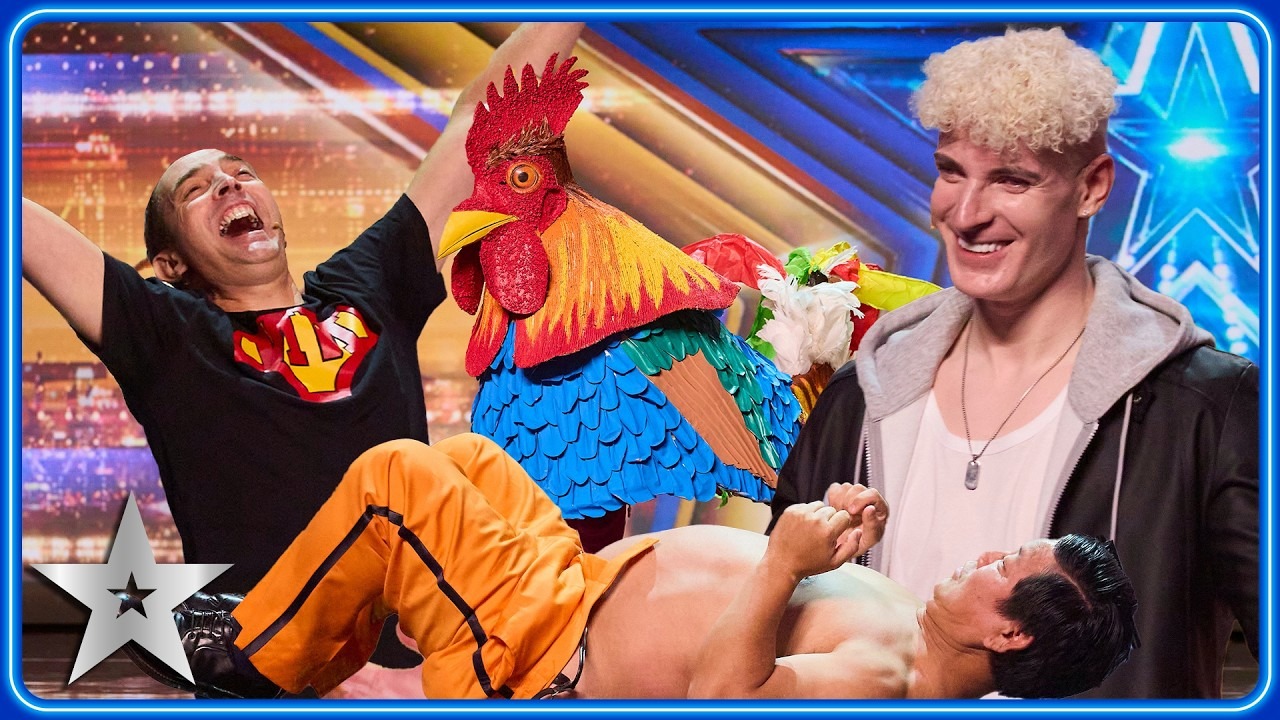
“What a start.” The new season of Britain’s Got Talent doesn’t stroll in. It barges into the room, knocks over the furniture, and dares you to keep up. Within minutes, a hopeful announces, “Season nineteen, you made it,” and the theatre answers with a restless roar. By the end, the panel has argued about cats, warned the crowd not to copy anything they’ve seen, and sent a handful of acts toward the live shows with the kind of praise you can’t fake.
The horn, the toy synths, and a split room
Noah from Somerset walks out with the confidence of a man who knows he’s brought something weird. “I have a real passion for unusual musical instruments,” he says. He holds up a toy drum machine and a bass synthesizer, then a plastic keyboard you play with a pen. “They’re the smallest, quietest musical instruments, and I gotta mix it with my largest, loudest musical instrument.” He grins. “Everybody, I have come here today to give you the horn.”
It’s bold, funny, and loud. The audience rises, some dancing as the room turns into a tiny rave fueled by pocket gear and brass. On the panel, the reactions split. One voice calls it out straight: “Me and the audience love that.” Another judge points to the beat: “If you just played the song but you weren’t on the stage, the audience, they would still be up dancing.” Then the brakes hit. “I don’t know if it’s standing ovation worthy,” says one. Another shrugs: “For me, it was just like being in a traffic jam.” The night has its first argument: originality versus polish, and where the line sits between a party trick and a performance.
Flames, fear, and four yeses
Lee Wei, 32, from Taiwan, steps on with quiet nerves. “I just want to win and perform for the king.” Then the stage answers with heat. “Fire,” someone gasps. “What is she doing?” The act builds from tense to reckless. A pot of fire arcs. Bodies fold and spring. At one point, even the judges talk to the cameras like parents: “Obviously, don’t try this at home. It’s very dangerous.”
When the final beat lands, one judge blurts, “This is the first good audition today.” Relief washes the panel. “Thank god for you.” They note the skill, and the risk. “Being able to flip with your legs, a pot of fire,” comes the awed verdict. Then a personal detail cuts through the smoke. “By the way, where is your partner?” “It’s my husband.” The whole room melts. “That is so sweet,” a judge says, before steering back to the point. “It was visually stunning… really thrilling, really dangerous, really different. I was really worried how close to that fire you came. It was super dangerous. So well done.” The votes run clean: “Finally, it’s the first yes of 10… It’s a yes from me… It’s a yes from me.” Then the kicker: “Four yeses.”
The crooner who needed more magic
John Danbury from Huddersfield arrives with swagger and a clear target. The prize is £250,000, but he wants the Royal Variety Performance. “The Royal Variety Performance is the pinnacle of a variety artist’s career, isn’t it?” He launches into “That’s Life,” sleeves rolled, charm on full beam. But in a season opener stacked with sharp edges, it’s hard to land with half-measures. “I don’t think I like that,” one judge says, softening it with hope. “The magic was just kinda mid. If we could ramp up the magic, you could be onto something really good, John.” He knows the problem. “We just saw a girl lie on her back, set herself on fire,” someone says. The room nods. Timing is a kind of trick too.
The mind reader from Glasgow who changed the room
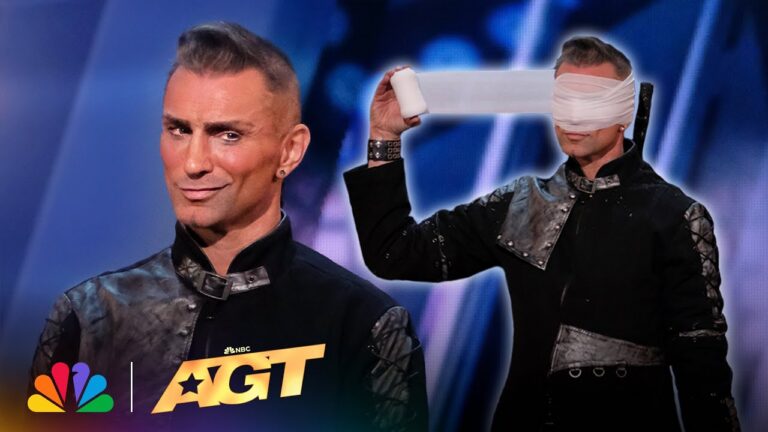
Fraser Penman, from Glasgow, doesn’t start with cards or coins. He starts with himself. “The odds of being born with albinism is one in twenty thousand people. I am one of those one in twenty thousand people, and I believe this gives me a special ability to connect with people.” He turns the theatre into a classroom. “Could everybody place your hand up like this… Thumbs up. Thumbs down. Open palm. Okay, sign. Place it here on your chin.” He pauses, then smiles. “Your chin is here.” The room laughs—and follows.
He picks Simon to anchor the piece. “We all have a childhood memory of someone that had a profound impact on us when we were kids. Tonight, Simon, I’d like you to go back to when you were a young boy and think of a memory that had a profound impact on your life. I want you to think of a name that you associate with this memory… Think of someone nobody could know.” The theatre goes quiet as Fraser locks eyes. “They say the eyes are the windows to the soul.” He pushes further. “In a nice clear voice, what was the first letter of the name you were thinking of?” Simon answers: “W.”
Fraser doesn’t gloat. He builds. He asks Simon to write down an object linked to that memory, folds it away, and parks it. Then he brings out a scuffed schoolbag and has Amanda pull a pocket dictionary from inside. “When I was around eight years old, I used to carry it everywhere I went,” he says. “Not because I loved homework or to impress anyone, it was my shield.” That line hangs in the air. “When the other kids would ask why my skin was so pale or why my eyes looked strange in the light, I didn’t always have the words. So I searched for them, hidden amongst those tiny pages.”
He sends Amanda to page 55, first column, seventh bold word down. Then he turns to Simon and asks the question that decides the trick. “Could I ask who was W?” Simon answers, stunned: “Mister Wilson.” The memory spills out. “When I was at my first school, we were told by my headmaster about riding a bike down a hill.” Fraser nods to the paper in Simon’s hand. “What was the word you were thinking of?” Simon breathes it out: “Bicycle.”
The panel goes from sceptical to shaken. “That’s spooky.” “That is unbelievable.” Simon tries to explain the impossible. “No one’s gonna believe that… I swear on my life, that’s it.” Another judge smiles through the shock. “Your whole presentation was so lovely. That was brilliant.” Someone else blurts what half the room is feeling: “You have superpowers.” Fraser stays with the point. “No matter what barriers you face in life, if you can see in your imagination, you can be anything.” The votes come fast. “I would love an act like this to be on the Royal Variety performance. So it’s a yes for me… I’m saying yes… Yes… Four yeses.”
A dog named Ninja, and a judge who likes cats
“Who are you?” “This is Ninja. I am Dominic.” A door swings. The dog bolts. “Ninja. Come back.” The theatre laughs as trainer and star reset. When they click, they click. “Your dog is brilliant,” someone says as Ninja nails tight choreography and classroom chaos with the same grin. One judge beams, “I think this is really different to any dog act we’ve ever had on the show. In fact, this is the coolest dog act we’ve ever had on the show. Loved it.”
Not everyone is sold on the middle. “I thought the entrance was fantastic, and then that was it for me. I wanted more.” Then the panel takes a detour. “KSI, do you have dogs or cats?” “I have cats.” The crowd boos the answer like a pantomime villain. “Stop booing my cats,” KSI laughs. He pushes the point: “My point is a cat couldn’t do that.” When it’s time to decide, one judge says no. Two say yes. The verdict lands with relief: “You have three yeses.” Dominic hugs Ninja as if the dog cares about voting math. Maybe he does.
The Japanese human soundboard who broke the panel
“What’s your name?” “My name is Chance Oshiro. I am from Japan.” He promises sounds and then delivers a hard left turn. “Cuckoo clock. Cuckoo clock. Cuckoo clock.” The room laughs. Then he becomes “Angry cat.” Then “irate baby.” He offers to make noise “with my back.” The panel blinks. “Have we lost our minds?” comes the honest question.
The bit speeds into a duel that shouldn’t work and somehow does. One judge tries to separate it. “I actually thought everything sort of sounded the same.” Another draws a crisp line: “To the cat than the car. F1 car. Cat. Car. Cat. Car. It’s the same thing.” The crowd keeps laughing. When the panel looks stuck, Simon flips it to the room. “I’m gonna hand this one over to the audience.” The theatre answers with a wall of sound. “They like you, which means everyone likes you. Yes. They love you. Everyone loves you.” It’s nonsense, and it’s fun, and the room chooses fun.
Liverpool’s precision wave
“We are Ella Mae, and we are dancing from Liverpool.” The music drops them into a formation that lives or dies on timing. You can see the hours on their faces and in their feet. One judge calls what most people were thinking after thirty seconds: “We have so many dance groups that come on to the show that promise us difference, and they never are. And that was as different and exceptional as it gets. I’ve never seen anything like it.” Another adds, “I thought it was beautiful. Really beautiful. And you, the way you commanded it as well was just so strong and central to all of it. It was sensational.”
KSI puts it in crisp terms. “Visually, my eyes loved it… it’s the type of dance that you can’t make a mistake. If one person’s out of time, then everything falls apart, and you all were on point and killed it.” When asked who built it, the choreographer steps up. “Hi, everybody. My name is Sajid Guragar.” The panel doesn’t overthink the result. “It’s a massive yes for me… I need to see more. So I’m saying yes… It’s a yes from me.”
The opener tells you what the season wants
If you want the pattern, it isn’t a style or a genre. It’s commitment. A man who turns toys into a dance floor and calls his shot—“I have come here today to give you the horn.” A fire artist who risks the skin on her arms while her husband waits in the wings. A crooner who can sing but needs a second gear. A mind reader who turns a schoolyard wound into theatre and makes Simon say “Mister Wilson” and “Bicycle” like he’s eight again. A dog who bolts, then wins back the room. A Japanese comic who makes the wrong sound at the right time until the crowd decides that’s exactly the point. A team from Liverpool who give the judges what they keep begging for: difference that works.
There’s a line that hung over the whole night. “I really thought this is gonna be a great year.” At first it sounded like wishful thinking. By the time the panel said “Four yeses” twice and the room found itself rooting for a man meowing like a motor, it felt like a plan. If this is how Series 19 begins, the live shows could get strange in the best way.
Watch the full episode for the moments words flatten—the crackle of the fire, the hush before “W,” Ninja’s first, failed exit and triumphant return—and to decide where you land on the season’s first arguments. Then keep watching. The acts that split the room now tend to own it later.