The Night Gravity Lost: Heidi Floats, a Ring Spins, and Skeptics Eat Their Words
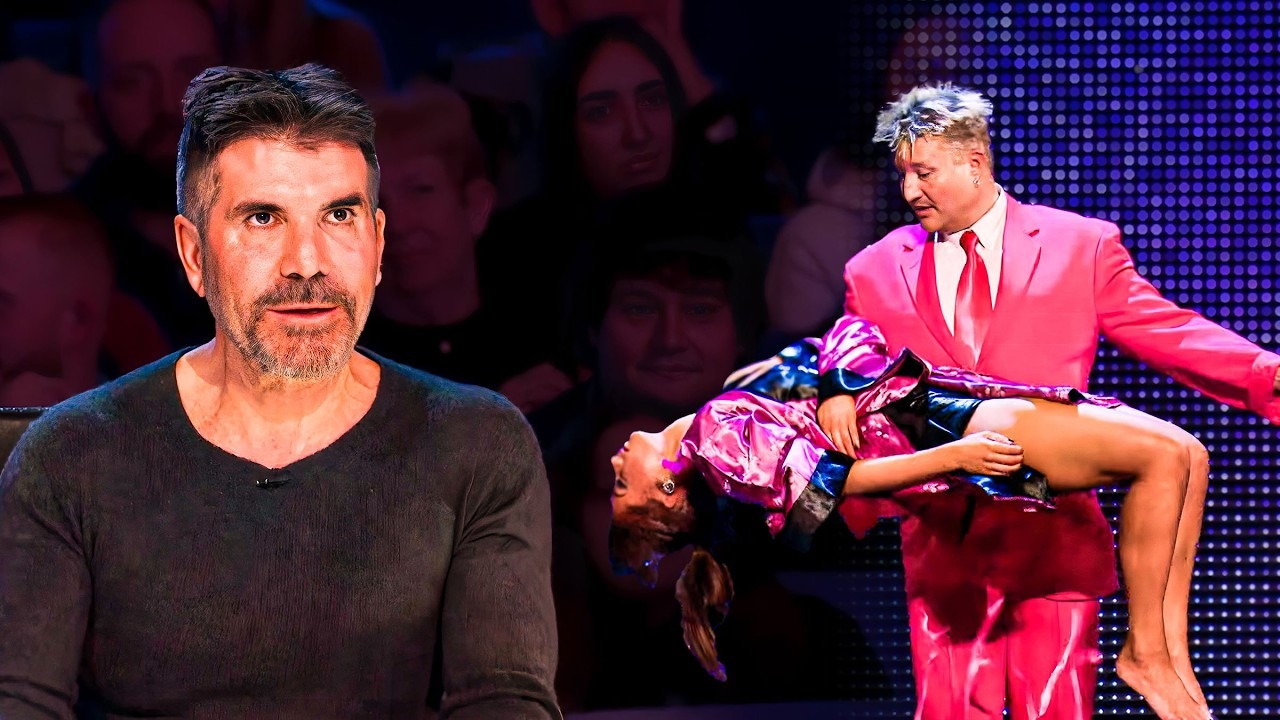
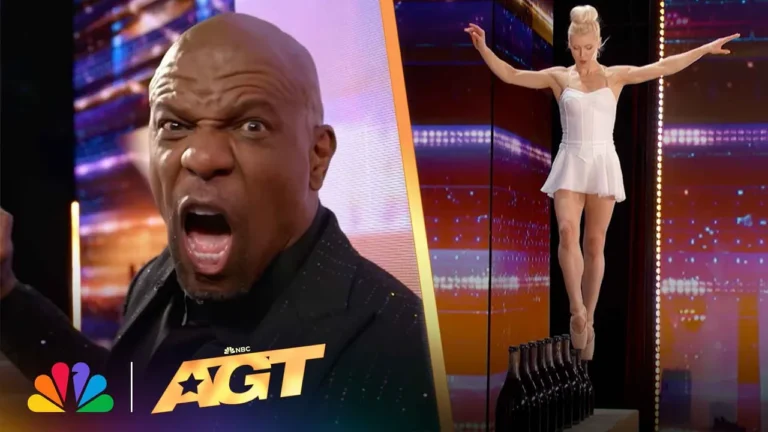
The moment the board slid away, the air changed. Two volunteers—Howie and a man plucked from the audience named Doug—stood like human bookends on either side of a plank. Heidi stepped back into waiting arms, was eased onto the makeshift bridge, and then, with a few crisp cues, the safety of that board vanished. A hush. A single hand adjusted. And suddenly a judge blurted the only words anyone could find: “Is that with one hand?”
It’s the kind of illusion that, even in a theater built to host spectacle, scrambles your sense of what you know. A heartbeat later came the only reasonable summary from nearby: “Was nothing there. That’s crazy.” Another voice, almost incredulous, offered the headline no one expected to write, “He made Heidi float.” And just like that, the room made a choice together—to doubt less, to feel more.
How Skepticism Becomes Story
Magic lives in the duel between doubt and wonder, and the duel needs its antagonists. One came quickly, not as a heckle but as a measured critique meant to push the artist further. “What you did was incredible,” a judge told Darcy, “but you lacked showmanship tonight. However, I’m not the one who’s voting… they love magic, so let’s see what happens.” There it was: the second half of the equation. Gravity may lose, but if the audience doesn’t fall too—into the rhythm, the music, the persona—the miracle can slip away.
That tension hummed beneath the evening. The levitation wasn’t a single trick; it was a thesis tested from angle after angle—seen up close, tested with borrowed hands, tightened under pressure. “Take her feet. Take her shoulders,” came the instructions. Then, from the same calm voice, a more daring order: “Drop your hand.” What happened next was as much theater as method. It wasn’t enough to make someone float. The show needed to prove the absence of crutches, to bake the doubt out of the room one careful beat at a time.
The Monk Who Made the Room Exhale
Enter an oddball who dared the audience to underestimate him—murmured syllables, a posture that looked more prank than prayer, and a buzzer slammed in impatience. “Messing up his g, Howard,” someone teased, as the panel sparred over whether to even let him continue. A host needled, “I wanna Howard to go first because I think Howard had a premature exification.” The joke set the trap. Annoyance curdled into fascination as the moment of lift arrived. Howard, freshly chastened, confessed the arc of his conversion: “I was annoyed with you. I wanted to lock you in a mental institution, and then lo and behold, you pulled off your special trick… I’m gonna take my ex back.” He added, almost sheepish, “I’ve never done that before.”
“This was amazing… I’m sitting right here, and I’m looking, and I’m like, how is he doing this?”
The rest of the panel fell in line. “What we all just witnessed was out of this world.” One by one, the green lights blinked on. “It’s a yes for me.” “Hands down definite yes.” The tally was clean: “You have four yeses.” Another victory for defiance over gravity—and, more quietly, for the strange charisma of someone who refuses to be tidy before revealing something transcendent.
Knots, Nerves, and a Ring That Refused to Fall
Later, a magician began not with a flourish, but with process. Two handkerchiefs. A simple invitation: “Could you make a knot?” Then came the ratchet. “Very tight, please. Okay. Very tight, please… more time, please. Another knot. Make sure you tie.” When the show insists “tighter,” it’s not for safety alone. It’s narrative: proof layered upon proof, a public audit of the impossible.
He raised the stakes with a warning—“Don’t move. It’s very dangerous”—and the room leaned in. Heidi became the axis again, offering a hand, then a single finger. “Is it okay to can I touch this?” she asked, half-joking, half-guarded. The reply was quick and charming. The setup was disarmingly plain: a ring, her finger, and a magician who promised not to watch.
“One, two, three… Is it flying? I can see it. It’s spinning.”
It didn’t hover so much as argue with gravity in full view—swinging, then suspending, then darting as if tugged by some invisible current. “Heidi, don’t move,” the magician pleaded, tossing in a laugh line about “dirty water” to cut the tension. The panel’s verdict? Unambiguous and warm. “You are amazing.” Simon, curious about backstory, asked, “How far did you go at BGT?” The answer—“Semifinal”—set up the evening’s sweetest sub-plot. “It’s the idea that you wanna redeem yourself… the super fans are going to love you.” Another judge gushed, “I love you already… I was right there with this ring. It was amazing.” Even the curmudgeon-in-chief relented with praise that doubled as a challenge to the genre: “I’ve always liked you because a lot of magicians do take themselves very seriously… You, however, have a personality.”
Where Taste Tests the Trick
The show never let the conversation about style drift too far away. At one point, a performer tried to braid singing with stagecraft. The ambition was clear; the reception was mixed. “When did you come up with the idea to sing and do that?” came the question. The artist explained two passions. The panel called it as they felt it. “I found the whole thing a little bit corny,” said one. Another agreed, more bluntly: “A huge cheese fest… I don’t think that I would want to see more of it.” And then the verdict that matters most in a scene obsessed with the next round: “If you just come on as a singer, this would have been a struggle.”
Those moments didn’t dim the magic; they framed it. They reminded us that astonishment alone isn’t enough. What gives a levitation staying power isn’t just the float—it’s the phrasing around it, the character holding the silence, the gentle drum of instructions that sound both practical and perilous: “Take her feet. Take her shoulders.” “Drop your hand.” “Don’t move. It’s very dangerous.”
Comic Relief and the Elasticity of Belief
Between levitations, the night offered comic asides that worked like pressure valves. One bit toyed with art history and body image: “If you imagine this naked and then you stick wings on it, it’s a cherub.” Another sketched a whole backstory in a single protest: “I’m not a shoplifter, okay?” Domestic life appeared as well-worn punchline and confession—“I have been married three previous times, and I have seven ex fiances”—delivered with the breezy fatalism of someone who knows the audience has already picked a side.
Even the panel played along with the theater of reversal. A teasing barb flew at Simon for a misstep; another judge caught himself mid-pivot after breaking out the dreaded buzzer too soon. These stumbles, quickly corrected, only amplified the authenticity of the night. When someone puts their skepticism on the record and then changes their mind in public, the rethink isn’t a weakness. It’s proof that the show is doing what magic is supposed to do.
The Freeze-Frame You Remember
What lingers is not the method. It’s the image: Heidi, eyes closed on command—“Close your eyes”—and then suspended where no one should be. A ring, circling a fingertip that refuses to twitch. A judge, head bowed in wonder, admitting aloud what everyone else is thinking: how is any of this happening?
Backstage explanations will never outrun the reasons people still pack theaters for this. The appeal is older than cynicism and younger than the attention span we blame for everything. The power is in a room full of people who arrive certain that they’ve seen it all—and leave certain of nothing except that they want to see it again. That’s why the gentle ribbing about “showmanship” matters; it’s why a dry note about “corny” or “cheese fest” can coexist with a memory of the most beautiful moment of the night. “The disappearing piano into the snow was absolutely beautiful,” one judge admitted in another segment, conceding that craft can be gorgeous even when taste disagrees.
But make no mistake: the center of gravity here was delight. “It was amazing,” said one voice, still buzzing. “I love you,” said another, collapsing critique into fandom. And somewhere in the swirl, the simplest line carried the deepest truth: “It felt amazing… All of a sudden, felt weightless.”
Maybe that’s the point. Not to decode, not to be right, but to feel lighter for a minute while someone else does something impossible. If you want to watch disbelief turn into applause—and hear the exact moment a room decides to believe—press play on this one. The board will slide, the ring will rise, and, against your better judgment, you might, too.