Hello, puzzle friends!
Today we are sitting down to a sunny pancake breakfast with a happy couple.
The coffee pot is steaming, the plates are piled high, and the morning light is pouring through the window.
Two pictures, side by side, that look exactly the same at first glance.
But one small detail in the picture on the right has quietly changed.
A friendly tip: forget the smiling faces for a moment and let your eyes walk slowly across the table.
Most people need about twenty seconds, and some find it in five.
Take your time, enjoy the hunt, and good luck!
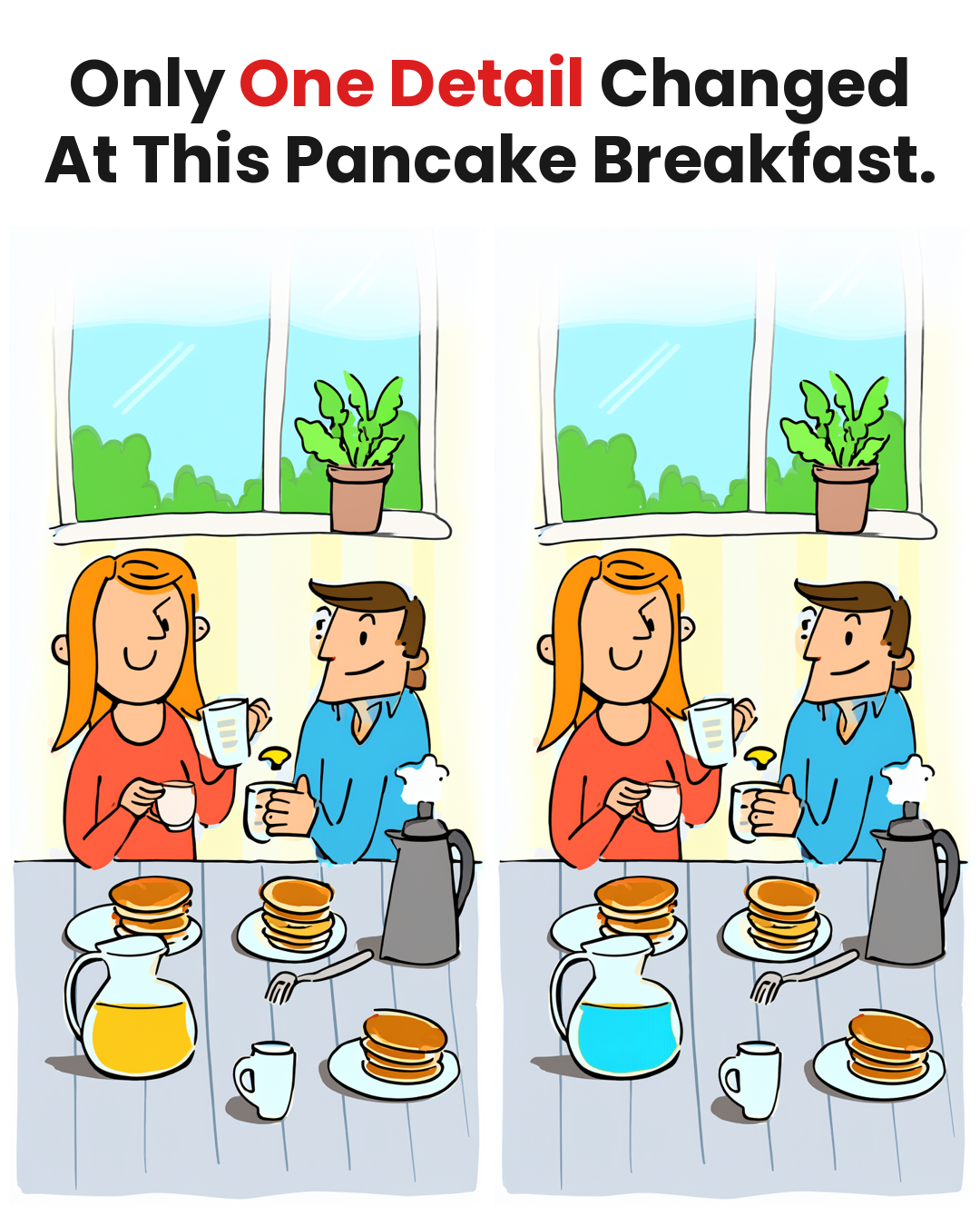
Take your time and look closely before you scroll down!
Look At The Table First
When two pictures sit next to each other, almost everybody starts with the faces. That is simply how we are built. Faces are the first thing a baby learns to recognise, and our eyes return to them all our lives. The trouble is that puzzle makers know this very well, so the change is hardly ever in a face.
A better method is to divide the picture into four quarters in your mind: top left, top right, bottom left, bottom right. Compare one quarter at a time, and compare it fully before you move on. In a breakfast scene like this one, give special attention to the table. Tables are busy places, full of plates, cups, jugs and little objects, and a busy place is the perfect hiding spot for a small change.
Another good habit is to name what you see out loud: pancakes, fork, mug, jug, coffee pot, plant. The moment you give an object a name, your brain holds on to it, and holding on is exactly what you need to notice when something is not the same.
Why Our Brain Finds This So Hard
Our eyes take in a huge amount of light every second, but our attention is a narrow beam. We do not really see a whole picture at once; we see a few small spots clearly and politely fill in the rest from memory and expectation.
That is why a change of colour can slip past us. We already decided what is in the jug before we looked properly, and once the brain has made up its mind, it stops checking. Scientists call this change blindness, and it happens to everyone, young and old. It is not a sign of tired eyes. It is a sign of a brain that is busy being efficient.
Colour is especially tricky at the edges of the picture, where our vision is much weaker than we imagine. Anything sitting in a lower corner, away from the people, gets less attention than it deserves.
A Little History Of These Puzzles
Spot-the-difference puzzles are much older than the internet. They were a favourite feature in newspapers and family magazines a hundred years ago, printed as two small drawings with the invitation to find six or seven changes.
Before that, painters sometimes hid tiny differences in pairs of pictures just for the fun of it. Today the same simple idea travels around the world on a telephone screen, and it still works exactly as well as it did on paper. Some things do not need improving.
Your Friendly Challenge
Most people need between twenty and thirty seconds for this one. Under ten seconds means a genuinely sharp pair of eyes, and under five seconds means you should be very proud of yourself.
When you have found it, try showing the picture to a friend or to someone in your family without saying a word. Watching another person search is almost as much fun as searching yourself.
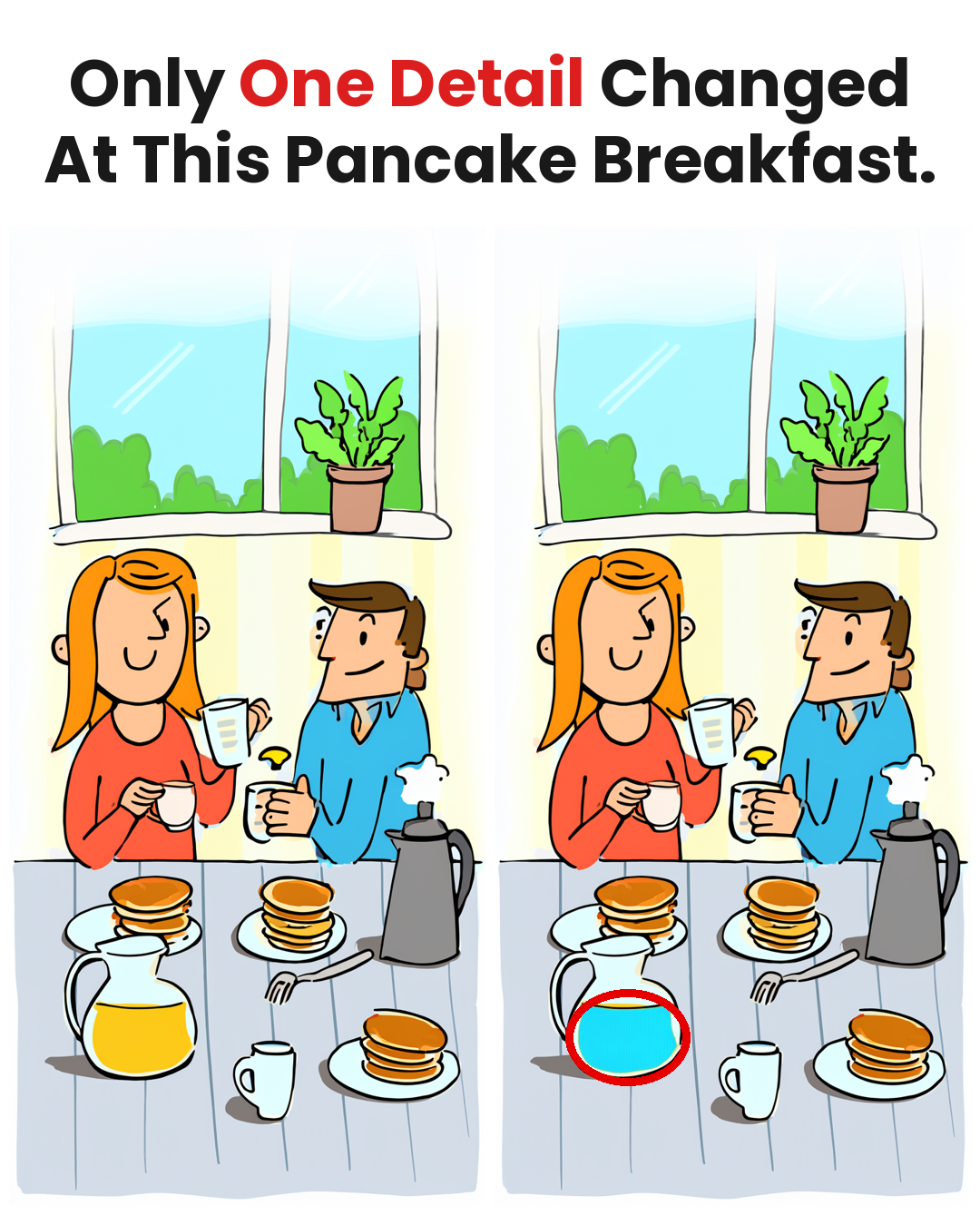
ANSWER: The juice in the big glass jug changed colour – it is yellow in the first picture and light blue in the second.
Where The Change Is Hiding
Look down at the bottom left of each picture, at the tall glass jug standing on the table. In the first picture it is filled with sunny yellow juice, the colour of orange juice on a summer morning. In the second picture the very same jug is filled with pale blue liquid.
It is a big object and a clear change, so why do so many people walk straight past it? Because it sits in a corner, below the faces, and because a jug on a breakfast table feels like furniture. We register that a jug is there, we decide it is full of something, and we move on. The yellow jug and the pale blue jug both mean the same thing to a hurried brain: drinks are on the table.
The Trick Our Eyes Fall For
There is a second reason this one is sneaky. The picture is full of warm yellow already: the pancakes, the wall, the lemon slice, the light at the window. In a scene with so much yellow, a single yellow object simply blends into the mood of the picture, and the mood is what we remember.
The cure is slow, patient comparing. Pick one object, find it in the other picture, and look at it properly before moving on. Patience beats speed in every puzzle of this kind.
How Did You Do?
Under 10 seconds – eagle eyes. You notice things other people miss, and your friends probably know it.
10 to 30 seconds – excellent. That is the sweet spot where most sharp puzzlers land.
30 to 60 seconds – very good indeed. You compared carefully instead of guessing, and careful always wins in the end.
Over a minute, or a little help needed – you are in good company. Try the next one; these puzzles get easier the more you play them.