He Saw Her Face At The Funeral And Said Nothing – Until Monday
A girl was slapped on the morning of her mother’s funeral… But her brother waited until Monday to destroy the woman who did it.
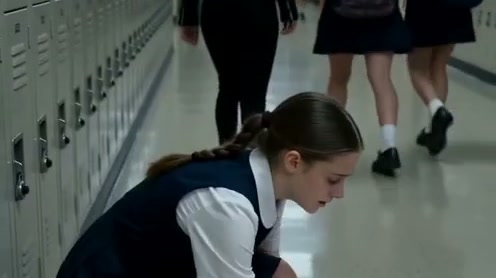
The hallway was loud the way school hallways always are — lockers slamming, sneakers squeaking, someone laughing too hard at something that wasn’t funny. Maya kept her folder pressed to her chest and worked her combination without looking up.
She had three pages in that folder. Four nights of writing. Her mother’s whole life, reduced to what she could say out loud without her voice breaking.
She didn’t hear Brittany coming.
She never did.
“Look at you,” Brittany said, stopping in front of her with two friends flanking her like parentheses. “Dressed up for something?”
Maya didn’t answer. She closed her locker.
“I’m talking to you.” Brittany’s voice dropped, which was always worse than when it was loud. “I said look at you.”
“I have to go,” Maya said.
The slap came open-palmed and fast. Maya’s head snapped sideways. Her hand flew to her cheek. The folder hit the floor and the three pages — four nights, slightly crumpled from being held — scattered across the linoleum in a wide white fan.
Brittany laughed. Her friends laughed. They walked away without looking back.
The hallway kept moving around Maya like she was a stone in a river. Nobody stopped. A few people looked and then looked away, which was its own kind of answer.
She knelt down.
She gathered the pages one by one, checking the order — one, two, three — and straightened them against the floor. She stood. She pressed the folder back against her chest, over her heart, the same way she’d been carrying it all morning.
Her cheek was still burning when she pushed through the exit doors.
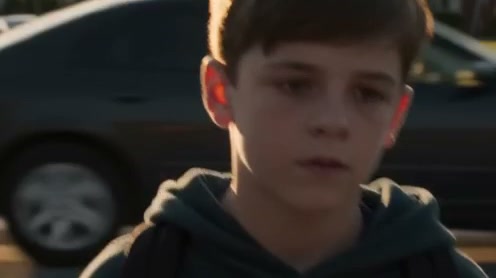
Daniel was at the bottom of the steps. Twenty-three years old, black suit, black tie, hands in his pockets. He’d been leaning against the car but he’d straightened when he heard the doors.
He looked up.
He saw her face.
His expression didn’t collapse. It didn’t rage. It went very, very still, the way water goes still before it freezes.
He didn’t ask. He walked up two steps, took the folder gently from her hands, tucked it under his own arm, and opened the passenger door.
She got in.
He walked around and got in the driver’s side. He put the folder on the seat between them. He started the car.
They drove.
Three blocks, four blocks. The city moving past the windows gray and cold. Maya had her hand pressed flat against her cheek, not rubbing it, just holding.
At a red light he said: “Who?”
She said: “It doesn’t matter today.”
He looked at the road.
She was right. The light turned green.
He drove.
The funeral home smelled like flowers that were trying too hard. Maya sat in the front row with her folder on her knees, watching the room fill with people she half-recognized — her mother’s coworkers, her mother’s friends from before, her mother’s sister from out of state who’d flown in and kept squeezing Maya’s shoulder like she was checking if she was still solid.
Daniel sat beside her. His knee was two inches from hers. That was enough.
When the director nodded at her, Maya stood.
She walked to the front. She opened the folder. The pages were slightly crumpled from being held against her chest, and she didn’t try to flatten them. She started reading.
She had written about her mother’s laugh first, because that was the thing that was hardest to describe and she’d wanted to try. She’d written about the way her mother made coffee — two sugars, a splash of something that wasn’t quite enough milk — and how that specific color of coffee meant morning meant safety meant home. She’d written about the last thing her mother had said to her, which was ordinary and perfect and exactly right.
She read all three pages without stopping.
Her voice broke once, on the second page, and she waited two seconds and kept going.
Daniel watched her from the front row. His hands were flat on his knees. His face was composed. Nobody in that room knew what had happened in the hallway ninety minutes earlier. Nobody could see the faint red mark that the foundation Maya had borrowed from her aunt was almost covering.
Nobody knew that her brother had driven her here with one hand on the wheel and one hand resting open on the center console, not grabbing her hand, just leaving his there in case she needed it.
She finished the eulogy.
She folded the pages back into the folder.
She sat down.
Daniel didn’t say anything. He moved his knee two inches until it was touching hers.
That was enough.
Friday was their mother’s.
Every hour of it. The flowers and the folding chairs and the people who meant well and the drive home in the dark and the way the apartment was too quiet in a new way, a permanent way. Daniel made eggs because it was the only thing either of them could face. They ate without talking. Maya fell asleep on the couch with her shoes still on and he put a blanket over her and turned off the lights.
Friday belonged to their mother.
He didn’t go back to that school on Friday.
He could have. He’d thought about it on the drive home from the funeral home, his hands tight on the wheel, the math of it simple: turn left instead of right, park, walk in, find whoever needed to be found. He had every reason. He had the mark he’d seen on his sister’s face. He had the folder she’d carried into a funeral. He had the image of her kneeling on a hallway floor gathering pages that had taken her four nights to write.
He turned right.
He made eggs.
He waited.
Monday morning he drove her to school. She didn’t argue, which meant she understood something was happening even if he hadn’t told her what.
He parked. He got out. He walked her inside, one hand not quite touching her back, just near it.
At the main hallway junction he said: “Go to class.”
She looked at him.
“Go to class,” he said again, and his voice was so calm that she went.
He walked to the main office. The secretary looked up, startled — he was in his black suit still, or a different black suit, it was hard to tell, but there was something about the way he carried it that made her sit up straighter.
“I need to see the principal,” he said.
“Do you have an appointment —”
“I don’t. I’ll wait.”
He sat down in one of the plastic chairs along the wall. He waited eleven minutes. He didn’t look at his phone. He didn’t fidget. He just waited with his hands folded and his back straight, and two of the office staff found reasons to be somewhere else in the room.
The principal’s door opened. Principal Warren was a wide man in his late fifties, reading glasses pushed up on his head, the particular brand of careful that comes from years of managing other people’s problems.
“Mr. —”
“Daniel Voss. Maya Voss is my sister. She’s a junior here.”
“Of course. Come in.”
Daniel came in. He sat down across from the desk. He waited until the door was fully closed.
Then he said: “My sister was slapped in your hallway on the morning of our mother’s funeral. I’d like to talk about what happens now.”
Principal Warren sat down slowly. “Mr. Voss, I —”
“The incident was on Friday at approximately seven fifty-five a.m. in the main hallway near the junior lockers. There are cameras in that hallway. I’ve already confirmed that with your district’s public records policy.” He placed a folded piece of paper on the desk. “That’s the name of the student. I had three different people confirm it before I came in today.”
Warren unfolded the paper. His face changed.
“I know who that is,” Daniel said. “I know who her parents are. I’m not here to make this complicated. I’m here to make sure it’s documented, investigated, and resolved through your disciplinary process — fully, and with a written record of every step, which I’ll be requesting monthly until Maya graduates.”
Warren looked at him. “Mr. Voss, what you’re describing is absolutely a serious —”
“Her mother was buried on Friday,” Daniel said. “Maya stood at the front of a room and read a eulogy she wrote over four nights. She did it with a red mark on her face that she covered with makeup so our family wouldn’t ask questions. She did not tell me to come here. She didn’t know I was coming.” He paused. “But I’m here, and I have time, and I’m not leaving until I have a documented incident report with a case number in my hand.”
Warren picked up his phone and called his secretary. “Pull the hallway camera footage from Friday morning, seven-fifty to eight o’clock, main junior corridor. Yes. Now, please.”
He set the phone down. He looked at Daniel. “I want to be clear — this will be handled.”
“I know it will,” Daniel said. “Because I’ll be watching every step.”
The footage was clear.
Brittany Calloway — a senior, a varsity something, the kind of girl whose parents showed up to school board meetings — was suspended for ten days pending a full disciplinary review. Her parents called Warren within the hour. Warren took the call. He listened. He said: “I understand your position. The footage is unambiguous. The review will proceed.”
He took two more calls that day. Both went the same way.
The third call he didn’t take. He let it go to voicemail.
Daniel got the incident report number before he left the building. He photographed it with his phone. He emailed a copy to himself with the timestamp.
In the parking lot he sat in the car for a moment.
He texted Maya: *Handled. Go to lunch. I’ll pick you up at 3.*
Three dots appeared. Then: *what did you do*
He typed: *What I should have done Monday.*
Then he corrected it, because that wasn’t right. Friday had been right. Friday had been their mother’s.
He deleted the message and sent: *Talked to Warren. Formal report filed. Ten-day suspension. More to come. You’re good.*
This time the dots took longer.
Then: *thank you*
Then: *she scattered my pages everywhere*
Then: *I got them all back*
He stared at that last message for a long time.
*I know,* he typed. *You read all three pages.*
He started the car.
He had somewhere to be.
Six weeks later the disciplinary review concluded. Brittany Calloway received a formal notation on her academic record, mandatory conflict mediation, and was removed from two extracurricular leadership positions. Her parents hired a lawyer. The lawyer sent a letter. Daniel forwarded the letter to the district’s legal office with a copy of the incident report, the camera footage timestamp, and a one-paragraph note that said he welcomed any further process and had retained his own counsel as a precaution.
He hadn’t actually retained counsel yet. He did it the next morning. It cost him four hundred dollars for a consultation. The lawyer told him his position was solid.
He never needed to use it.
Brittany’s parents withdrew the complaint.
Maya found out on a Tuesday when Warren called her out of class to tell her in person, which Daniel had requested specifically. She came home that afternoon and made coffee — two sugars, a splash of something that wasn’t quite enough milk — and set a mug in front of Daniel without saying anything.
He looked at the color of it.
“Too much milk,” he said.
“I know,” she said. “I’m still figuring it out.”
She sat down across from him. They drank the coffee. It was slightly wrong and it was also, in every way that mattered, exactly right.