Cucumbers, Face Swaps, and a Golden Buzzer: BGT’s Funniest Magic Auditions
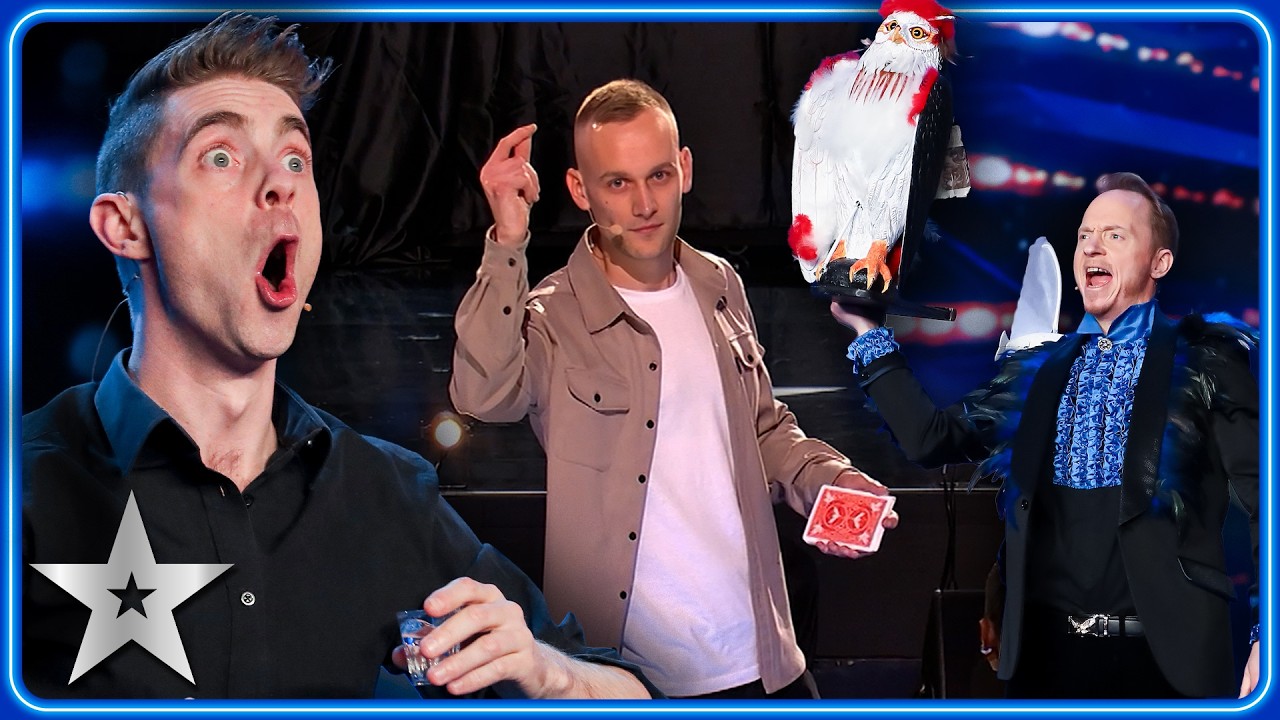
Britain’s Got Talent is ruthless about one thing: the trick has to earn the laugh, and the laugh has to sell the trick. This video strings together the auditions that hit both bulls-eyes, where misdirection isn’t whispered—it’s shouted, danced, and milked for every beat until the room caves in.
Jack Rhodes writes “cucumber” into BGT lore
Jack Rhodes walks on with a CV no one expects: nuclear engineer turned magician. His parents didn’t buy the pivot. “My dad used to call me a part time wizard. Sorry. Full time moron,” he cracks. Then he points the act where it belongs—straight at the judges.
He tells Simon Cowell he might remember “the invisible magician, the phantom,” then hisses from nowhere: “You can’t see me.” The bit sets a tone: he’s going to mess with what you think you’re watching.
Rhodes lays out blank cards. “Simon, have you write down a word for me. What’s the first word that comes to mind when you look at me?” Cowell, deadpan: “Cucumber.” Bruno Tonioli gets “minted.” Rhodes locks the words in their hands, then claims he’ll move “undetected.” Seconds later, the cards have swapped. “Minty,” Simon reads. Bruno lifts his card: “Cucumber.” Alicia Dixon can only sputter: “I cannot get out of my mind because I held this card.”
Then Rhodes yanks the floor again. He repeats the handling—but this time offers an “action replay in slow motion.” He mimes an astral glide between the judges, oversells the bit, then drops the line that detonates the premise:
“I’ve been lying the whole time.”
He plays a pre-shot prediction titled “what Simon will think of.” Six months old, he says, and he saved it for this stage. The payoff lands on one word that now feels fated: “Cucumber.” Bruno calls it “unbelievable.” Cowell wrestles with the finish—“The only thing lacking for me was the ending didn’t feel big enough”—and gets pushback from the panel: “I liked it because the end was big.” Four yeses send Rhodes forward, nuclear past and all.
Matt Edwards chases chaos—and gets a Golden Buzzer
“I’m 34… I’m a magician,” says Matt Edwards from Suffolk, grinning with the jittery glee of a born crowd surfer. He warns he has a minute, so he over-cranks everything. He rallies the room—“When I say cheers, everybody shouts ‘cheers’”—and somewhere between the toast and the tequila, the act stops being a trick and starts being an avalanche.
Edwards throws his body at every beat. “So I’m Lee Evans and magic,” he yelps, name-checking the high-octane comic who sprinted so this routine could sprint faster. He mugs, stumbles, and keeps the “cheers” drill going until the payoff snaps into view with the neat finality only a magician can deliver. The mechanics hide in plain sight because the audience is laughing too hard to hunt them.
David Walliams nails the method in a single sentence: “What a brilliant way to present a magic trick.” Amanda Holden connects it to a lineage: “You’re so distracted by you clowning and messing about that we’re not paying attention to what you’re actually doing, so therefore, it’s even more magical.” Simon Cowell confesses he braced for annoyance—“When you started with that voice, I thought this is gonna be really annoying”—then flips: “Actually, you are brilliant… This is what we look for… star quality.”
Then the stage changes. The hosts bulldoze tradition and hammer the Golden Buzzer from the wings. Confetti answers. Backstage and judges’ desk fuse into one moment. On stage, Walliams puts it plain: “This is what it’s all about. Dreams come true. Good for you.” The room agrees. Edwards just got his break, and he earned it by pushing the joke until the magic had nowhere to hide.
“It’s not comedy”—until the wallet appears
Another act walks on with the cadence of a deadpan teacher and the vocabulary of a saboteur. “Good evening. Only you.” He asks Amanda to join him. Two boxes. Plastic bags. Turn back-to-back. “Count to 10… slowly.” She starts. He cuts her off. “No. Wait. Start from the beginning.” The gag stretches. The tension turns into a laugh, then into an itch: what’s he stalling for?
He answers by handing back what he took. “Here is your wallet,” he tells Amanda, and then does it again—“And you? No. Your wallet.” It lands as both punchline and proof. David reaches for a label—“I think you’re an absolute comedy genius”—and the magician refuses it: “It’s not comedy.” Walliams fires back: “Well, then I think you’re screwed because you’re the world’s worst mentalist.” Four yeses anyway. The act worked because it held attention in the wrong place for long enough to make the right place impossible to guard.
The birdman from Sweden and the newspaper that won’t behave
“What’s your name?” “My name is Hockenburg.” A beat later, the judges call him “Hakan” and ask where he’s from. “Sweden.” None of those details end up mattering as much as the noise. He chirps, hoots, and talks to birds that aren’t there. Then he tries the oldest of stage miracles: “the champagne in the newspaper.”
He pours. He crushes the paper. He claims it’s gone. It isn’t. “Oh, no champagne,” he chides, twice, then sprays a face. “In your face.” The chaos feels anarchic but steers cleanly into the final vanish, and the panel leans into the absurdity. “What a hoot,” says Amanda. “Brilliantly barking mad and funny in all the right places,” adds another voice at the desk. Cowell threads the needle: “Kind of oddly British even though it was eccentrically Swedish.” Four yeses. No birds required.
The Hacker calls—and steals Simon Cowell’s face
The screens stutter. A phone rings. “It says unknown.” A voice arrives over the system: “Simon, I’m the hacker, and you and I are about to trade places.” The line that follows could be a manifesto or a threat: “It’s time for the judge to be judged.”
What happens next sits in a new corner of magic’s toolkit. The intruder “swaps faces” with Cowell in real time and runs a routine through the judge’s own persona. He asks for a word. “Write down the first word that comes to you. Keep it clean. Nice and safe.” Cowell writes. The Hacker “thinks,” then lands it: “Melon.” Cowell’s card agrees. He even plays mentor while under digital duress: “You could win this… You need a big finish.” The Hacker turns the advice into part of the patter. No rabbits. No doves. The trick is identity itself.
Why these laughs make the magic hit harder
What ties these auditions together isn’t a prop or a method. It’s how each performer uses comedy to bait attention away from the work. Rhodes makes a word on a card feel like slapstick. He brands “cucumber” into memory and sells misdirection with literal slow-motion mime. Edwards dials volume past sense so no one notices his hands loading the moment. The deadpan “mentalist” turns counting to ten into a sketch to lift a wallet in plain sight. Hakan drowns a classic in nonsense until the nonsense becomes the shield. The Hacker swaps a silk for a screen and proves you can vanish the border between a face and a feed.
The judges keep saying the same thing in different ways. “You kept us on our toes,” one tells Rhodes. “You’re really likable and nuts,” Simon offers Edwards. “You had us in the palm of your hands,” David says to the pickpocket. “Oddly British… eccentrically Swedish,” Cowell tells Hakan, capturing the tension that makes silliness disarming. Even doubt fuels the effect. Cowell wants a bigger ending from Rhodes. Another judge fires back. The friction makes the applause feel earned rather than automatic.
There’s a craft lesson too. Single words carry weight on TV. “Cucumber.” “Minted.” “Melon.” They’re clean, funny, and visual. They hit like logos. A good magician reduces the reveal to something you can repeat in a corridor. These acts understand that echo. The word becomes the handle for the miracle.
Rhodes also points to where this could go. Asked about Vegas, he doesn’t bluff. “That’d be the dream. I think the go to guys would be Penn and Teller.” He knows the lane: deadpan impossibility rendered with a wink. Edwards, with confetti still falling, hears Walliams say it plain: this show can hand you a career if you show up with a point of view strong enough to bend the room.
The comedy doesn’t soften the magic. It sharpens it. Laughter crowds out analysis. It resets the rhythm. When the payoff finally hits—an impossible switch in two clenched hands, an empty newspaper that shouldn’t be dry, a private word said out loud by a stranger—it lands cleaner because the brain wasn’t braced for it.
These auditions also sketch out the stage’s new edges. A face can be a deck of cards. A phone call can be a force. A mistimed count can be a lock-pick. The tools change, but the contract holds: make us care, make us watch the wrong thing, then show us the right thing at the exact second we can’t explain it.
If you want the full ride—the hush before the reveal, the bark of laughter that cuts it, the judges’ faces ricocheting between suspicion and delight—watch the video. The magic works even when you know the punchline, because the performers don’t sell secrets. They sell timing, and they hit it.