Hello again, dear puzzle friends!
Pull up a chair, because today we are sitting in the cosiest corner of the house.
A lady is knitting a long blue scarf, a cat is fast asleep on the rug, and a basket of yarn waits on the floor.
Two pictures of this warm little room look exactly alike, but one single thing has quietly changed.
Nothing has moved and nothing is missing, so do not waste time counting the books.
Start at the top of the room and work your way down in calm, steady lines.
Say out loud what you see in each picture; it sounds silly, but it really does help.
Take a deep breath and enjoy the search.
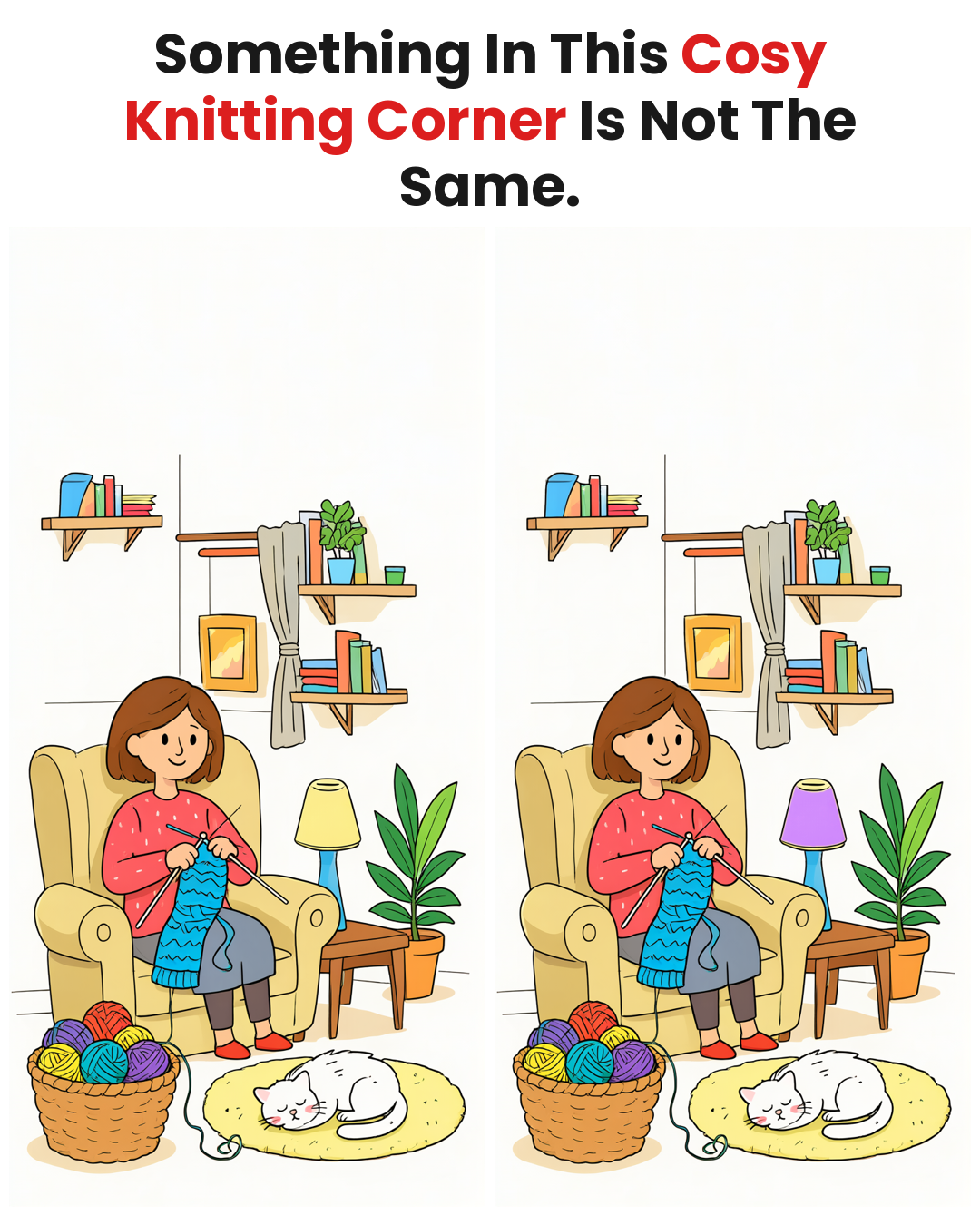
Take your time and look closely before you scroll down!
A Smart Way To Search A Room
Indoor scenes are a different kind of challenge from outdoor ones. A room is full of separate objects, each with its own shape and colour, and that makes it very tempting to jump from one to the next like a bee in a flower bed. Jumping is exactly what you want to avoid.
Instead, make a list in your head: the shelf and the books, the curtain and the picture frame, the plant, the armchair, the lady and her knitting, the table and the lamp, the basket of yarn, the rug and the cat. Now compare the two pictures item by item, in that order, and tick each one off as you go.
It feels slower, but it is usually much faster, because you never check the same thing twice and you never forget a corner. A tidy search also saves your eyes, which tire quickly when they are flicking back and forth.
Why The Small Things Slip Past Us
Our brains are wonderful at seeing the gist of a scene. One glance tells you “a cosy living room, someone knitting, a cat asleep” and you feel as if you have seen everything. In truth you have seen the headline and skipped the article.
Everyday objects suffer the most from this. A lamp, a chair, a cup: we have seen thousands of them, so the brain fills in the details from memory instead of looking carefully. If the real lamp has changed, memory happily hands you the old one.
Colour adds another twist. In a soft, warm room, one pleasant colour is easily swapped for another pleasant colour without raising any alarm. The brain is checking whether the room still makes sense, not whether every shade is the one it was a moment ago.
A Little History Of The Side-By-Side Puzzle
Puzzles made of two almost identical drawings became popular in family magazines more than a hundred years ago, when printing two copies of one picture became cheap and easy. They sat beside the riddles and the word games, and they were meant to be shared around the table.
They have lasted so long because they need nothing at all: no pencil, no board, no rules to explain. Anyone can join in at any age, and everybody has an equal chance. That is rare in the world of games, and it is why this old pastime is still going strong today.
Ready For A Challenge?
The average time for this knitting corner is around twenty-five seconds. Under ten seconds puts you in excellent company. If you are still searching after a minute, here is a hint that gives nothing away: look at the things that give off light or hold water.
When you have it, pass the picture on to a friend and keep a straight face while they hunt. Puzzles are twice as good when they are shared, and the gentle teasing afterwards is the best part of all.
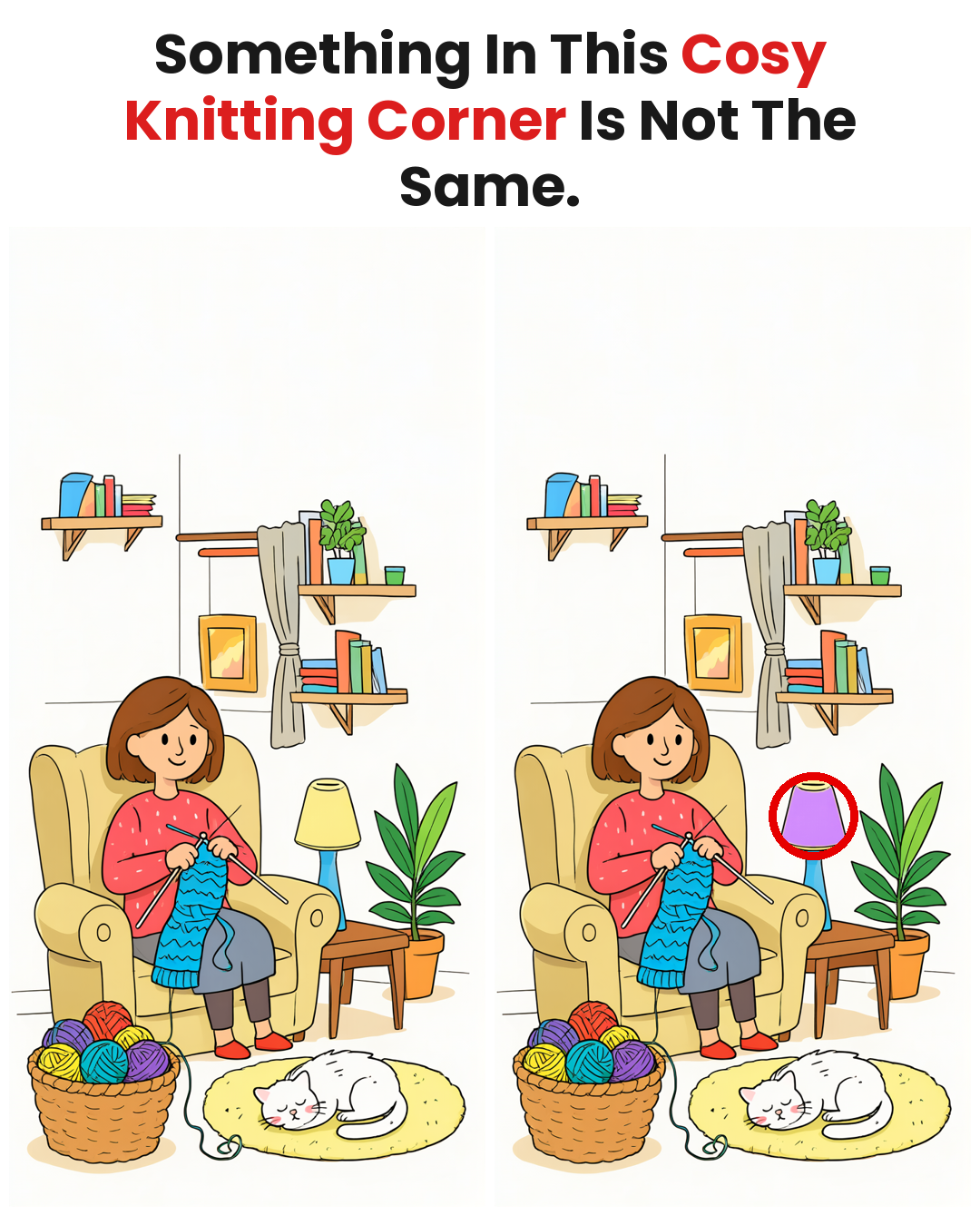
ANSWER: The lampshade changed colour – it is soft yellow in the first picture and purple in the second.
Where The Change Is Hiding
Look at the little side table to the right of the armchair, next to the tall green plant. On it stands a small table lamp with a slim base and a wide shade.
In the first picture the shade is a soft, buttery yellow, the colour of warm lamplight. In the second picture the very same shade has turned a gentle purple. The base of the lamp, the table, the plant and everything else in the room are untouched.
This one slips past most people because the lamp sits in a quiet pocket of the picture, between the big armchair on the left and the leafy plant on the right. Our eyes are pulled towards faces and movement, so they go straight to the lady, her blue scarf and the sleeping cat, and the little lamp never gets a proper look. The new colour is also soft and friendly rather than loud, so nothing feels wrong at first glance.
How Did You Do?
Under ten seconds: eagle eyes. You clearly search a picture in an orderly way, and nothing much gets past you.
Ten to thirty seconds: very good indeed. You are right at the top of the normal range and you kept your patience.
Thirty to sixty seconds: perfectly normal, and in good company. Indoor scenes are crowded, and crowded scenes take time.
More than a minute: do not worry for a second. Try the next puzzle with the list method described above, comparing one object at a time, and you may surprise yourself.