Hello, puzzle friends!
Today we are spending a bright, breezy morning in a sunny backyard on laundry day.
Two pictures of the same little garden are waiting for you, side by side.
They look like twins at first glance, but one small thing is not the same in the picture on the right.
Let your eyes travel slowly from the clothesline down to the grass, and then back again.
A gentle tip: compare the two pictures in narrow strips, from left to right, instead of staring at the whole scene at once.
Most people lose time because they keep looking at the big, bright towels in the middle.
Take your time, there is no clock running. Good luck, and enjoy the sunshine!
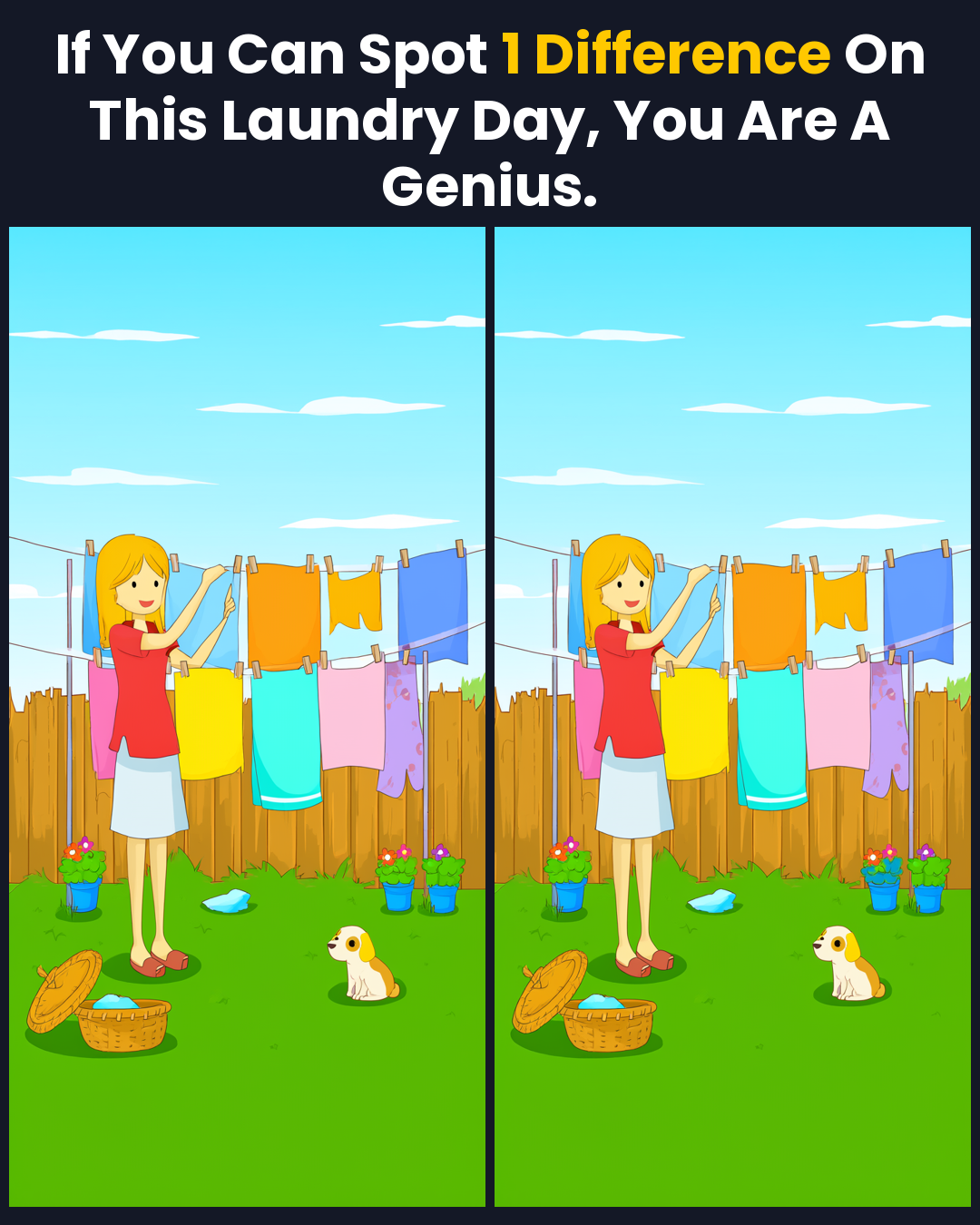
Take your time and look closely before you scroll down!
Where To Look First
The best way to start a spot-the-difference picture is to forget about hunting and start about sorting. Divide the two pictures into three bands in your mind: the sky and the top of the clothesline, the middle band with the hanging washing and the fence, and the bottom band with the grass, the basket and the little dog. Then compare one band at a time, left picture to right picture, before you move down to the next one.
Most people do the opposite. They let their eyes jump all over the picture, land on the brightest colours, and then jump again. After half a minute everything starts to look the same and the search feels hopeless. A slow, tidy sweep almost always beats a fast, excited one.
There is one more trick worth knowing. When you compare a band, do not look at the big shapes first. Look at the edges, the corners and the small objects that sit quietly at the side of the scene. Picture makers love to place the change exactly where your eye does not want to go.
Why Our Brain Finds This So Hard
Your eyes take in a huge amount of information every second, but your attention is a narrow beam. You really only see a small circle sharply at any moment; everything around it is filled in by your brain from memory and from habit. That is why you can look straight at the answer and still not notice it.
Colour makes the trap deeper. In a scene full of cheerful towels, pots and flowers, one more patch of colour simply joins the crowd. The brain says “yes, colourful garden” and files the whole area away as finished, without checking the details inside it.
There is also something called change blindness, which researchers have studied for many years. When two pictures are shown side by side, instead of flickering one after the other, we have to hold a copy of one picture in our memory while we look at the other. That short-term copy is surprisingly rough, and small details simply fall out of it.
A Pastime With A Long History
Spot-the-difference pictures have been making people squint since the days when newspapers and family magazines printed two nearly identical drawings on the back page. They were a Sunday tradition in many homes, passed from a grandparent to a grandchild along with the crossword and a cup of tea.
The idea is even older than print. Painters and illustrators have always played quiet games with repeated scenes, hiding a tiny difference for the patient viewer to enjoy. What has changed is only the speed: today a puzzle travels around the world in an afternoon instead of waiting for next week’s paper.
Your Friendly Challenge
Most people need somewhere between twenty and fifty seconds to find the change in this backyard. A few lucky souls see it in five. If a minute goes by and nothing jumps out, cover the top half of both pictures with your hand and look only at the ground level.
When you have found it, do not tell anyone right away. Show the picture to a friend or to someone in your family and watch them search. Half the fun of a puzzle like this is seeing somebody else stare at the answer for a full minute without seeing it.
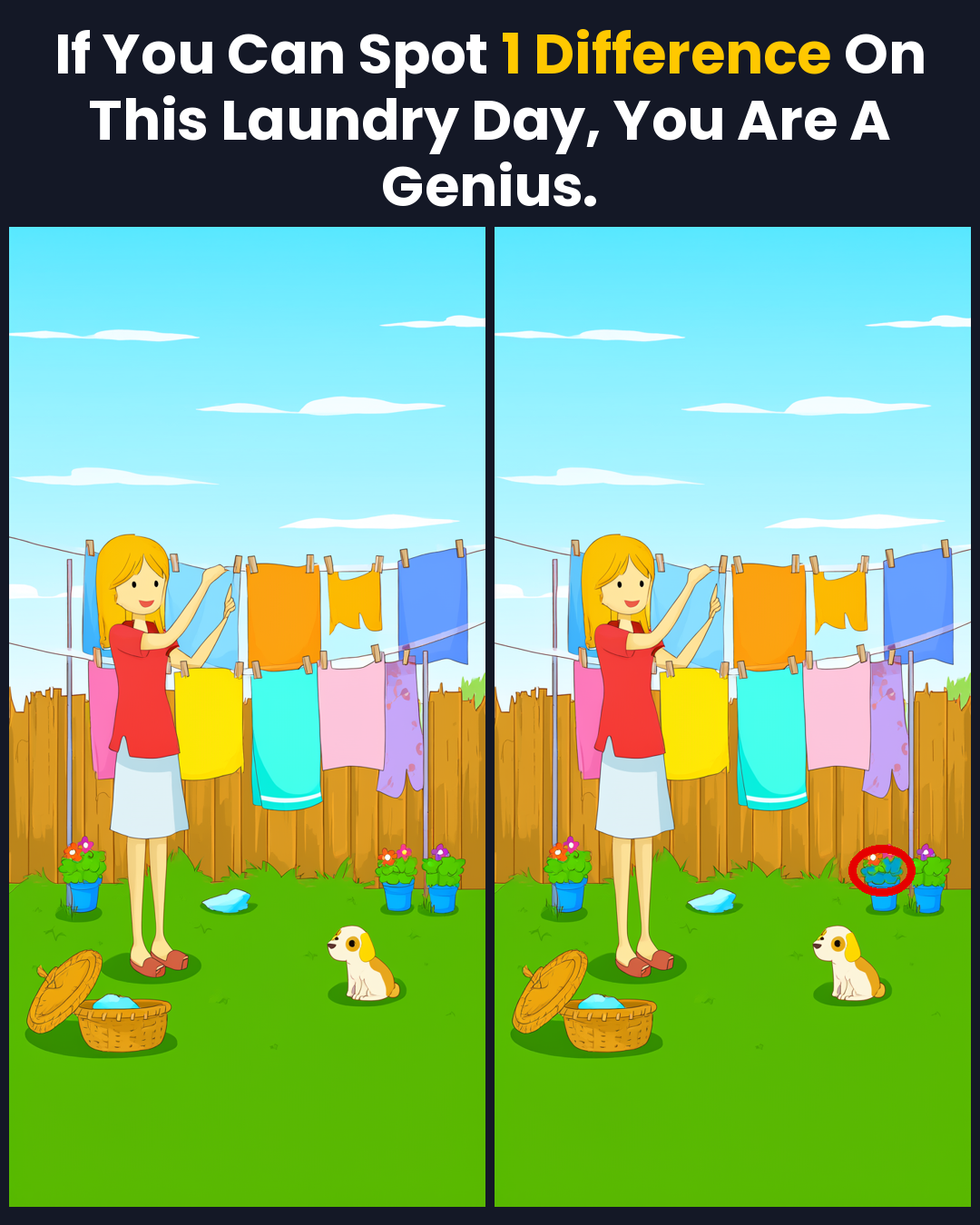
ANSWER: The leaves of the little potted flower by the fence changed colour – they are green in the first picture and blue-green in the second.
Where The Difference Is Hiding
The change is not on the washing line at all, even though that is where almost everybody looks. It is down at the bottom right of the picture, by the wooden fence, where two small potted plants stand side by side on the grass.
In the first picture the leaves of the nearer plant are the same fresh green as the lawn behind them. In the second picture those leaves have turned a cool blue-green, as if a different plant had been set down in the same pot. The flowers on top, the pot itself and the grass around it stay exactly the same.
Most people miss it for two honest reasons. First, the plant is small and sits at the very edge of the scene, far away from the colourful towels that pull the eye. Second, green and blue-green are close neighbours, so the brain accepts the new colour as just another bit of garden without ever stopping to compare.
How Did You Do?
Under ten seconds: eagle eyes. You have the kind of attention that notices when a picture frame on the wall has been nudged half an inch.
Ten to thirty seconds: very sharp. You searched in an orderly way and trusted your method instead of guessing.
Thirty to sixty seconds: right in the middle, where most of us live. You found it, and that is what counts.
Over a minute, or a peek at the answer: nothing at all to be ashamed of. This one was built to be quiet. Now that you know the trick, try the next puzzle starting from the edges and see how much faster you are.