Hello, puzzle friends!
Today we are stepping into a little ice cream shop, the kind with a striped wall and a lamp hanging over the counter.
The lady behind the glass case is holding out a fresh cone, and twelve tubs of ice cream are waiting underneath.
There are two pictures here, and only one single detail is different.
Everything else is exactly the same – the lamp, the plant in the corner, the cones in the rack.
A gentle tip: do not start with her face. Start with the row of ice cream tubs and read them like a line of words.
Good luck, and try not to get hungry.
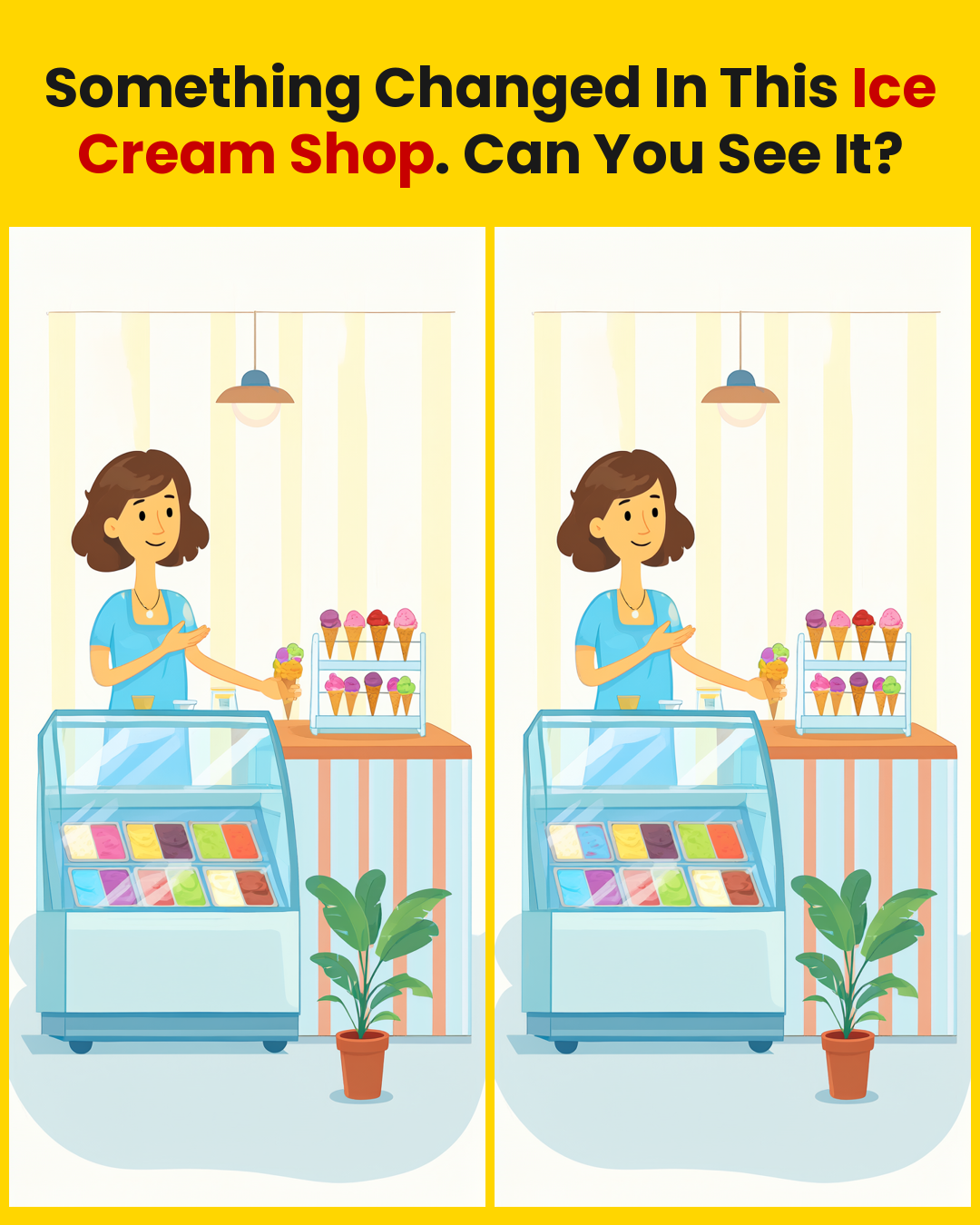
Take your time and look closely before you scroll down!
Read The Picture Like A Line Of Text
When a picture contains a row of similar objects – tubs of ice cream, cones in a rack, books on a shelf – that row is almost always where the change is hiding. Rows are perfect hiding places, because our eyes glide along them without stopping.
The cure is to read the row the way you read a sentence. Go from left to right, one item at a time, and name the colour of each one in your head. Pink, yellow, purple, green, orange. Then do exactly the same on the other picture and listen for the word that does not match.
It sounds slow, and it is slower than a quick glance, but it works almost every time. Quick glances are exactly what these puzzles are designed to defeat.
What Our Brain Does With Colour
We are very good at seeing colour, but surprisingly poor at remembering it. If you look at a painting and then turn away, you can usually describe what was in it, yet you will struggle to say whether the curtain was teal or pale green.
That is because colour is stored loosely in memory, as a rough category rather than an exact shade. In a picture with a dozen bright colours side by side, those categories blur into one cheerful mix called ice cream.
There is a second trap here too. The display case is behind glass, and the artist drew a shine across it. Reflections and highlights make our brain treat whatever is underneath as less important, because in real life a reflection is usually something we need to look past rather than at.
A Sweet Little Piece Of History
Ice cream shops with a long glass case and a row of tubs became a familiar sight in American towns in the nineteen twenties, when refrigeration finally became reliable enough for a small business to keep ice cream frozen all day.
The parlour quickly turned into a meeting place, and the long colourful row behind the glass became part of the fun – choosing was half the pleasure. Artists have loved drawing those rows ever since, which is lucky for us, because a row of colours makes a wonderful puzzle.
The Challenge
Most people take around forty seconds on this one, because they spend the first twenty looking at the lady’s face and hands.
If you find it in under twenty seconds you are doing very well indeed. Share the picture with a friend and ask them to beat your time – and do not give any hints, no matter how much they complain.
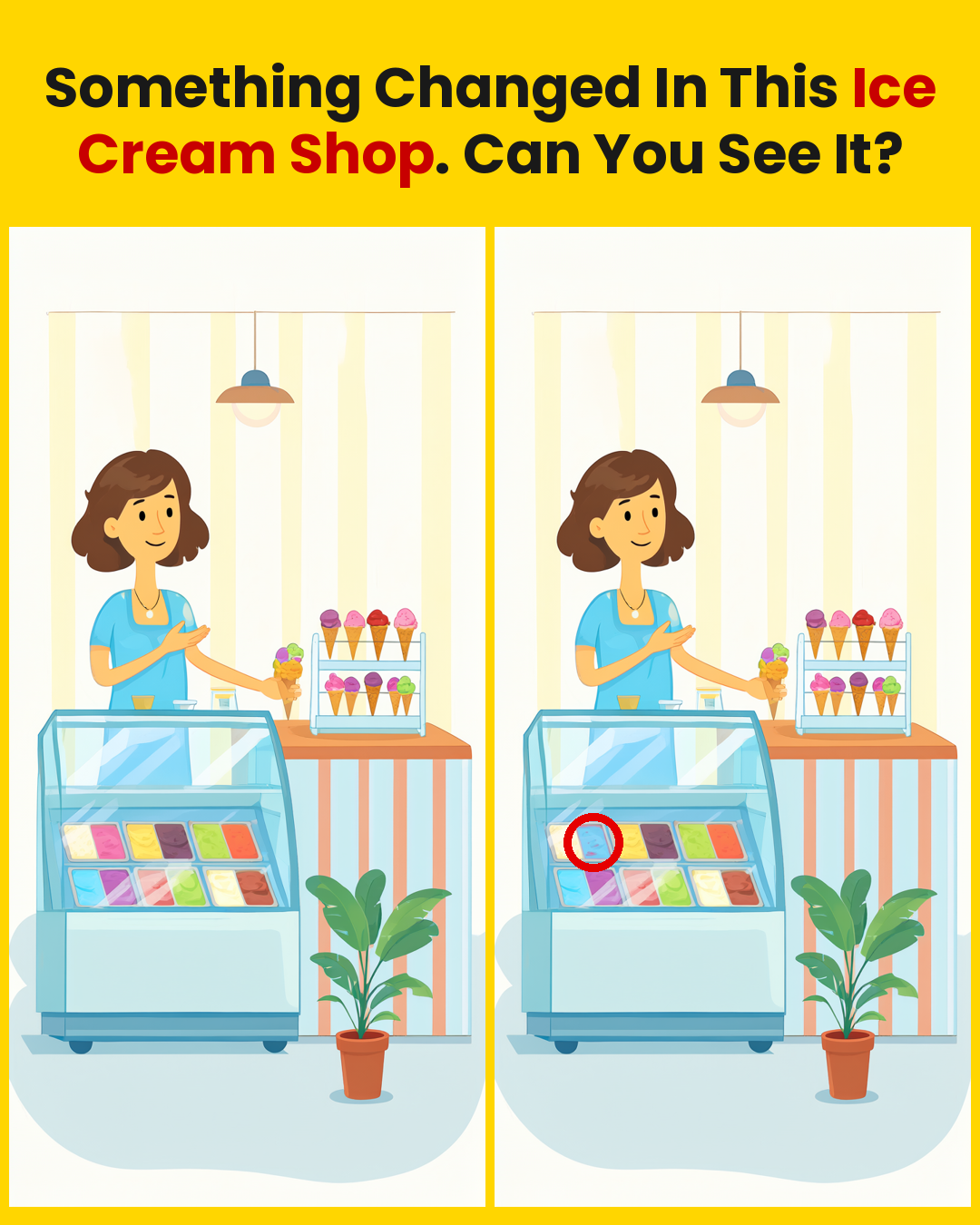
ANSWER: The first tub in the top row of the display case changed colour – it is pink on the left and blue on the right.
Look At The Very First Tub
In the display case there are two rows of ice cream tubs. Follow the top row to its very first tub, on the far left, closest to the edge of the case.
In the left picture that tub is a soft strawberry pink. In the right picture the same tub has turned pale blue, like a scoop of mint or bubblegum ice cream. The lid, the shape and the little white border are identical – only the colour of the ice cream itself was swapped.
Once you know where it is, it looks obvious. That is the strange and wonderful thing about change blindness: the difference does not become easier to see because you know about it, it becomes impossible to unsee.
Why It Hides So Well
Three things protect this little tub. It sits at the very start of the row, where our eyes are still getting organised. It is partly covered by the shine painted across the glass. And it is surrounded by eleven other bright colours, so one more colour change simply blends into the crowd.
If you had covered the bottom row with your finger and compared only the top row, you would probably have found it in a few seconds. Narrowing the search area is the single most useful trick in this kind of puzzle.
How Did You Do?
Under 15 seconds: eagle eyes. You went straight for the row instead of the people.
15 to 35 seconds: a very good result and better than most.
35 to 60 seconds: completely normal. The glass shine fools nearly everybody.
Over a minute: you are in good company. Try the next one with the row-reading method and watch your time drop.