Hello, puzzle friends, and welcome to a quiet morning at the lake!
A man has walked out onto the old wooden dock with his rod, his cooler and a bucket, and the fish are not biting yet.
That gives us plenty of time for today’s little test.
Two pictures of the same peaceful fishing spot, and exactly one detail is different.
Everything else – the clouds, the pine trees, the ripples in the water – is the same on both sides.
A friendly tip: forget the man for a moment and look at the small things lying on the dock.
Take a slow breath and let your eyes do the work.
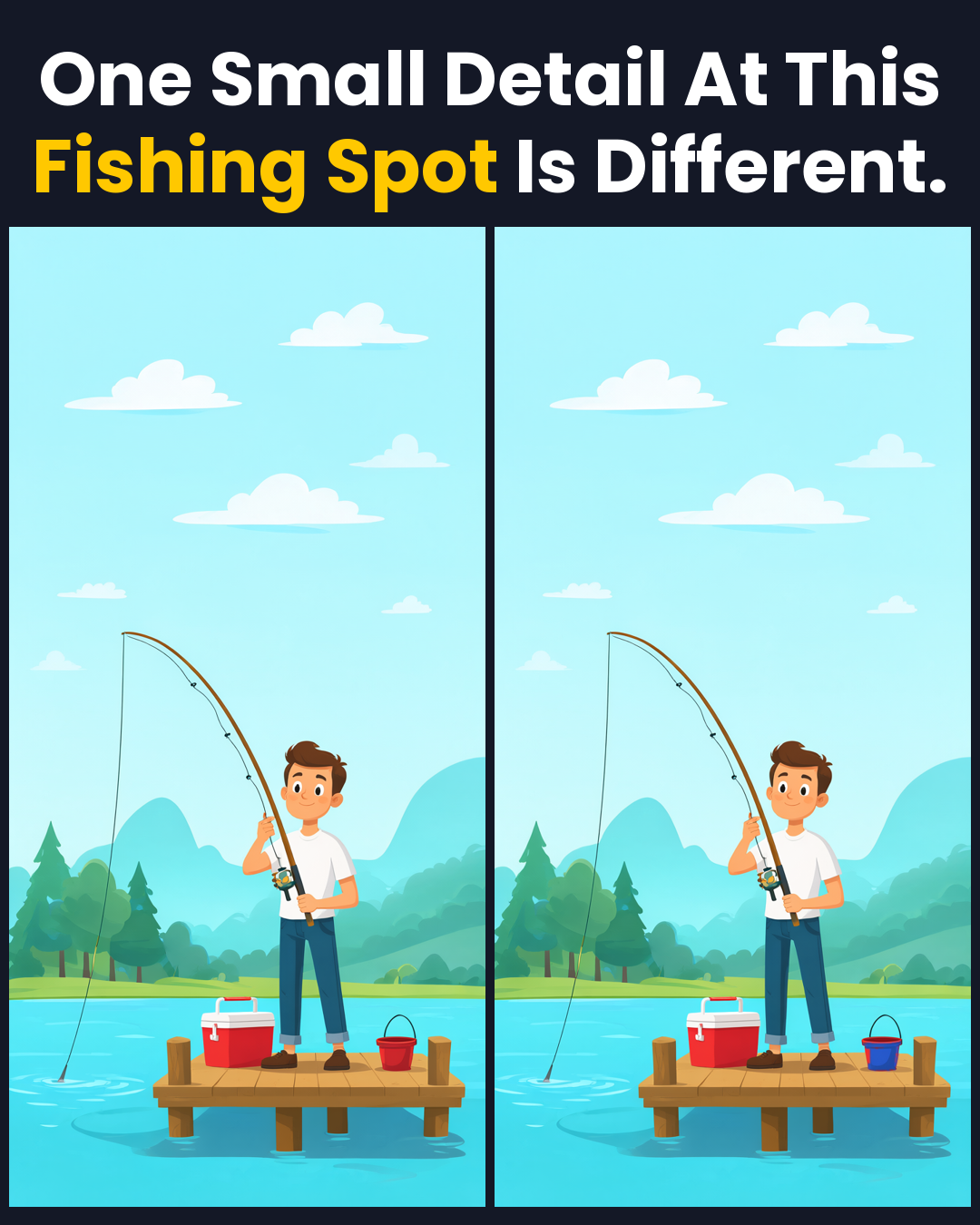
Take your time and look closely before you scroll down!
Where To Look First
In a calm outdoor scene like this one, most of the picture is sky, water and trees. Those big empty areas feel important because they take up so much room, but a puzzle maker almost never hides the change there – it would be far too easy to see.
The smart place to start is where the small man-made objects are. Here that means the dock: the cooler, the bucket, the planks, the posts going down into the water. Compare them one at a time, left against right, and only then move out to the trees and the clouds.
Another good habit is to look at colours rather than shapes. Ask yourself what colour each object is, say it quietly in your head, and then check the other picture. Words slow your eyes down just enough to see what is really there.
Why Our Attention Lets Us Down
The human eye only sees fine detail in a tiny spot in the middle of our vision, about the size of a thumbnail held at arm’s length. Everything else is a rough impression. To see a whole picture we have to move that little spotlight around, several times a second, and the brain stitches the pieces together.
When the brain stitches, it also guesses. If it has already decided that the end of the dock holds a bucket, it will not go back and check what colour that bucket is. It simply reuses the first impression.
There is one more trap in this picture. The man is the only person in the scene, and faces and bodies grab our attention first, every single time. While we study his face and his rod, the real answer sits two steps away from him.
A Puzzle As Old As The Newspaper
Comparison puzzles like this have appeared in family newspapers since the late eighteen hundreds, and they travelled around the world without ever needing a translation. You do not have to read a word to play – you only have to look.
That is also why they are still popular in care homes and classrooms today. Looking carefully at two similar pictures is gentle, pleasant practice for attention and patience, and unlike a crossword, nobody feels left out.
Your Challenge For Today
Most people need about thirty seconds to find this one. Under twenty seconds puts you in the top group, and under ten seconds is genuinely rare.
When you have found it, pass the picture to a friend without saying a word. Half the fun is watching somebody else stare at the fishing rod for a full minute.
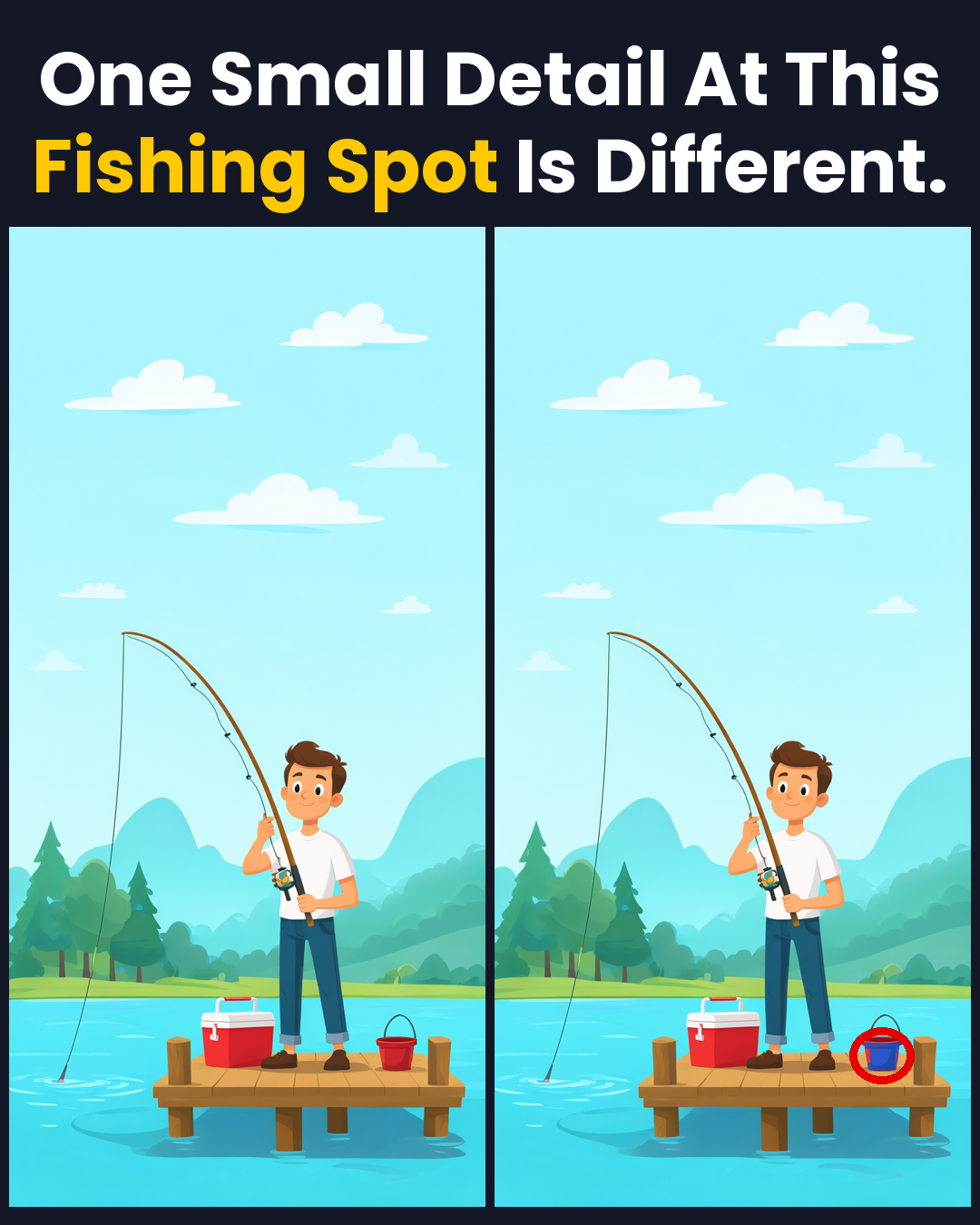
ANSWER: The bucket at the end of the dock changed colour – it is red on the left and blue on the right.
The Answer Was On The Dock
Look at the far end of the wooden dock, just past the man’s feet. In the left picture there is a small red bucket standing there. In the right picture that same bucket is blue.
Nothing else moved. The cooler is still red in both pictures, which is exactly what makes the trick work so well. Your brain sees red on the dock, ticks the box and moves on, without noticing that the red it saw the second time was only the cooler.
The shape of the bucket, its handle and its shadow are identical. Only the colour was swapped, and colour is the detail we check last.
Why So Many People Walk Past It
The bucket is small, it sits at the edge of the frame, and it is next to two much louder things: a bright red cooler and a man in a white shirt. Psychologists call this crowding – when an object stands close to bigger, bolder neighbours, our vision blurs it into the group.
The cure is simple. Next time, cover half the picture with your hand and compare only the strip that is left. Without the loud neighbours, the quiet objects suddenly become very easy to read.
How Did You Do?
Under 10 seconds: eagle eyes, and a rare talent for ignoring distractions.
10 to 25 seconds: very sharp. You clearly checked the small objects early.
25 to 50 seconds: a perfectly normal, healthy result.
Over 50 seconds: no shame at all. This puzzle was built around the one thing our eyes are worst at – a quiet change of colour in a busy corner.