Hello there, puzzle friends, and welcome to a quiet morning down by the water.
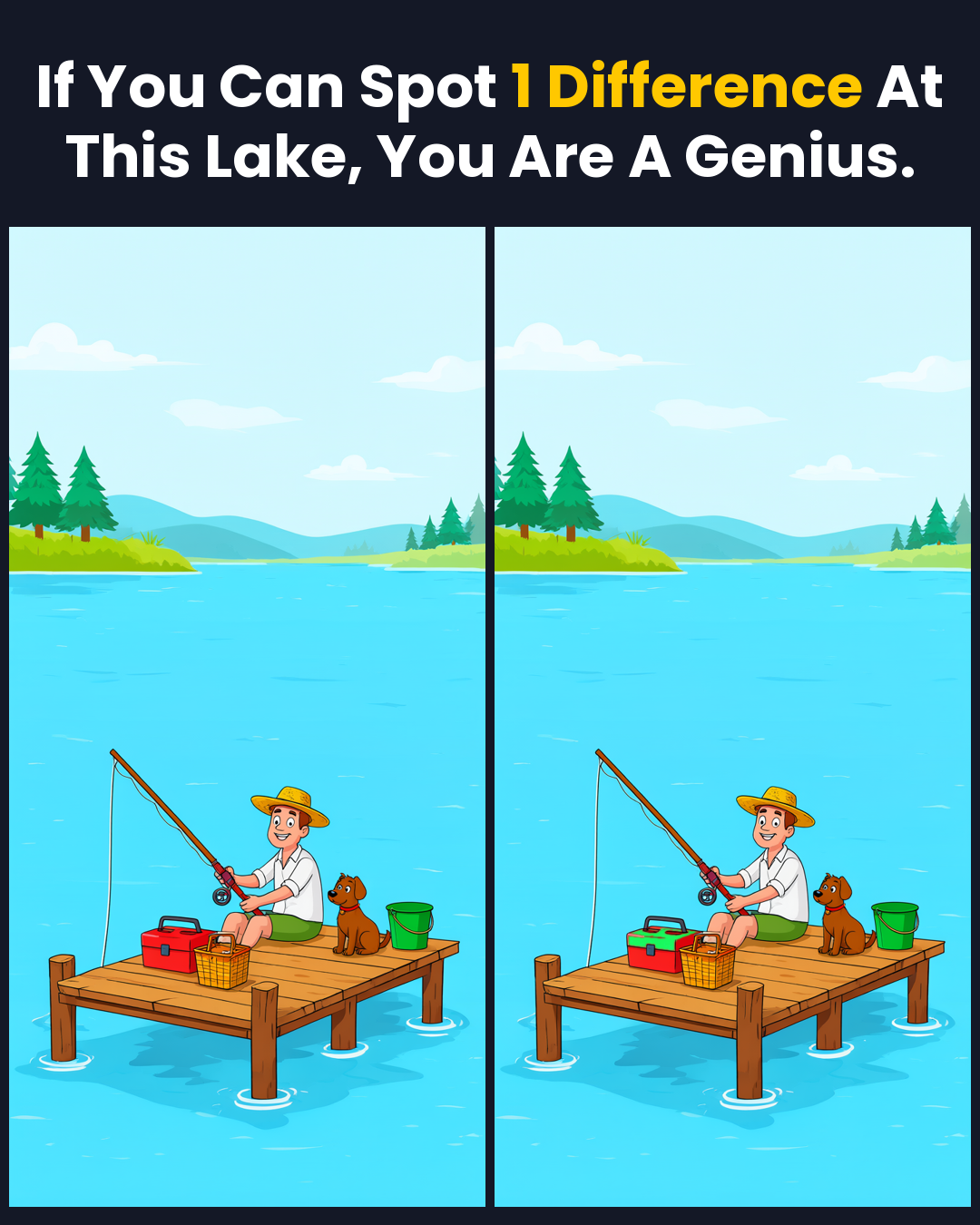
Today we are sitting on an old wooden pier with a friendly fisherman and his loyal brown dog.
The lake is calm, the pines stand tall on the far shore, and the picnic basket is packed and ready.
At first glance the two pictures look the same, but one single detail has been changed.
Here is a friendly tip: do not start with the sky or the water, because big empty areas tell you very little.
Begin with the small items on the pier and work outward, one object at a time.
Take your time, trust your eyes, and enjoy the search.
Take your time and look closely before you scroll down!
Start With The Small Things
The smartest way to solve a spot-the-difference picture is to ignore the big, beautiful scenery for a moment. The sky, the water and the rolling hills take up most of the space, but they almost never hold the answer. They are there to fill your eyes and slow you down.
Instead, make a short list in your head of the small objects you can see. Here we have a tackle box, a picnic basket, a bucket, a fishing rod, a straw hat, a dog and a wooden post or two. Look at each one in the left picture, then jump straight across to the very same object in the right picture. Compare them as a pair before moving on.
This simple habit, often called pairing, keeps you from wandering in circles. Most people who struggle with these puzzles are not looking too little. They are looking everywhere at once, which is almost the same as looking nowhere at all.
Why Our Eyes Are So Easy To Fool
Our eyes take in a huge amount of information, but our attention is much smaller than we like to believe. The brain cannot study every pixel of a picture, so it builds a quick summary instead: a man, a dog, a pier, a lake. Once that summary feels complete, the mind quietly stops checking the details.
Colour makes the trap even better. We remember objects by their shape far more strongly than by their shade. A box is still a box whether its lid is red, green or blue, so a change of colour can slip past us while a missing object would be noticed right away.
A Game With A Long History
Spot-the-difference puzzles have been entertaining families for well over a hundred years. They appeared in children’s magazines and Sunday newspapers long before television, printed as two nearly identical drawings side by side, and readers would send in their answers by post.
Doctors and teachers later noticed something useful about them. These puzzles ask the brain to hold one image in memory while it studies another, which is a gentle workout for visual attention and short-term memory. That is why you still find them in waiting rooms, in activity books and in community centres around the world.
Your Friendly Challenge
Most people need somewhere between thirty and sixty seconds to find this one. A sharp-eyed few catch it in under fifteen, usually because they started with the objects on the pier instead of the lovely view.
So set yourself a little goal. Scan the picture once quickly, then go back slowly, object by object, and see how fast you can be. When you have found it, send the picture to a friend or a family member and see whether they beat your time.
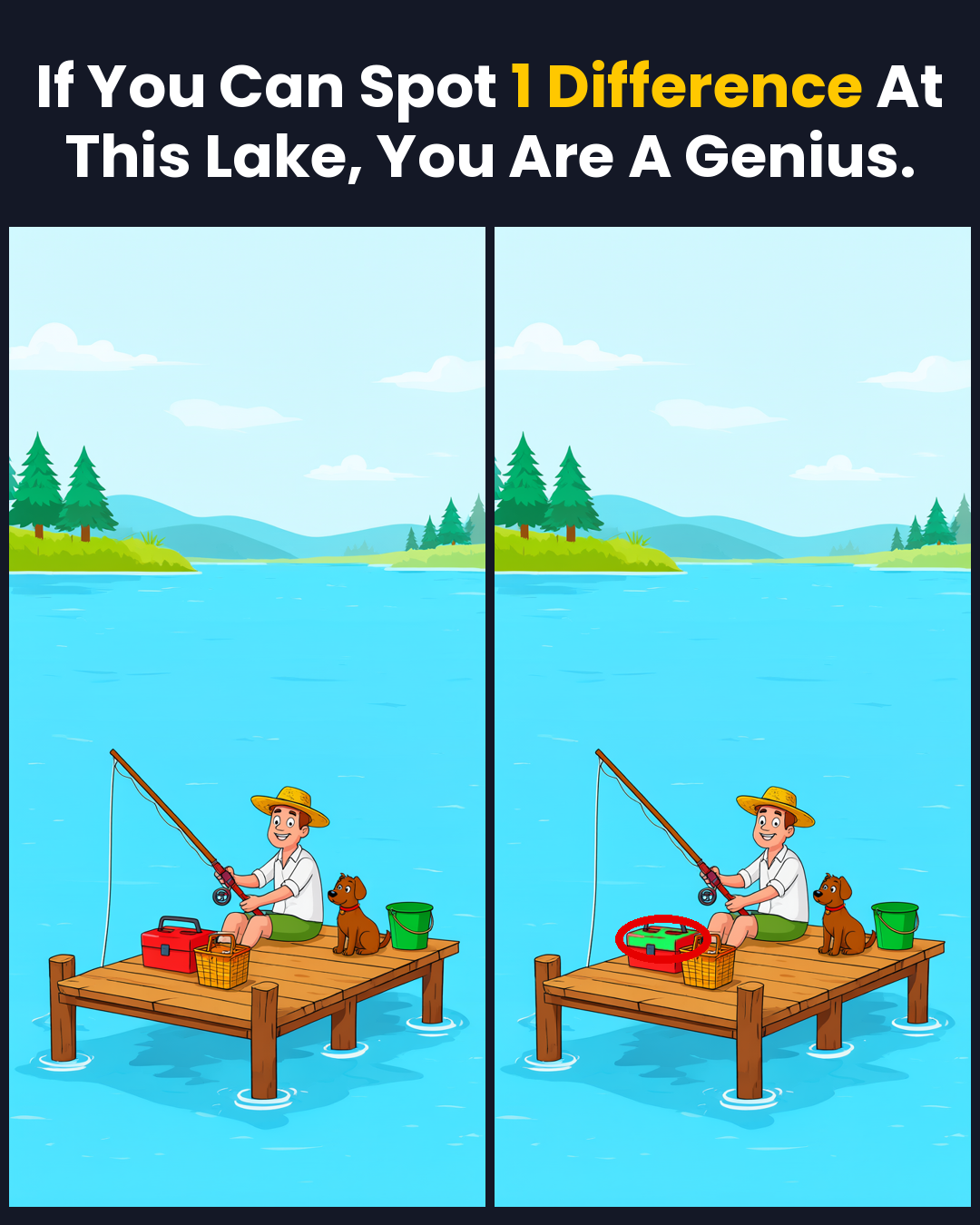
ANSWER: The lid of the red tackle box changed colour – in the second picture it is green.
Where The Change Is Hiding
Look at the red tackle box sitting on the wooden boards, just to the left of the picnic basket. In the first picture the whole box is red, lid and all. In the second picture the lid has turned a bright shade of green, while the body of the box stays exactly the same red as before.
Everything else is untouched. The dog sits in the same spot, the bucket keeps its green colour in both pictures, the hat is the same straw yellow, and even the little ripples around the posts match perfectly. Only that one lid is different.
Why Most People Miss It
The tackle box sits low in the picture, close to the bottom edge, and our eyes rarely start there. They go first to the man’s smiling face, then to the dog, then up to the trees and the open water. By the time we look down at the pier, we already feel we have seen the whole scene.
The green bucket on the other end of the pier helps the trick along. Because there is already a green object in the picture, a second patch of green does not feel out of place, and the mind simply accepts it as part of the scene.
How Did You Do?
Under ten seconds means you have real eagle eyes, the kind that notice a new haircut across a room. Ten to thirty seconds is excellent and puts you well ahead of most people who try this one.
Thirty to sixty seconds is a fine, steady result and means you searched in an orderly way. More than a minute is nothing to worry about at all. These puzzles are a skill, and the more of them you do, the quicker your eyes learn where to look first.