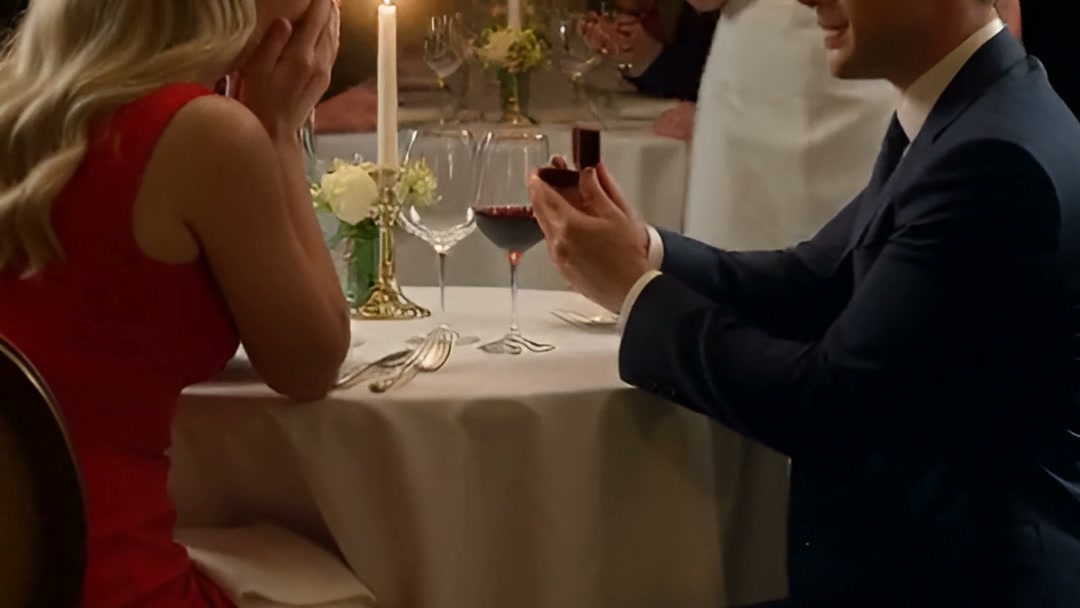
At a candlelit restaurant, CEO Marcus Webb knelt to propose with an antique gold ring — then the elderly waitress dropped her tray, shaking, and whispered: “That’s my ring. I left it with my baby boy thirty years ago.”
The restaurant smelled of gardenias and warm wax. Marcus Webb, thirty-one, broad-shouldered in his navy suit, had rehearsed this moment a hundred times in the mirror of his small orphanage bedroom, years ago, when mirrors were still a luxury.
He knelt on the marble floor and opened the velvet box.
Inside, a small gold ring with a red stone caught the candlelight like an ember.
“Elena,” he said, his voice steady even though his hands weren’t. “Will you marry me?”
Elena Marsh pressed both hands over her mouth. Her eyes filled instantly. Around them, the entire restaurant held its breath — couples mid-sip, a waiter frozen with a bread basket, a child at the corner table standing on his chair to see.
“Yes,” she whispered through her fingers. “Obviously, yes.”
The room broke into warm applause. Someone clinked a glass. Marcus slid the ring onto Elena’s finger and stood, pulling her into his chest, laughing against her hair.
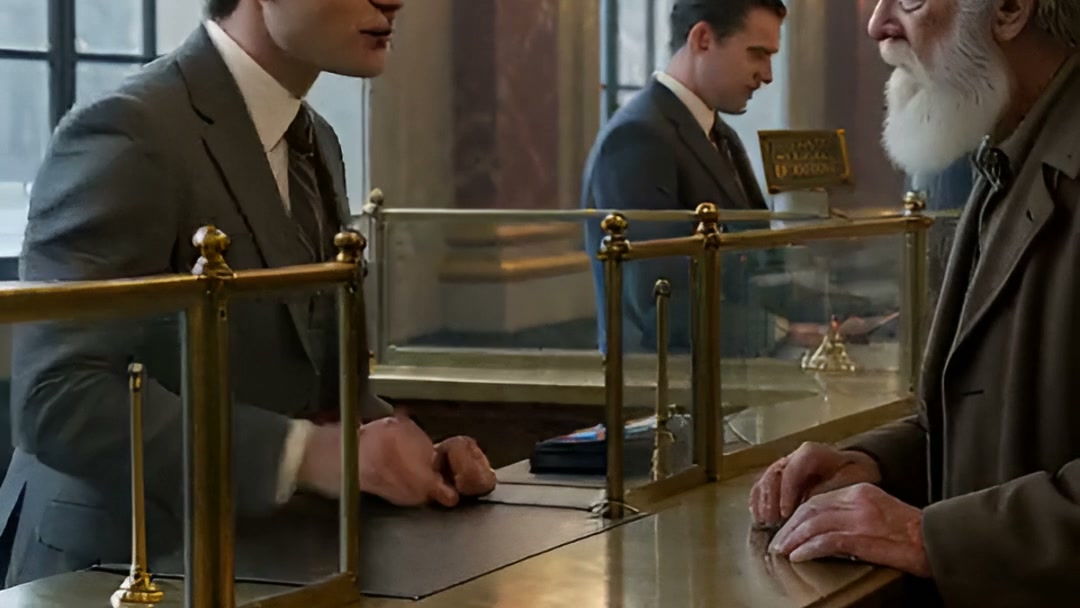
Nobody noticed the old waitress in the aisle until the tray hit the floor.
The sound of shattering crystal cut through the applause like a blade.
Every head turned.
She stood among the broken glass, both hands shaking at her lips, a woman in her late sixties with silver hair pulled back under a white cap, her uniform too big at the shoulders, her shoes worn thin at the toe. Her name badge said *Ruth*.
She was staring at the ring on Elena’s finger with an expression that had no name — not envy, not grief, something older than both.
“Ma’am?” A young busboy stepped toward her. “Are you all right?”
She didn’t hear him.
Her eyes moved from the ring to Marcus’s face. She studied it the way you study a photograph you’ve kept for thirty years until the colors fade but the shape stays burned into you.
“That’s my ring,” she said.
The room went absolutely still.
Marcus turned. “I’m sorry?”
Ruth took one step forward over the broken glass. Her voice was barely above a breath, but in the silence every person in the restaurant heard it clearly.
“I left it with my baby boy. Tied inside his blanket.” Her chin trembled. “At St. Augustine’s orphanage. On a Tuesday in February. Thirty years ago.”
Marcus did not move.
His face didn’t change — it simply emptied, the way a face does when the brain stops processing and just receives.
Elena looked at him. “Marcus?”
He opened his mouth. Nothing came out.
He had grown up at St. Augustine’s. He had arrived as a newborn. The nuns had given him his name — Marcus, because it was the feast day of Saint Mark — and the ring had been folded into his blanket, the only possession he carried into the world. He’d worn it on a chain through school. He’d shown it to every case worker, every social worker, every volunteer who’d come through with clipboards and kind eyes and no answers.
He’d chosen it for this proposal because he’d wanted, in some quiet and unanswered way, for whoever his mother was to be present.
“St. Augustine’s,” he said. The words came out flat. “February.”
Ruth’s knees buckled.
The busboy caught her by the elbow. She barely noticed. Her entire body was focused on Marcus’s face — on the shape of his jaw, the particular set of his ears, the way he held his shoulders, all of it identical to a face she’d been building and rebuilding in her mind for three decades.
“Your eyes,” she said. “You have his eyes. My father’s eyes.”
Marcus crossed the restaurant floor in four steps and caught both her hands in his.
They stood face to face in the broken glass.
“Tell me,” he said. “Tell me everything.”
So she did, right there, with the busboy holding a broom he forgot to use and Elena standing with the ring on her finger and the whole restaurant collectively forgetting to breathe.
Ruth had been seventeen. Her name then was Ruth Calloway. She’d worked as a maid for the Harrington family on Elm Ridge — the kind of house with a separate staircase for the staff. Daniel Harrington, the eldest son, twenty-two and charming and careless in the way that rich young men are careless, had paid her a particular kind of attention all summer.
When she told him about the baby, he’d looked at her like she’d said something in a foreign language.
“My mother came to me that night,” Ruth said. Her voice was steadier now, like the telling of it had been stored so long under pressure that once the valve opened, it ran smooth. “She said the family would pay to make it go away. I refused. So they told my father instead.”
She paused.
“My father was a proud man. Proud in the bad way. He said I’d shamed him. He said he wouldn’t raise a bastard grandson and he wouldn’t have a daughter who’d thrown herself at her employer.” She looked down at Marcus’s hands, still holding hers. “He drove me to the orphanage himself. January thaw. Ground all mud. He told me to leave the child at the door and not look back.”
“But you looked back,” Marcus said.
She pressed her lips together. “I always looked back. Every day for thirty years, I looked back.”
She’d tried to find him. At first in secret — she was still living under her father’s roof, still seventeen, with nowhere to go. Later, when she was old enough and brave enough, she’d gone to St. Augustine’s herself. The records, they told her, were sealed. She could apply to have them opened, but the process was long, and the family had to consent, and Marcus, by then, had aged out of the system and moved on.
She’d hired a private investigator once, in her forties, with three months of saved wages. He’d come back with nothing useful.
She’d never stopped working. She’d never married. She’d waited tables for forty years in five different restaurants because it was the only trade she’d learned in the Harrington house, and because in the back of her mind she always thought: *he could walk in. People walk into restaurants.*
“What happened to the Harrington family?” Elena asked quietly, from behind Marcus.
Ruth’s expression shifted — not to anger, but to something measured and final.
“Daniel Harrington became a state senator,” she said. “His mother died six years ago. Very comfortable death, very large funeral.” She paused. “His wife left him last year. Apparently he’d been quite free with his attention to other people throughout their marriage as well.”
She said it without satisfaction. Just fact.
Marcus was quiet for a long moment. Then: “The ring. Why the ring specifically?”
“It was my mother’s,” Ruth said. “The only thing of hers I had. I couldn’t keep it — my father would have sold it. I thought if I left it with you, you’d have something real. Something that couldn’t be taken away.” She looked at Elena’s hand. “Something someone would recognize.”
The restaurant manager appeared at the edge of the group, looking uncertain. Marcus looked up at him.
“Can you bring her a chair?” he said. “And whatever she’d like to eat. She’s not working tonight.”
The manager didn’t argue.
They talked for two hours. Marcus’s food went cold and he didn’t touch it. Elena sat beside him, her hand on his back, and listened. When Ruth described the orphanage door — the blue paint, the iron knocker shaped like a fish, the cold — Marcus nodded once.
“I’ve dreamed about that door,” he said. “I always assumed I made it up.”
“You didn’t make it up,” Ruth said.
The DNA test was Marcus’s idea, suggested before they left the restaurant that night, and Ruth agreed immediately, without hesitation, in the way that people agree to things they’ve been waiting to be asked for thirty years.
The results came back on a Thursday, eleven days later, while Marcus was in a meeting he left halfway through.
*Probability of biological relationship (mother/son): 99.97%*
He called Ruth from the parking garage. She answered on the first ring.
“It’s confirmed,” he said.
He heard her exhale — a long, slow breath that sounded like something she’d been holding since February, thirty years ago, in a cold mud yard outside a blue door.
“I know,” she said softly. “I already knew.”
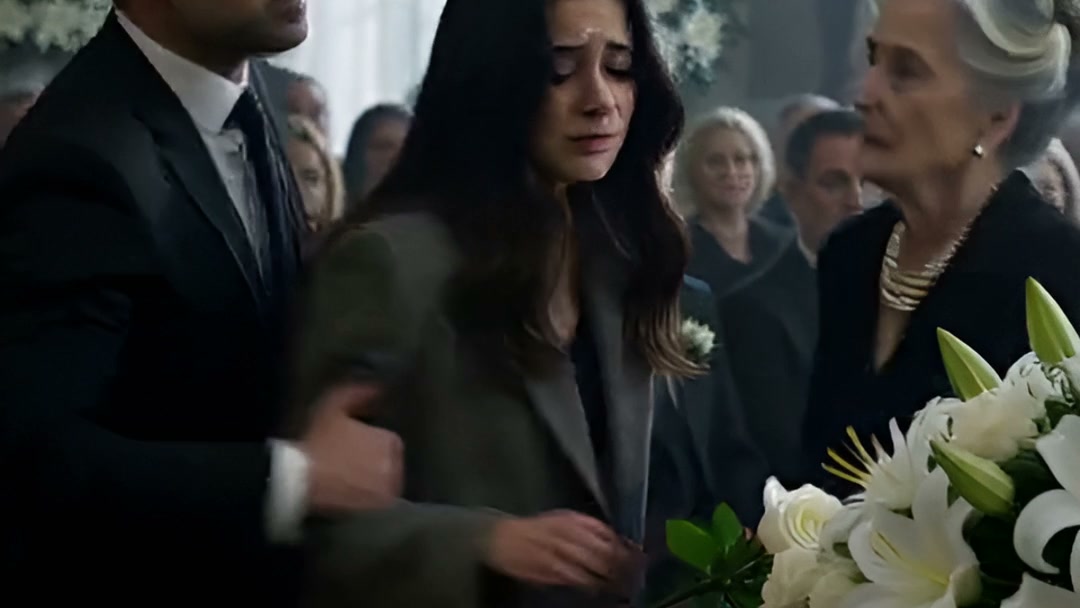
Ruth Calloway sat in the front row at the wedding, in a pale blue dress Marcus had insisted on buying her himself. Elena’s mother had taken her shopping.
When the officiant asked if anyone had made this couple’s love possible, Marcus turned from the altar and looked directly at his mother in the front row.
She was already crying.
He said into the microphone, calmly and clearly, so the whole room could hear: “She has. My whole life, she was looking for me. She never stopped.”
Ruth pressed her hand flat over her heart.
She didn’t look like a woman who’d spent forty years waiting tables, worn thin by shifts and silence and a grief she’d never been permitted to name out loud.
She looked like a mother at her son’s wedding.
The ring on Elena’s finger caught the light — the small red stone, the thin gold band, the same ring that had traveled from a grandmother’s hand to a mother’s hand to an orphanage blanket to a boy’s chain to a velvet proposal box — and it glowed, warm and complete, like a closed circle.
The officiant said, “You may kiss the bride.”
Marcus kissed Elena.
The room rose.
Ruth stood with them, clapping with both hands above her head, laughing and crying at the same time, not caring at all who saw.
The ring had found its way home.
So had she.