He Watched A Boy Shove His Daughter — Then He Hit Record
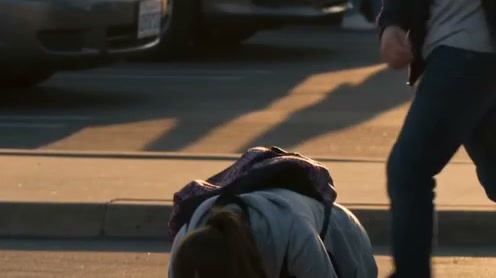
A senior boy shoved a twelve-year-old girl onto the asphalt in front of her father… But Dad wasn’t frozen with shock — he was already recording every second on his phone.
Marcus Reyes had picked up his daughter from Clearwater Middle every Tuesday and Thursday for two years. Same spot, same curb, engine running, radio low. He knew the rhythms of that parking lot better than he knew his own heartbeat.
He saw Brianna come out the side door at 3:18.
Pink backpack, one strap loose the way she always wore it, hair in the two braids her mother had done that morning. She was looking down at her phone, already texting him that she was on her way.
Marcus smiled and reached for the volume dial.
Then Colton Briggs stepped out from behind a white SUV.
Marcus didn’t know the boy’s name yet. He knew the type. Junior or senior, built like he played something, wearing that particular slouch that said he’d never once been held accountable for anything in his life. He fell into step two feet behind Brianna without her noticing.
Marcus sat up straighter.
The boy glanced back at his two friends — one quick look, a grin — and then he planted both hands flat between Brianna’s shoulder blades and shoved.
Hard.
She went down onto the asphalt like something cut from under her. The phone skidded. The backpack swung sideways. Both palms hit the ground and Marcus heard, through his closed windshield, the sound she made.
The boy laughed, stepped over her scattered notebooks, and kept walking.
“Hey. Hey!” one of his friends called out, laughing too.
Marcus had his door open before the laugh finished.
He was not a large man. He was five-eleven, forty-three years old, wore reading glasses, worked in civil engineering. He had not raised his voice in front of his daughter since she was four years old. He walked around the front of his car and he crossed the ten feet of asphalt in about four seconds.
Brianna was pushing herself up, palms bleeding.
“Dad—” she started.
“Stay there, baby.”
He stepped past her and stood directly in front of the boy, who had stopped walking when he heard the car door. The two friends had gone quiet.
“That’s my daughter,” Marcus said.
The boy — Colton, seventeen, six feet, seventy pounds heavier — looked him up and down once. “Okay.”
“You just knocked her onto the ground.”
“She walked into me.”
“I watched you from my car. I watched you look back at your friends before you did it. I watched you step over her while she was down.” Marcus held up his phone. “And I recorded the entire thing.”
The boy’s face shifted. Just barely, but it shifted.
“That’s not—”
“I have the timestamp. I have your face. I have the shove.” Marcus did not raise his voice once. “What I need from you right now is your name.”
“I’m not telling you my—”
“That’s fine. You’re on school property. I’ll get it from the office.” Marcus turned and raised his hand toward the school building where a teacher was already crossing the parking lot at a half-jog, having seen the fall from the walkway.
“What happened?” the teacher — Ms. Alvarez, seventh grade English — said, looking at Brianna’s palms.
“This student shoved my daughter to the ground from behind,” Marcus said. “Unprovoked. I have it recorded. I’d like to go to the office and report it now.”
“He assaulted her,” Ms. Alvarez said flatly.
“Yes.”
Colton started talking fast. “She was in the way, it was an accident, I barely touched—”
“I have the video,” Marcus said again, very quietly. He was not looking at the boy anymore. He was looking at Brianna, who was on her feet now, holding her scraped hands away from her jacket. “You okay?”
“My hands hurt.”
“I know. Let’s go inside.”
The principal’s office was small and smelled like old carpet and coffee. Marcus sat across the desk from Principal Hewitt, a man in his late fifties who Marcus had spoken to twice before about minor issues. Brianna sat next to her father with a paper towel pressed to one palm.
Colton sat two chairs away with his arms crossed.
His parents were called. They arrived in eleven minutes — his mother in gym clothes, his father still in a work jacket, both of them wearing the expression Marcus recognized: the expression of people who had done this before and expected it to end the same way it always had.
“Boys will be boys,” the father said, before anyone had finished speaking.
“Excuse me?” Marcus said.
“He didn’t mean anything. It was roughhousing. If your daughter—”
“My daughter was walking to my car,” Marcus said. “She did not speak to him. She did not look at him. He shoved her from behind onto concrete.” He set his phone on the desk, screen up. “This is the video.”
Principal Hewitt watched it. He watched it twice.
Colton’s father watched it the second time. The arm-crossing stopped.
“He will be suspended,” Principal Hewitt said. “Minimum three days. Given that it’s recorded and there’s a witness—” he nodded at Ms. Alvarez, who had come in with them— “I’m escalating to the district conduct office for a full review. This falls under their physical aggression policy.”
“What does that mean, exactly?” Colton’s mother asked.
“It means a formal record. It means a potential hearing.” Hewitt looked at Colton directly. “It means this does not disappear.”
Colton said nothing. He was staring at the floor.
“I also want to say,” Marcus said, “that I intend to file a police report. Not to ruin anyone’s life. Because this is assault on a minor and there is video evidence and I want it documented formally outside of this building.”
“You’re going to call the police over a shove?” Colton’s father said.
Marcus looked at him for a long moment. “Your son stood up and looked at his friends before he did it. It was deliberate. My daughter’s hands are bleeding.” He paused. “Yes. I’m going to document it.”
The police report was filed that evening. A records case, not an arrest — Colton was a minor, it was a first formal offense. But the report existed. His name was attached to it. The district conduct review happened eight days later.
Colton was suspended for five days, not three.
He was removed from the junior varsity basketball roster for the remainder of the semester, per the school’s athletic conduct agreement that both he and his parents had signed in September.
That part hit differently than Marcus expected it to.
He found out through Brianna, who heard it from a girl in her homeroom whose older sister was in Colton’s grade.
“He lost his spot on the team,” Brianna told him over dinner.
Marcus passed her the bread. “How do your hands feel?”
“Better. The right one still stings a little.”
“Give it another day.”
She was quiet for a moment. “Dad. Were you scared? When you got out of the car?”
“No.”
“Really?”
“I was angry,” he said. “That’s different.”
She thought about that. “He’s really mad, apparently. At school.”
“I know.”
“Are you worried about that?”
Marcus set down his fork. He looked at his daughter — twelve years old, two braids, both palms still lightly bandaged. “Brianna. I was ten feet away. I watched it happen and I have it recorded and I walked over and gave him my full name in front of a teacher and a principal and two police officers.” He picked his fork back up. “If he’s smart, he’s not mad at you. He’s thinking about how every choice has a consequence.”
Brianna nodded slowly.
“And if he’s not smart,” Marcus added, “we have the recording.”
She almost smiled. Then she actually smiled. “That’s kind of cold, Dad.”
“I know,” he said. “Eat your dinner.”
Three weeks later, a letter arrived from the district conduct office. The review was complete. Colton Briggs had been formally cited under the district’s physical aggression policy. The citation would remain in his student file through graduation. Any further incident would trigger an expulsion hearing.
Marcus read the letter at the kitchen table.
He folded it, put it in the file folder he kept in the second drawer, and went to start dinner.
When Brianna came home at 3:19 — same curb, same parking spot, engine running — she opened the car door and dropped her backpack on the back seat and said, “There’s a new teacher monitoring the parking lot now. Every afternoon.”
“Good,” Marcus said.
He pulled out of the lot.
She put one earbud in and looked out the window and he drove them home, the same way he had done every Tuesday and Thursday for two years, the radio low.
Nothing dramatic. Nothing more was required.
That was the whole point.