He Drove The Fire Engine To The Auction Still Covered In Soot
A bank auctioned her grandmother’s house on the front lawn while she stood there helpless… But her brother’s fire engine pulled into the driveway mid-bid, soot still on his jacket, with the deed the bank swore didn’t exist.
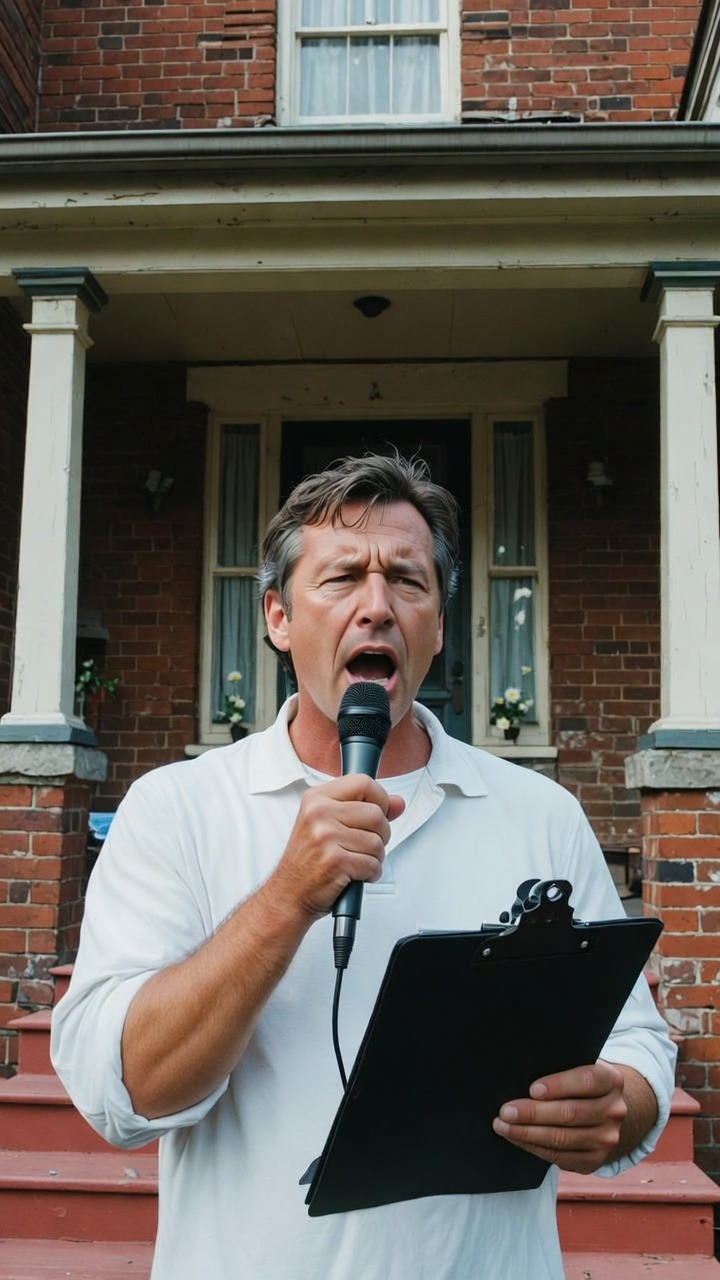
The auctioneer had a clipboard, a microphone, and a voice built for projecting over crowd noise.
He was using all three.
“We have forty-two thousand,” he called from the porch steps. “Do I hear forty-three?”
Mara stood at the edge of the lawn with her arms crossed so tight her knuckles had gone white. Twelve strangers stood in her grandmother’s grass. Investors. Flippers. A man in khakis who’d already walked the perimeter twice with a measuring tape.
She’d called the bank six times in the last two weeks. Six times they’d told her the same thing. The loan was in default. The property was scheduled. The original deed her grandmother had signed in 1971 — the one her grandmother swore proved the second mortgage was fraudulent — did not appear in their records.
*Did not appear.* Like it had simply decided to leave.
“Forty-three thousand,” the clipboard man called. “Do I hear forty-four?”
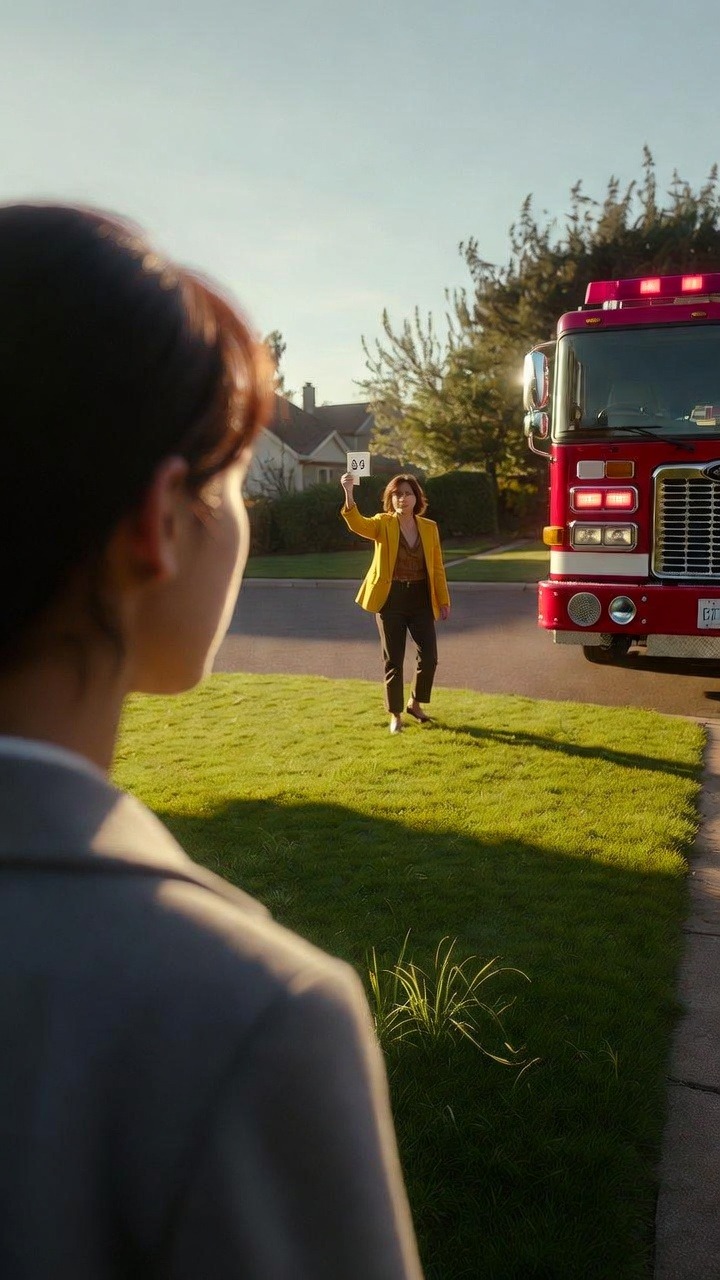
Mara’s phone buzzed. She didn’t look at it. She was watching a woman in a yellow blazer raise a numbered card like she was ordering at a restaurant. Like this was nothing. Like a house where someone had lived for fifty-three years was just inventory.
“Danny isn’t coming,” she said to no one.
She’d texted him an hour ago. No response. She’d called twice. Straight to voicemail.
“Forty-four thousand. Do I hear forty-five?”
The woman in the yellow blazer raised her card again.
Mara looked at the front window. The curtains her grandmother had sewn by hand in 1987 were still hanging there. Pale blue with little white flowers. She’d never taken them down. Mara had asked her once why she kept them — they were old, faded, the seams were splitting.
Her grandmother had said, *”Because I put my hands into those, baby. You don’t throw away what you put your hands into.”*
“Forty-five thousand. Going once—”
The sound came from the street.
Low. Mechanical. Unmistakable.
Every head on the lawn turned at the same moment.

The fire engine turned into the driveway slowly — the way something very large moves when it’s being careful — and the brakes exhaled as it stopped, the front grille level with the basketball hoop her grandmother had never once asked to have taken down.
For two full seconds, nobody spoke.
The door opened.
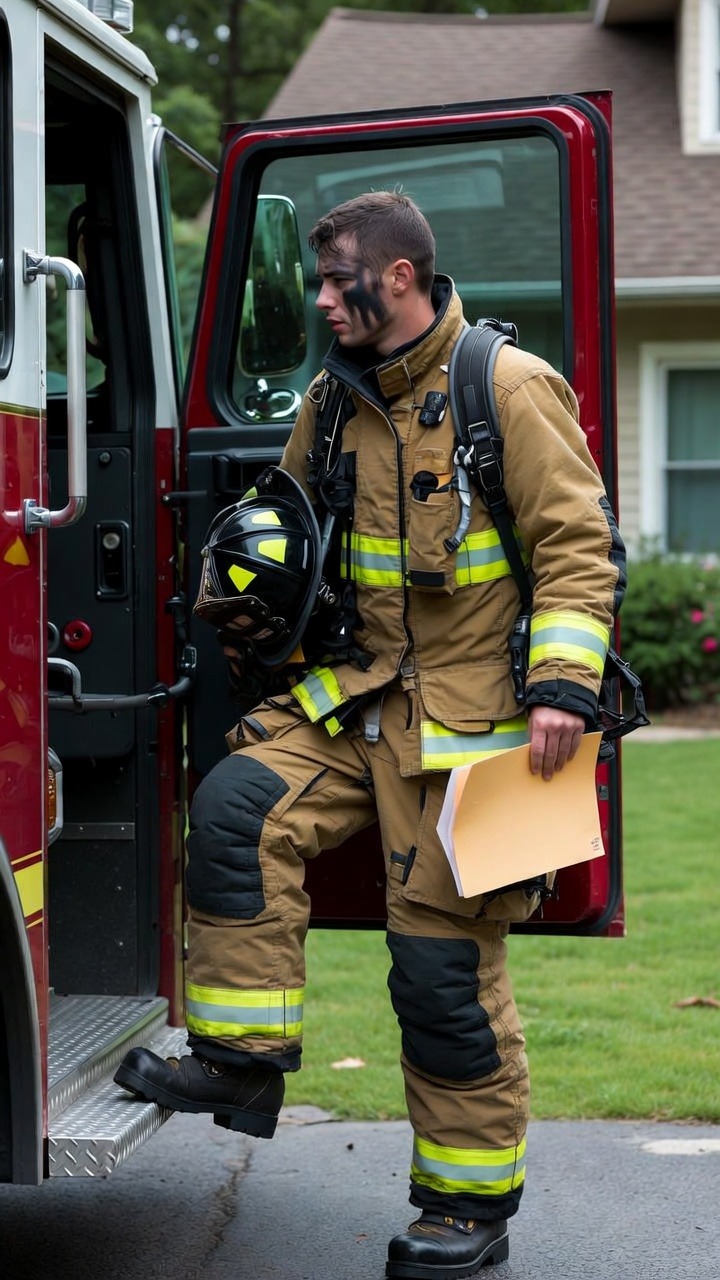
He dropped down from the cab in full turnout gear — jacket, pants, boots. Helmet under his left arm. A dark streak of soot ran from his jaw down the side of his neck. His right hand was holding a manila folder.
Danny walked across the lawn.
He didn’t look at the auctioneer. He didn’t look at the woman in the yellow blazer, who had lowered her numbered card. He didn’t look at the man with the measuring tape.
He looked at Mara.
He crossed the grass and put one hand on her shoulder, and she felt something in her chest crack open in a way that wasn’t entirely sadness.
“I’ve got it,” he said.
“The deed?” Her voice came out smaller than she intended.
“The deed.”
“Danny, the bank said—”
“I know what the bank said.” He squeezed her shoulder once. “I found it in the storage unit. The one off Route 9. I’ve been meaning to clear it for two years.” He exhaled through his nose. “Turns out that was the right call.”
She grabbed his arm. “Where was it?”
“Taped to the inside of a cedar chest. Sealed in a plastic bag. Grandma put it in there herself.” He almost smiled. “She didn’t trust banks. Turns out she was right about that too.”
The auctioneer had stopped talking. The crowd had rearranged itself, the way crowds do when something more interesting than the scheduled event begins happening.
“Sir.” The auctioneer stepped forward. Mid-fifties. The voice of a man accustomed to being the authority in any given space. “We’re in the middle of a legal proceeding. I’m going to need you to—”
Danny walked past him.
He climbed the two porch steps, set the folder down flat on the top step, and opened it.
Inside: a property deed dated March 14, 1971. Notarized. The name *Eleanor Ruth Voss* printed in the clear, deliberate hand of a county clerk who’d done the job with care. Underneath it: a legal letter from an attorney named Patricia Chun, dated four days ago, confirming the document’s authenticity and its direct contradiction of the second lien the bank had filed.
Underneath that: a cease-and-desist.
Danny tapped the top page once with two fingers and looked at the auctioneer.
“The second mortgage your bank filed in 2019 was against a property your bank didn’t hold clear title to auction,” he said. His voice was level. Not loud. The kind of calm that comes from having been in burning buildings and learned which situations actually require yelling. “The original deed was never transferred. It was never recorded as transferred. Because it wasn’t. This property was never legally collateral.”
“That’s a claim your attorney would need to—”
“My attorney already did.” Danny pointed at the letter. “That’s Patricia Chun’s signature. Call her. She’s expecting it.”
Silence.
The woman in the yellow blazer had lowered her card fully now. The man with the measuring tape had put it in his pocket. Even the crowd seemed to understand that the event they’d come for was over and had been replaced by something they hadn’t paid to see.
The auctioneer looked at the folder. Looked at Danny. Looked at his clipboard.
“I’m going to need to make some calls,” he said.
“You do that,” Danny said. “The auction is over while you do.”
It took forty minutes.
Mara sat on the porch steps next to the folder while Danny stood in the driveway on his phone, still in his gear, still with the soot on his neck, walking slow circles the way he always did when he was working something through. She could hear pieces of it — *yes sir, Patricia Chun, C-H-U-N, yes, the document is here, yes I can hold.*
The crowd dissolved. The woman in the yellow blazer left first, then the man with the measuring tape, then the others in clusters until the lawn was just grass again.
The auctioneer sat in his car in the street with his clipboard on the steering wheel.
At the forty-minute mark, he got out, walked up the driveway, and spoke to Danny directly.
Mara watched Danny nod once. Then nod again. Then say something she couldn’t hear.
Danny walked back to the porch and looked at her.
“Bank’s pulling the auction,” he said. “They’re opening a review of the lien. Patricia says the second mortgage gets voided inside of thirty days, maybe less. The house stays.”
Mara pressed her hands flat against the porch step beneath her. The wood was warm from the morning sun. Old wood. Her grandmother’s wood.
“She put the deed in a plastic bag,” Mara said.
“Taped to the inside of a cedar chest.”
“Because she didn’t trust banks.”
“Fifty-three years ago,” Danny said. “And she was still right.”
Mara looked at the curtains in the front window. Pale blue. White flowers. The seams still splitting exactly where they’d always been splitting.
“You came straight from a call,” she said.
“Structure fire on Clemmons Road.” He looked down at his jacket. “Nobody was hurt.”
“You didn’t stop to change.”
He looked at her like the question barely warranted an answer.
“No,” he said. “I didn’t stop to change.”
The bank’s formal withdrawal arrived in writing eleven days later. The fraudulent lien, filed by a loan officer who had since been terminated for a separate compliance violation, was vacated by court order on a Thursday morning.
Patricia Chun filed a civil claim against the bank for damages the following Monday. The settlement — reached privately, without a trial — covered three years of Mara’s mortgage payments on the house she’d inherited and included a formal written apology, on bank letterhead, addressed to the estate of Eleanor Ruth Voss.
Mara framed it. She hung it in the kitchen, next to the curtains her grandmother had sewn by hand in 1987.
The cedar chest went into the living room.
She put her hands into it every time she walked past.