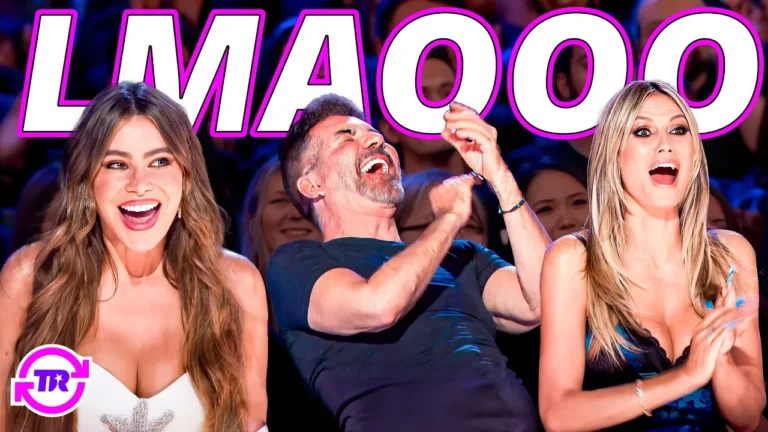
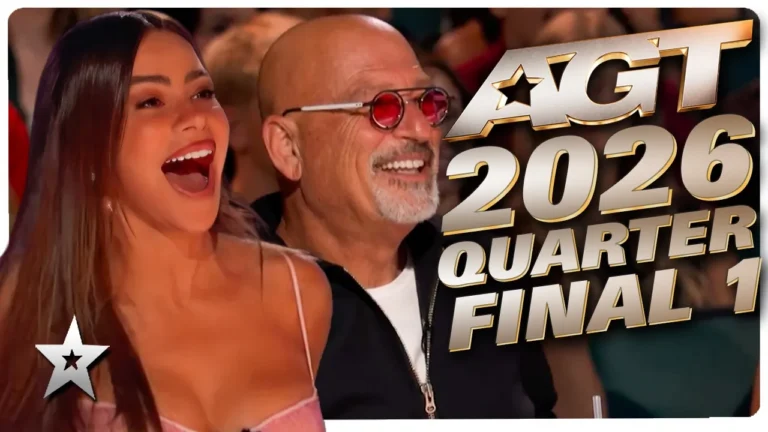
Bruised knees, sealed eyes, and a four‑yes finish on America’s Got Talent
America’s Got Talent works because real stakes show up without warning. On this night they arrive with a brace, a candle, a lunchbox habit, and a handshake that never happens.
Two brothers, one repaired knee
They introduced themselves without flair. “My name is Ricardo Rossi. My name is Alejandro Rossi. We are the Fratelli Rossi.” Sixth‑generation performers, they said, raised to learn by impact. “The only way to learn really good is falling. And from falling, you learn how to don’t fall.”
The stakes for their tumbling act were not theoretical. “I tore my ACL,” one brother said. “I had a ACL surgery six months ago on my right knee, and this is my first performance since then.” The doctor had only “just gave me the permission to be back to perform again.” He admitted it still hurt “a little bit,” then added the line that tells you why they walked out anyway: “It’s part of our job. Like, everything hurts all the time.” Their dream, he said, was simple: “to open our own show.”
They went for it. Mid‑routine, the air shifted. “Did he break it again?” someone blurted. “Are you alright?” The calls kept coming from the wings and the panel. “No more. Don’t. You’re not doing it again. No more.” Even as the music pressed on, you could hear the argument between adrenaline and caution. “Don’t do it again. They’ve done it already.”
When they finally stopped, the debate that always follows danger arrived on cue. One judge tried to diagnose the missing piece. “I have seen this kind of act before, and I don’t know where it goes next. I think it should have been something perhaps on fire. I think it just needs a bit more danger at the end or something.” Another made the subtext plain: “It has to be something quite large and could be catastrophic if it went wrong.” A third didn’t bother with euphemism. “I want axes and knives and swords.” From the table came the dry counterpoint: “For you, it’s always about being more dangerous.”
The stranger who sealed his eyes shut
Then the room met a performer who barely spoke. “Who are you?” went unanswered. “Do you not want to talk?” Silence. “How old are you? Are you excited? Do you think that you’re hot?” The only reply landed flat: “No.”
He held up an apple. “Good luck. What is it? Magic?” someone asked. Whatever it was ignored the lanes. “Wait. He’s coming down here? No. Why is he coming here now? Why is he coming here?” He walked to the judges. One of them stiffened. “I—I don’t shake hands.” Another tried to normalize it: “Hi. How are you?”
The oddness turned into a stunt. “He’s sticking his eyes shut with the wax,” a voice narrated from the table. “Why?” “So he can’t see.” A producer leapt in with the standard warning, delivered like a seatbelt instruction before turbulence: “Do not try this at home. Do not try this at work. Do not try this at school.” Then, quieter, the kind of gallows humor that shows up when a room feels off balance: “Just leave.”
He asked for details the audience couldn’t parse. “What’s the number we can take in?” someone echoed, unsure if they heard right. Another stray word rolled across the mic: “Nunchuck.” A beat. “No.” By then the panel had surrendered to confusion. “The good news is gone,” someone sighed. And still the wax cooled on his lashes.
The office worker who bends the rules of a body
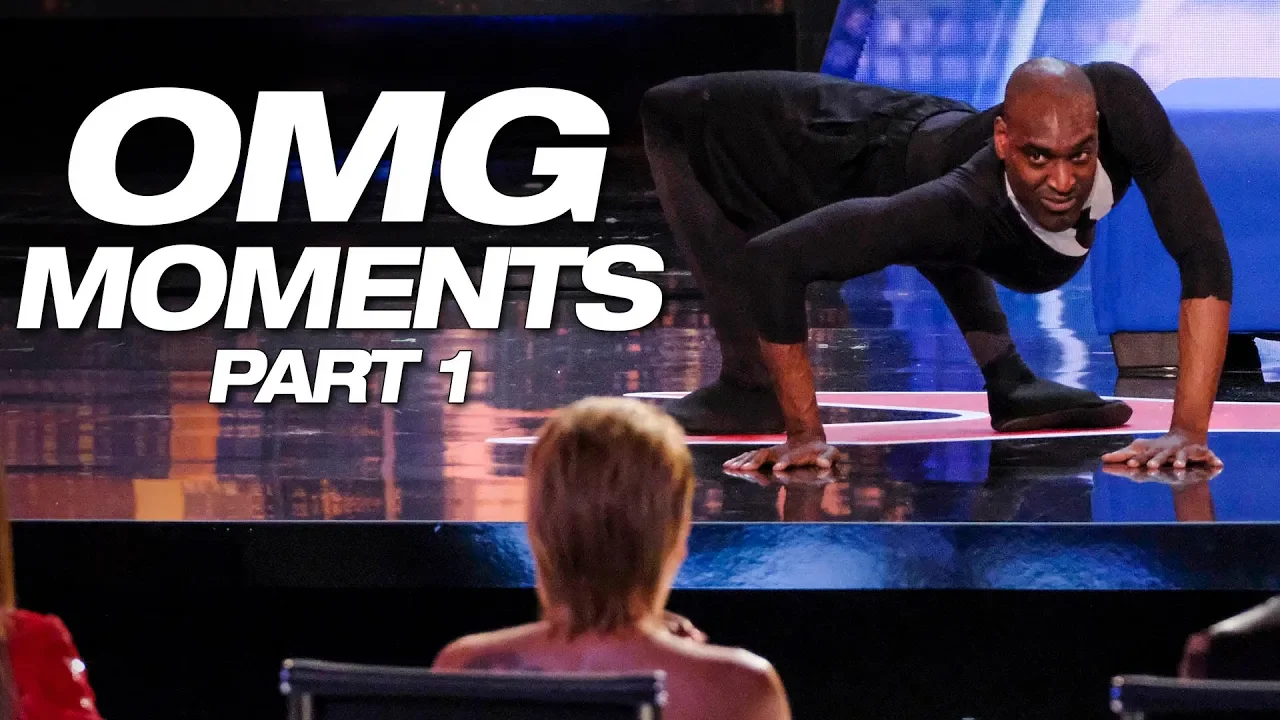
Troy James did the opposite. He over‑explained his day until the ordinary felt staged as a prank. “My name is Troy James. I’m 28 years old, and I work in human resources.” Then he read out a life in bullet points. “My line of work, there aren’t many surprises. I wake up at the same time every day. I go to work. I check my email. I have a chicken sandwich for lunch every day, and I pack a snack of almonds and some cheese. I love cheese as a snack. I drive home, make dinner, read a book, and go to sleep. Wake up and do it all again the next day. I’m a pretty reliable employee. I never miss work.”
He smiled at his one slip. “Except for one time, my boss put out a missing persons report out for me.” Then he admitted the secret that brought him there. “Even though I’m a pretty ordinary guy, I do like to entertain. My talent is just a hobby of mine, but it would be unbelievable if I got to pursue this as a full time career.” At work, he said, “it’s not really known yet that I’m auditioning for America’s Got Talent.” He was hoping to leave with permission: “I hope the judges like me, and I’m hoping that they tell me to quit my day job.”
Onstage he kept the mystery alive. “What will you be doing for us today?” a judge asked. “You’ll see.” As the music started, someone near the panel whispered, “What’s he doing?” Another voice, earlier in the night, had previewed the feeling perfectly: “This looks interesting.”
“I trust my dad 100%”
Sergei and Sasha walked out like a memory from a Vegas sidewalk brought into sharper light. “My name is Sergei. I’m 52 years old.” “I’m Sasha, and I’m 15.” “We are a father daughter acrobatic duo from Las Vegas.” They started together when she was six. “We work in street for tips.” They promised “handstands,” “equilibrium,” and “foot juggling.” Then the line every parent hears in their bones: “Our job is dangerous. I feel very big responsibility for her.” She answered him from the same place. “I’m really happy that I have this special relationship with my father. I know that I could talk to if I have any problems, even though he can’t always help me with math.”
“How long have you been doing this act?” “Ten years.” “Is this act dangerous?” “Yes.” “You’re not scared?” “No.” “At all?” “I trust my dad a 100%.” The dream was as teenage as it was honest. “To be recognized anywhere. Like, I’ll be in a grocery store, and somebody’s like, that’s Sasha from Got Talent. Oh my god. I gotta get her autograph.”
They delivered the kind of tension that lands everywhere at once: in shoulders, in fists, in the way a room holds breath without instruction. The comments after were blunt. One judge confessed, “I was traumatized, but in a really, really good way because you made it out alive. I haven’t actually seen an act like this before, so I was blown away.” Another put weight on the years. “That was so scary and so dangerous. I would imagine when you started when she was six, it was easier.” The dad nodded. “It was definitely easy. And it’s just getting tougher and tougher and tougher.” He grinned at his own punch line: “And I’m getting heavier and heavier and heavier.”
Heidi Klum said the quiet part out loud. “I don’t think I was breathing the entire time until you were safe on the ground again. I thought it was amazing.” Then Simon Cowell played the long game. “Following day, people are gonna be walking up to your grocery store saying, yeah. I saw you on America’s Got Talent. Yes. It’s gonna happen. I can feel it.” He pressed the show’s favorite question. “Does it get more dangerous?” “Yes.” “Much more?” “More dangerous. More props.” “Fire?” “No. Not fire. We don’t wanna end up with hair like Howie.”
“Let’s vote, shall we?”
“I give you a yes.”
“It’s a yes.”
“You’re still getting a yes.”
“And you’re getting your fourth yes from me.”
Backstage, the adrenaline leaked out as laughter. “Do it again on my head,” someone joked. The pair stood like people who had carried a decade to a mark and hit it clean.
Rope, pain, and resolve
Vivian, a jump rope phenom, carried another kind of history. “I used to be bullied a lot,” she said earlier in the season. When she returned, the update came with a wince. “Unfortunately, I managed to sprain both of my ankles.” The panel asked the question a doctor would. “Will you be able to bring it up to the standard that you had hoped for, or is the injury gonna be holding you back?” She didn’t blink. “It hurts, but this is my dream, and this is what I’ve been working for.” From the table, a judge sympathized with the facts. “Sprained ankle, it’s so bad. One of the worst things.” Then the thesis of every competition bled through. “Desire is what it comes down to.”
Afterward, the praise came with a lump in the throat. “You’re such a warrior to be out there doing all that. Your tricks always amaze me. You’ve just come out on the stage and laid everything out on the line. We wish you the best.”
Why danger keeps winning
Thread the night and a pattern emerges. Acts that flirt with disaster pull the room into a single pulse. The brothers showed how a repaired knee can still chase a dream. The silent daredevil turned a table into part of the stage and made everyone complicit in the risk by walking straight at them and sealing his own vision shut. Troy James arrived as HR and left as something the office handbook can’t file. A dad balanced his daughter and an audience weighed fear against faith until the votes made both feel useful. Vivian limped past common sense and reclaimed her story with every jump.
Even the offhand lines tell the same tale. “I don’t shake hands.” “He’s sticking his eyes shut with the wax.” “Do not try this at home.” “What’s the number we can take in?” “Nunchuck.” “The good news is gone.” They read like stage directions from a play where the characters can be hurt and the last page is still blank.
America’s Got Talent thrives on that bargain. The show asks for courage in public and pays it back with instant proof that someone saw you at your most exposed and clapped anyway. As Simon teased Sasha, the real prize might be smaller than a trophy and bigger than a stage: a stranger in a grocery store who knows your name.
Watch the video to see how each act builds that tension in its own way: the brothers chasing a clean landing on a fragile knee, the wax‑blind stunt that sends a performer toward the judges, the office worker who says “You’ll see” and makes you believe it, the father and daughter daring gravity for four yeses, and a jumper refusing to sit out with two taped ankles. The risks are real. So are the reactions.