She Wore Her Grandmother’s Ring — He’d Watched It Go Into A Coffin

She wore her grandmother’s ring to a job interview… But the man on the hiring panel had watched that exact ring lowered into a coffin forty years ago — and never stopped blaming a stranger.
Sarah Chen wore the ring because she always wore the ring.
Gold band, square-cut stone, warm against her knuckle the way something worn every day becomes part of the body. She’d had it for eleven years. Her grandmother pressed it into her palm three days before she died and said, “Wear it. Don’t sell it. And if anyone ever asks where it came from, tell the truth.”
Sarah had never known the truth to tell.
The interview was for a senior project manager role at Hargrove Capital. She’d applied through a recruiter. She’d never heard of the company before the callback.
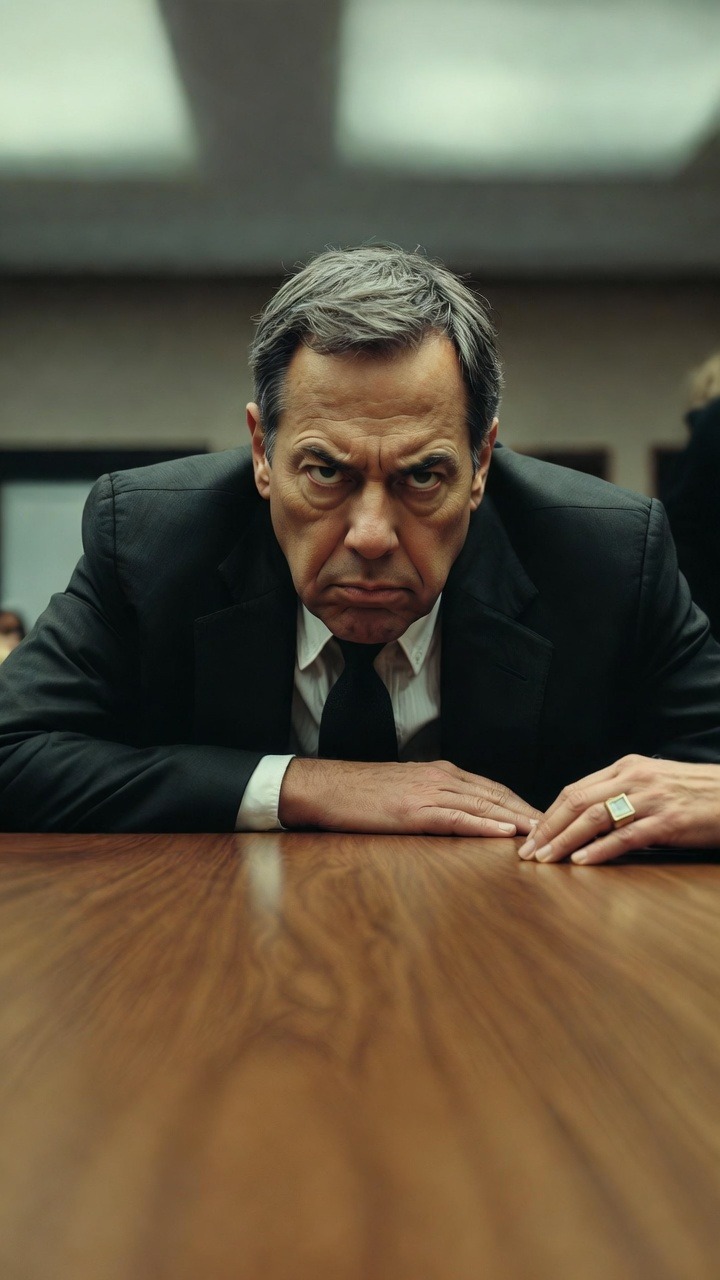
The conference room was on the fourteenth floor. Morning light came through half-open blinds in flat white strips. Three panelists sat behind a long table with her file open between them: two women in their forties, and a man in his sixties with grey hair, a dark suit, and the particular stillness of someone who had already decided.
His name placard read: WILLIAM HARGROVE.
Sarah walked in, smiled, and extended her hand across the table.
William Hargrove reached to take it.
His hand stopped.
Not slowly. Not politely. It stopped mid-air, four inches from hers, as if something had cut the signal between his brain and his arm.
His eyes dropped to her ring finger.
The two women beside him looked at him. Then at her. Then back at him.
“Mr. Hargrove?” one of them said.
He didn’t answer.
Sarah held her hand out for another full second before lowering it. “I’m sorry — have we met?”
“No.” His voice was flat. “Where did you get that ring?”
The room changed temperature.
“It was my grandmother’s,” Sarah said carefully. “She gave it to me before she passed.”
“What was your grandmother’s name?”

The woman to his left — her nameplate read DIANE COLE, HR — touched his arm. “William—”
“What was her name?” he repeated. Not loud. Quieter than anything else in the room.
“Mae Chen,” Sarah said. “She passed eleven years ago. She was a nurse for most of her life.”
Something moved through William Hargrove’s face. Not anger. Something older than anger.
“That ring,” he said, “belonged to my grandmother. Eleanor Hargrove. She died in October 1984. I was twenty-two years old. I stood at her casket.” He paused. “She was wearing that ring.”
Sarah did not move. “I don’t understand what you’re telling me.”
“That ring was stolen from the funeral home before the burial.” He was still looking at her hand. “The theft was never solved. We assumed it was someone who broke in. A stranger.”
“My grandmother didn’t steal anything,” Sarah said. Her voice was steady but her jaw was tight.
“Then how does a dead woman’s ring end up on your finger?”
The two panelists had gone completely still. Diane Cole had her hand on her phone but wasn’t calling anyone.
Sarah took a breath. “My grandmother told me to tell the truth about where it came from if anyone ever asked.” She looked at him directly. “She never told me the truth herself. So I can’t.”
“That’s convenient.”
“It’s what I have.” She stood up straighter. “I can tell you what I know about her. She was a private nurse. She cared for elderly patients in their homes. She was meticulous and she was devoted and she died with almost nothing because she spent thirty years in a profession that didn’t pay her what she was worth.” A pause. “That’s what I know.”
William Hargrove finally looked at her face.
“Eleanor Hargrove,” he said. “My grandmother. Your grandmother cared for her?”
“I don’t know. She never told me the names of her patients.”
He was quiet for a long moment. Then he said, “I need to make a phone call.”
He stood and walked out of the room.
Diane Cole looked at Sarah. “Can I get you some water?”
“Yes,” Sarah said. “Please.”
He came back twenty minutes later with a manila folder and a different expression — not softer exactly, but reorganized, like a face that had been taken apart and put back together with some pieces in new places.
He sat down. He opened the folder.
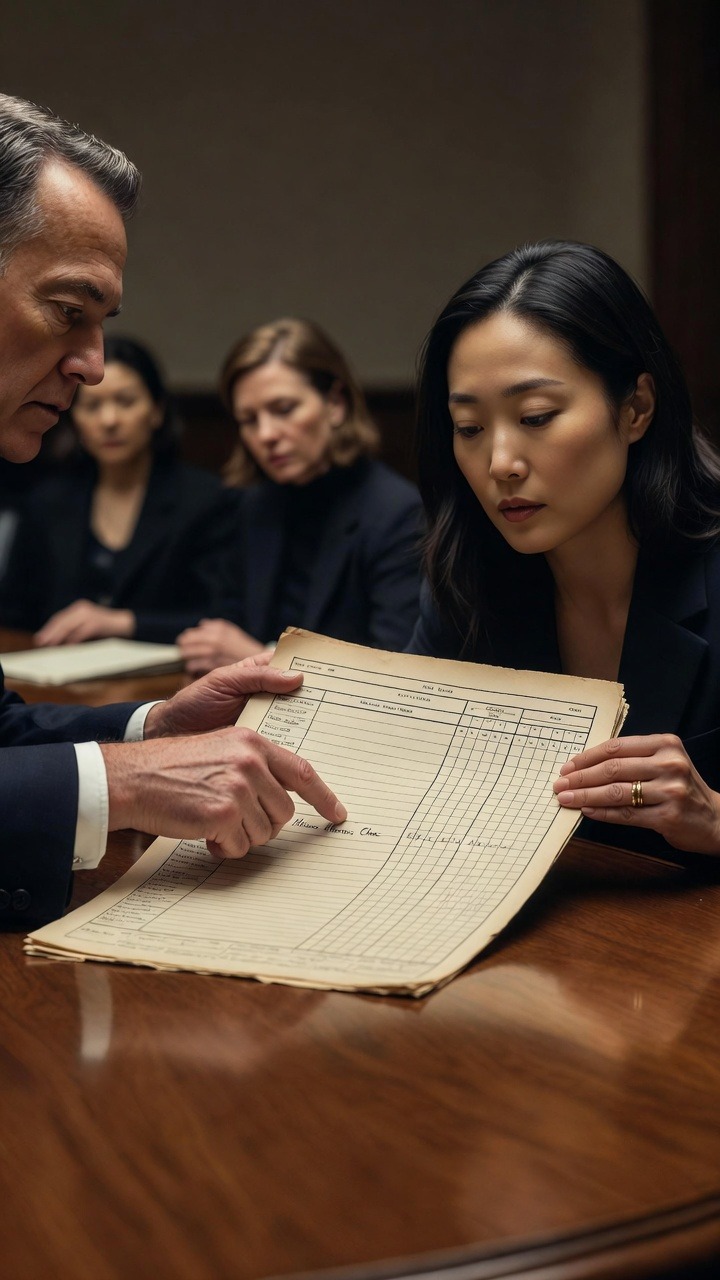
“My grandmother’s estate went into probate in 1983,” he said. “She was still alive. There was a dispute between my father and his brother about power of attorney. It dragged on for fourteen months.” He set a document on the table and turned it to face her. “During that time, the estate accounts were frozen. All of them.”
Sarah looked at the document. It was a payroll ledger. Old paper, photographed and printed.
“Her private nurse,” he said, “was contracted through an agency. The agency was paid through the estate account. When the account froze, the agency stopped receiving payments.” He pointed to a column of dates. “Eleven months of unpaid invoices. The agency dropped the contract. The nurse stayed.”
Sarah said nothing.
“She stayed and kept working for eleven months without pay,” he said. “My family was in court fighting over who got to sign checks, and this woman was showing up every day and caring for my grandmother for free.” He closed the folder. “We didn’t know. Or we didn’t look. I don’t know which is worse.”
“What was the nurse’s name?” Sarah asked quietly.
He turned the folder back around and pointed to a line near the bottom.
Mae Chen.
Sarah put her hand flat on the table. The ring caught the light.
“She took it the day after my grandmother died,” William said. “Before the funeral. The funeral home reported a break-in but nothing else was taken. One ring.” He looked at it. “I’ve spent forty years thinking a stranger did it for the money.”
“A jeweler told me it wasn’t worth much,” Sarah said.
“It wasn’t.” He was quiet. “It was worth nothing except that my grandmother wore it every day. I remember her hands.”
“So did mine,” Sarah said. “Apparently.”
The silence between them was not comfortable, but it was honest.
“She had nothing left of her,” Sarah said. “Not a photograph. Not a letter. The agency dropped the file when the contract ended. Your family was in court. She worked eleven months and walked away with a ring and apparently never told anyone — not even me — because she knew what it looked like.”
“It looked like theft,” William said.
“It was theft,” Sarah said. “She knew that. She told me to tell the truth about where it came from. She just never gave me the truth to tell.” Her voice didn’t break. “I think she was ashamed of it and couldn’t let go of it at the same time.”
William Hargrove put both hands on the table.
“My family owes your family eleven months of nursing wages,” he said. “Plus forty years of interest, legally speaking, if you wanted to pursue it. You’d have a case.”
“I didn’t come here to pursue anything,” Sarah said. “I came here for a job interview.”
“I know.” He looked at the ring one more time. Then he looked at her. “The position is yours if you want it. That decision was made before you walked in — your file is excellent.” A pause. “But I’d also like to have our legal team calculate what’s owed. Not as a settlement. As a debt. Because that’s what it is.”
Sarah looked at him for a long moment.
“My grandmother spent her life caring for people whose families forgot to,” she said. “She didn’t take that ring to hurt anyone. She took it because she’d held that woman’s hand every day for six years and she needed something to hold onto afterward.”
“I know,” he said.
“I’m not giving it back,” she said.
“I’m not asking you to.”
Three weeks later, Sarah started the job.
The legal team’s calculation came to sixty-one thousand dollars in back wages, adjusted for inflation and compounding interest over four decades. William Hargrove signed the check personally and had it delivered to Sarah’s office with a single handwritten line: *For Mae Chen’s eleven months. Overdue.*
Sarah deposited it into a nursing scholarship fund she set up the same afternoon in her grandmother’s name.
She wore the ring to the bank.
She wore it home.
She wore it the next day, and the day after, and every day after that — not because no one had ever asked about it, but because now she finally had the truth her grandmother had told her to tell, and she understood at last why the old woman had pressed it into her palm and said *wear it* like it was the most important instruction she would ever give.
It wasn’t about the ring.
It was about not letting the people who get forgotten stay forgotten.
Sarah Chen did not forget.