Britain’s Got Talent 2026: Ten Auditions That Stopped the Nation
Britain’s Got Talent is built on one simple promise: the next person who walks onstage could be unforgettable. In a season already rich with showstoppers, this showcase gathers the ten auditions that most seized the moment. What binds them is not only talent, but point of view. Each act arrives with something to say—about family, grit, wonder, and the joy of doing what you love in front of people who are ready to be surprised.
When sound becomes sight
Rafferty Coop loped out with the rangy nerves of a teenager and the charm to match. “I’m 16 years old,” he grinned, then added a self-aware aside about his height that warmed the room to him. His pitch was disarmingly simple: “I believe that there’s magic in music.” What followed was a small miracle of theater. He spoke of rhythm as “the heartbeat,” shook an egg shaker like it was a first love, and asked Simon Cowell to hold out a hand to “see sound passing through a solid object.” Chairs leaned forward. You could feel the show clicking into gear.
Then he took a deck of cards, asked KSI to cut where he wished, and turned chance into melody. “There are 13 cards in a suit and 13 notes in an octave,” he explained, labeling piano keys and translating values into tones. The sequence sounded random—“Ace, three, five, eight, ten, queen, ten”—until he played it back and a classic anthem bloomed. Don’t stop believing, indeed. Gasps turned into laughter and cheers as KSI flipped the cards to reveal a final surprise, the kind of button that turns a good routine into a story you repeat to your friends.
“What a lovely boy. You’ve done a great job.”
The panel’s praise landed with extra weight because he never rushed. He let each idea breathe and stacked his moments. “Your showmanship is spectacular,” one judge said. Another called him “seriously spectacular.” In a season chasing big emotions, Rafferty found them with timing, not volume.
Strength, trust, and the jaw
From Dar es Salaam, Tanzania, came a troupe called Rafiki, who introduced themselves with quiet confidence and a goal “to reach the final.” Their routine made the word understatement feel small. What they did with balance, precision, and, most shockingly, their mouths, was part circus, part dare, and all teamwork. The shapes they built rose and then rose again. The gasp line hovered just above the stage, and they kept leaping to touch it.
“It was so thrilling and so dangerous. I literally could not take my eyes off you.”
That wasn’t hyperbole. The judges spoke of “raising the levels over and over,” and one admitted, “I’ve never seen it done using your mouth.” Four yeses arrived like a collective exhale. Later, Simon contrasted them with an earlier trampoline act that blamed its equipment. Rafiki “didn’t have a particularly big staircase,” he said, but “you put on a show.” It was a lesson in how stakes and style matter more than scale.
Two Aussies, one beat, zero script
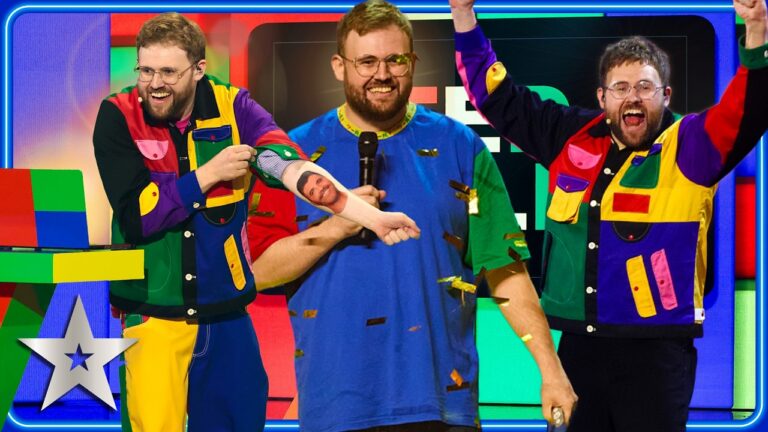
Thirty hours from Perth to London is a long way to travel without a plan. That was the joke—“We freestyle rap,” said Daniel Delby and MacShane, “we make everything up on the spot”—and the challenge. They asked the crowd to hold up objects: a disposable camera, big glasses, an oven glove. They worked the room with agile eyes and faster minds, stitching punchlines to details before the audience could even name them.
Then they went for the judges. “Who’s the most famous person you got in your phone?” they asked. “James Bond,” came the deadpan reply. The duo turned it into a rhyme about “digits double oh seven” and a wink toward Connery. Another prompt asked, “If you could be an animal for a day?” “Elephant.” They spun that too, never missing a beat. Confidence comes in many forms; this was the kind that smiles while tap-dancing on a moving rug.
“It’s so cool to actually see someone be able to freestyle really, really well at BGT.”
“I’ve never heard it that fast ever in my life,” added another. The yeses felt inevitable because the risk felt real. It is rare to see control and danger share the same breath on a comedy stage. They left with both.
Silks, doubt, and a golden buzzer
Paul Nanari from Sydney arrived with family on his mind and a promise: “I want everyone in this crowd rocking their pants off.” The laugh this line earned softened what came next. He took to the silks—“They’re called silks, right?”—and threw himself into space. First came the basics, enough to quiet doubters and draw a murmur of respect. Then he leveled up, and then again, until he pulled on a blindfold and the theater fell into that crisp, rare silence auditions only sometimes find.
“That’s one of the greatest things I’ve ever seen in my life.”
It wasn’t only the difficulty. It was the way he owned the moment, how he used pauses to let disbelief ripen. A judge who confessed, “I’m not a huge fan,” of silks added, in the same breath, “However, I’ve now changed my mind.” Another called it “actually one of the most incredible things” they had seen. The golden buzzer fell like a final chord, showering the stage, collapsing the distance between effort and recognition.
After the confetti, the words were simple and human. “If you dream something, you can make it happen,” someone said. Paul called the buzzer “a dream come true,” and you believed him because it felt like he had willed a season into clarity. This is what the show is for: not just to display excellence, but to reframe what the familiar can do in the right hands.
Reading minds, changing minds
“The odds of being born with albinism is one in twenty thousand people,” said a young Glaswegian mentalist who introduced himself as Prasov Penman. He wasn’t asking for sympathy. He was offering a lens. “I’ve lived in a body that made the world stop and stare,” he said, speaking of a mother who never saw him that way and a lesson he wanted to pass along.
He turned to Simon and asked for a memory from childhood and a name tied to it. He built connection out of play. “Place it here on your chin,” he guided, before adding, gently, “Your chin is here.” It broke the ice without breaking the spell. “They say the eyes are the windows to the soul,” he said, “and right now, I’m seeing into your soul.” When he asked for only the first letter, the answer came: “W.” You could feel the room leaning in together.
What followed, step by step, was the compassionate kind of astonishment. He spoke of imagining a word—an object nobody else could know—and sent it “from your mind to mine.” When the reveals landed, the question beneath the trick—how did he know?—shared space with a different one: how did he make us see each other a little better? His standing ovation felt as much about tone as technique.
How this season finds its heart
There’s always a danger in superlatives on a show like this. Every week brings “the best ever” and “never before.” But the highlights here earn their hype not just by going bigger, but by going more specific. Talent is the hook; story is the hold.
Rafferty didn’t just do card tricks—he made a case that sound itself can be seen. Rafiki didn’t simply stack bodies—they modeled trust as art. The Perth duo didn’t rely on shock—they turned a theater into a shared inside joke. Paul didn’t try to be superhuman—he showed just how human a flying act can feel. Prasov didn’t chase fear—he invited empathy and still thrilled. In between, smaller moments glow: a judge confessing surprise; a host saying, “You just made his dream come true”; crowd roars that sound like relief.
Even the offhand comments carry meaning this year. We heard about acts that “blamed the size of the trampoline,” and then saw performers who refused excuses. We heard a wary take on “silks,” and watched opinion turn on a dime when excellence demanded it. A panelist looked at a teenage magician and called him “a bright light.” That’s generous. It’s also accurate.
And yes, the prize—the Royal Variety Performance—hangs over every audition like a crown in the wings. You can feel it when four yeses arrive at once, when the golden buzzer freezes time, when a rap rhyme about “double oh seven” makes even the front row dance. But what lingers is smaller and closer. It’s pride on a family’s face. It’s a performer squeezing a mic with both hands because they don’t want the moment to end. It’s a line as plain as a promise: “If you dream something, you can make it happen.”
Britain’s Got Talent lives on these collisions—of skill and risk, of practice and luck, of past and now. This season’s top auditions deliver all of it, with the rare bonus of surprise that feels earned. Watch for the elegant craft. Watch for the quick wit. Watch for the reversals that turn skeptics into fans. Most of all, watch with the hope that the next voice, the next leap, the next glance across a stage will make your world bigger for a minute. This video does that, more than once. Press play and let it pull you in.