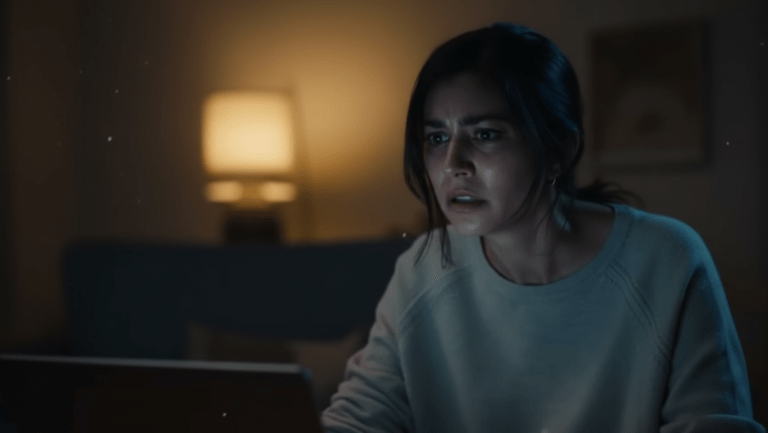
Boy Shoves Girl At Farmer’s Market — Her Dad’s Response Was Perfect
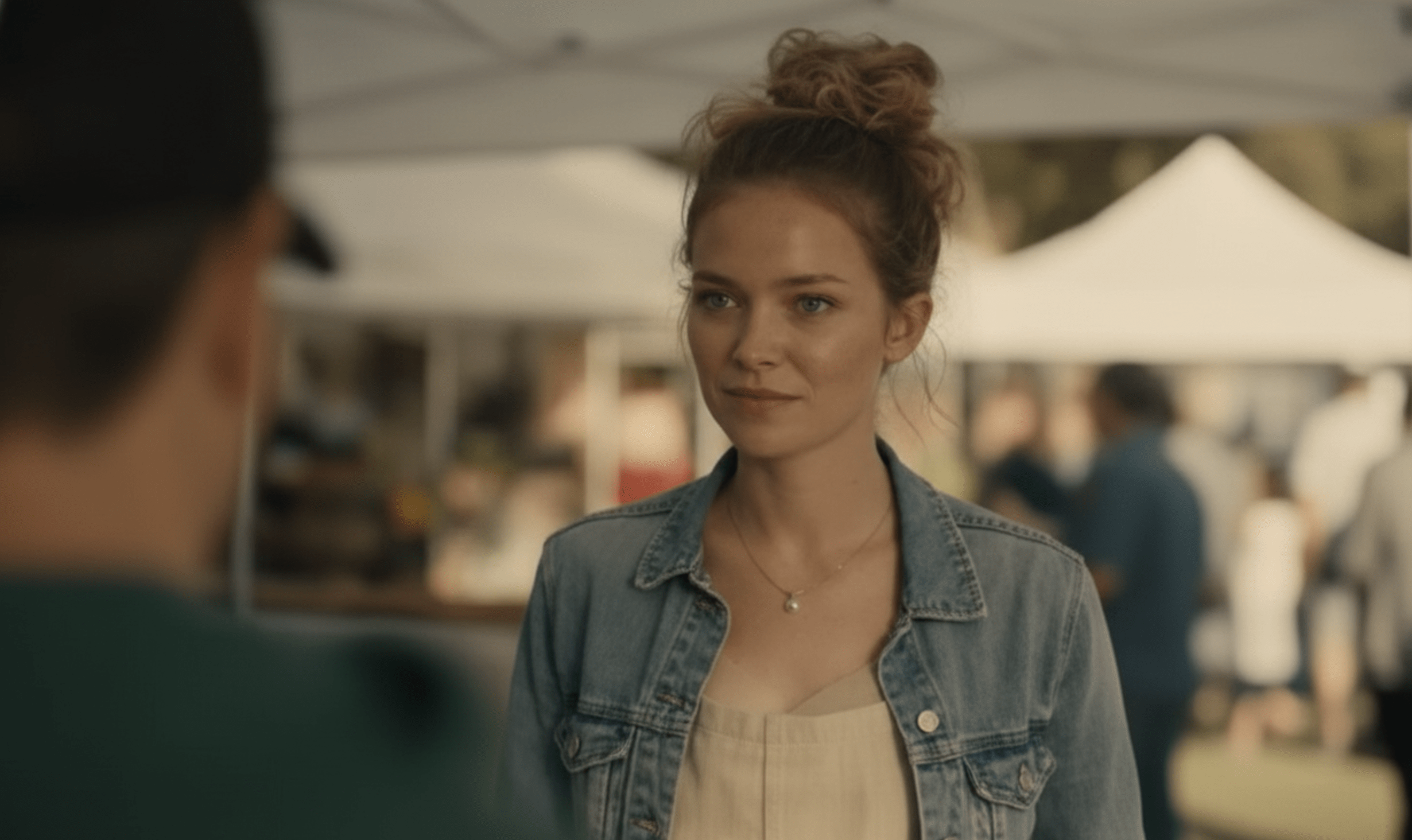
A boy shoved a quiet girl at the Saturday farmer’s market in front of everyone… But her father had been watching from one booth down all morning — and he’d set his honey jar down before he even started walking.
Ray Callahan had been up since four thirty.
Loading the truck. Driving forty minutes from the farm to the market. Setting up the booth with hand-lettered signs his wife had made before she passed — Callahan Family Farm. Est. 1987 — and jars of honey lined up smallest to largest the way she’d always done it.
Emma didn’t know he’d be here.
She thought he was fixing the back fence today. He’d told her that specifically because he wanted to surprise her — she’d started her own booth this spring, candles she made in the barn at night, and he’d watched her carry boxes to her car every Saturday morning for six weeks without asking if she wanted company because she was twenty and needed to do things herself.
But he’d come anyway. One booth down. Near enough to watch without crowding.
He’d been watching her all morning.
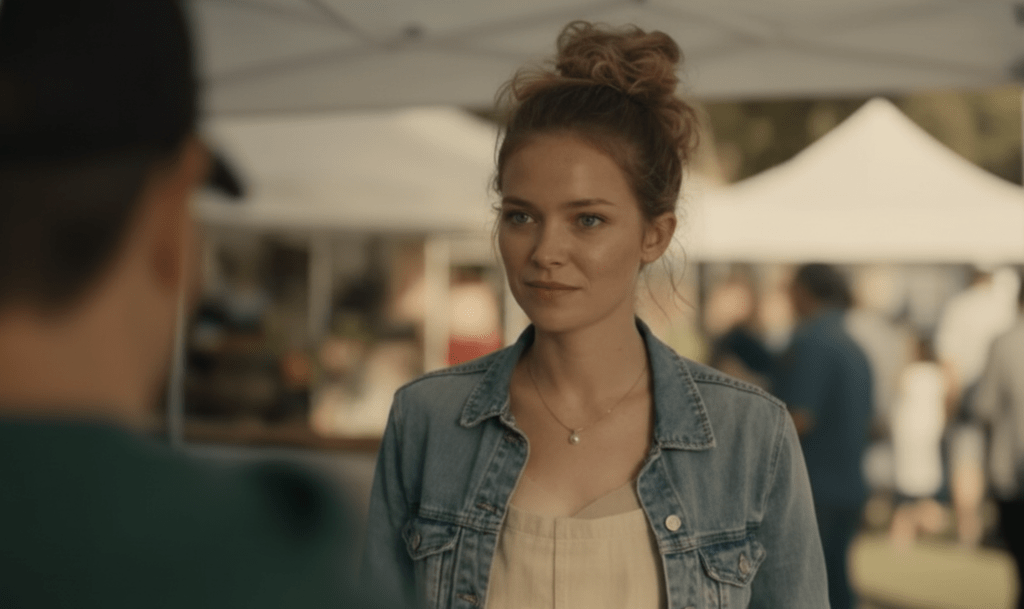
“Good morning, these are beautiful.” Confident. The way she’d been getting more confident since she started the booth — the specific confidence that comes from making something with your hands and having strangers value it enough to pay for it.
He’d been watching her talk to a woman about lavender candles when the boy arrived.
He didn’t know the boy. Young. Early twenties. The particular entitlement of someone who moved through spaces assuming they would accommodate him.
He’d stopped at Emma’s booth. Picked up a candle. Set it down without care — the way you handle things that belong to someone else when you’ve decided they don’t matter.
“How much for this one?”
Emma looked up. “The vanilla? That’s twelve dollars.”
“Twelve? For a candle?”
“It’s hand-poured. Pure soy wax. Takes about four hours to make each one.”
The boy laughed. “Four hours? Come on.”
Emma kept her voice level. “That’s the price.”
“I’ll give you five.”
“I’m sorry, but twelve is firm.”
The boy’s expression shifted. He reached for the candle again, this time his hand closing around Emma’s wrist as she moved to straighten the display.
“Everything’s negotiable, sweetheart.”
Ray set down the jar of honey he’d been holding.
He was sixty-one years old. Twenty-two years Army. The last four of those in places the Army didn’t put on official itineraries. He’d come home from those places with a bad knee and a particular way of assessing situations quickly and three rules he’d made for himself and kept without exception.
The third rule was: when someone puts their hands on your family, you move.
He moved.
Not fast. He didn’t run at markets. He didn’t run anywhere anymore — the knee wouldn’t allow it and besides, running at things was almost never the right answer. He walked. The specific walk of someone who has covered difficult ground and knows that pace and direction matter more than speed.
The boy saw him coming when he was four feet away.
Ray stopped. Looked at the boy’s hand on his daughter’s wrist.
Then at the boy’s face.
“Let go of her wrist.”
The boy released it immediately. Processed the situation — the age, the size, the particular expression, the way Ray was standing. Made a decision that Ray could see being made in real time.
“Old man, mind your business.”
Ray looked at him for one second.
Then the boy shoved Emma — both hands, hard, into the booth behind her. Jars rattled. One candle hit the ground. Emma grabbed the table edge to steady herself.
The market around them had gone quiet the way outdoor spaces go quiet — not silent, but with the specific hush of people redirecting their attention.
Ray reached into his back pocket.
The boy tensed — misreading the motion, the way people misread things when they’ve decided what they’re seeing.
Ray pulled out his wallet. Opened it. Held it out flat in his palm so the boy could read what was on the card inside.
Not a badge. Not credentials.
A business card. Callahan Family Farm. His name. His number. His address.
“That’s my farm,” Ray said. “That’s my name. And that—” he nodded toward Emma “—is my daughter.”
He closed the wallet. Put it back.
“Now you’re going to pick up that candle.”
The boy looked at the candle on the ground.
“Pick it up.”
Same voice. Same pace. The voice that had never needed volume.
The boy picked up the candle.
“Set it on the table. Carefully.”
The boy set it on the table. Carefully.
“Now apologize to my daughter. For the wrist and for the shove. Specifically.”
The boy looked at Emma. His jaw tight with the specific humiliation of someone being walked through their own consequences one step at a time in public.
“I’m sorry for grabbing your wrist.”
He stopped.
“And for the shove,” Ray said quietly.
“And for the shove.”
Ray nodded once. “Go.”
The boy went.
Ray watched him leave the market entirely — not just the booth, the whole market, the specific exit of someone who understood that staying was no longer available to them.
Then he turned to Emma.
She was looking at him. At the booth he’d set up one space over. At the hand-lettered signs. At the jars of honey lined up smallest to largest.
“You’re supposed to be fixing the back fence.”
“Fence can wait.”
Emma looked at her booth. At the candle the boy had set back carefully. At her wrist where his hand had been.
“You’ve been here all morning.”
“One booth down. Didn’t want to crowd you.”
Emma looked at him — at the sixty-one years and the bad knee and the particular way he stood and the wallet in his back pocket and the jar of honey he’d set down four booths away and walked away from without looking back.
“Dad.”
“Yeah.”
“The honey. You set it down when you started walking.”
“I did.”
“You didn’t go back for it.”
Ray looked at his empty hand. Then back at his daughter.
“Wasn’t going anywhere.”
Emma laughed — the real one. The one that had been held in since the boy’s hand closed around her wrist and was now coming out because it had somewhere safe to go.
A woman from the next booth over appeared beside them. Set the honey jar on Emma’s table.
“Someone left this. Thought you might want it back.”
Her eyes were bright with the particular brightness of someone who had been watching and approved of what they’d seen.
Ray looked at the jar. At the woman. At the twenty or thirty people who had been watching from various distances and were now pretending they hadn’t been.
“Thank you.”
The woman nodded. Went back to her booth.
Ray picked up the honey jar. Looked at it. Set it on Emma’s table. Right beside the candle the boy had placed back carefully.
“Honey and candles. Good combination.”
Emma looked at the jar beside her candles. At her father standing in her booth with his bad knee and his empty hands and his wallet with the business card and the hand-lettered signs from her mother visible one booth down.
“You can set up next to me. If you want.”
Ray looked at his booth. At the signs. At the jars lined up smallest to largest.
“Don’t want to crowd you.”
“You’re not crowding me.”
Ray was quiet for a moment.
“Okay.”
He went to get his booth.
It took him three trips — bad knee, slow progress, the particular pace of someone who has learned that things worth doing are worth doing at whatever speed they require.
By eleven o’clock Callahan Family Farm occupied two booths at the Saturday market — honey on the left, candles on the right, the hand-lettered signs from Emma’s mother spanning both.
A customer stopped and looked at the setup.
“Are you together?”
Emma looked at her father.
Ray looked at his daughter.
“Yeah,” Emma said. “We’re together.”