Bully Slapped Quiet Kid—Then His Father Walked In
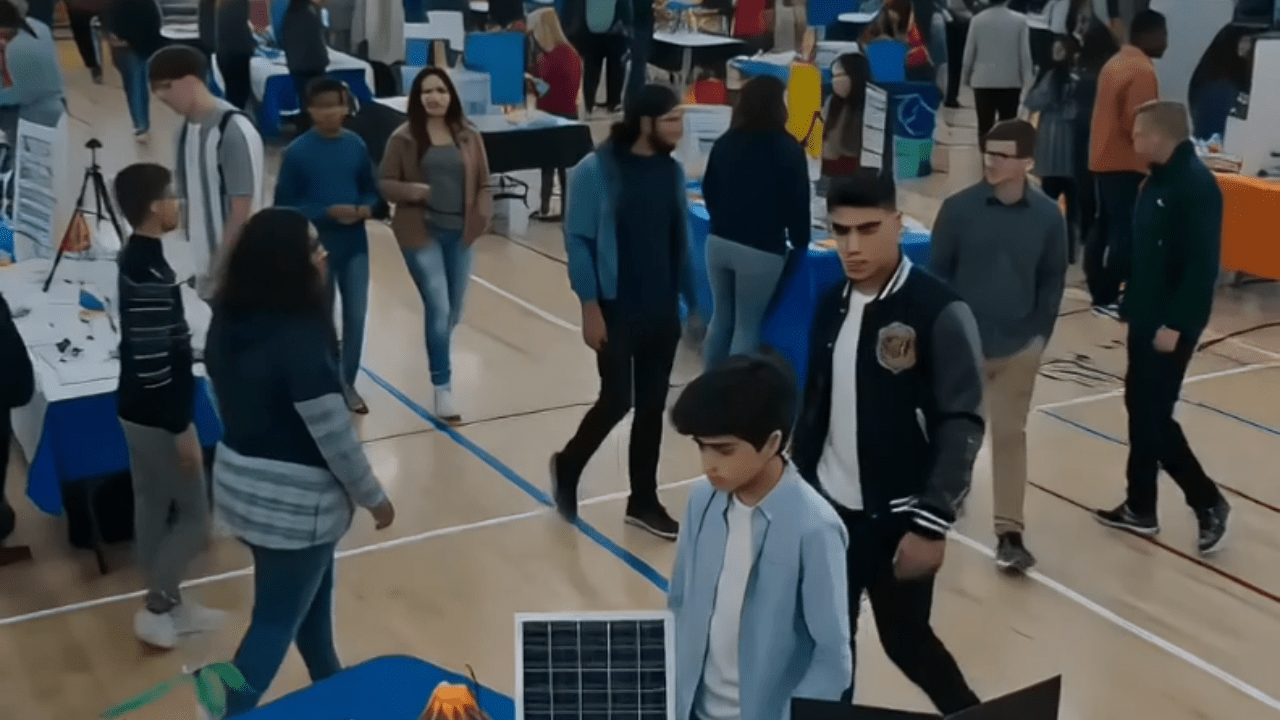
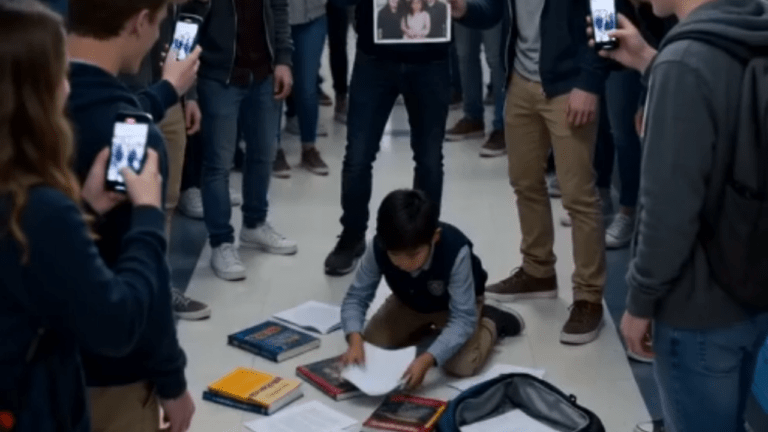
A senior boy slapped a quiet kid at the school science fair in front of everyone… But his father had just walked through the door still in his firefighter gear, carrying the lunch he’d packed that morning.
Captain Ray Torres had been on shift since six AM at Engine Company 7.
At 11:47, his phone buzzed. His wife. Two words: “Tommy forgot lunch.”
Ray looked at the lunch bag on the station counter. He’d packed it at 5:30 AM before his shift—sandwich, apple, and a napkin note: “Good luck at the fair today.”
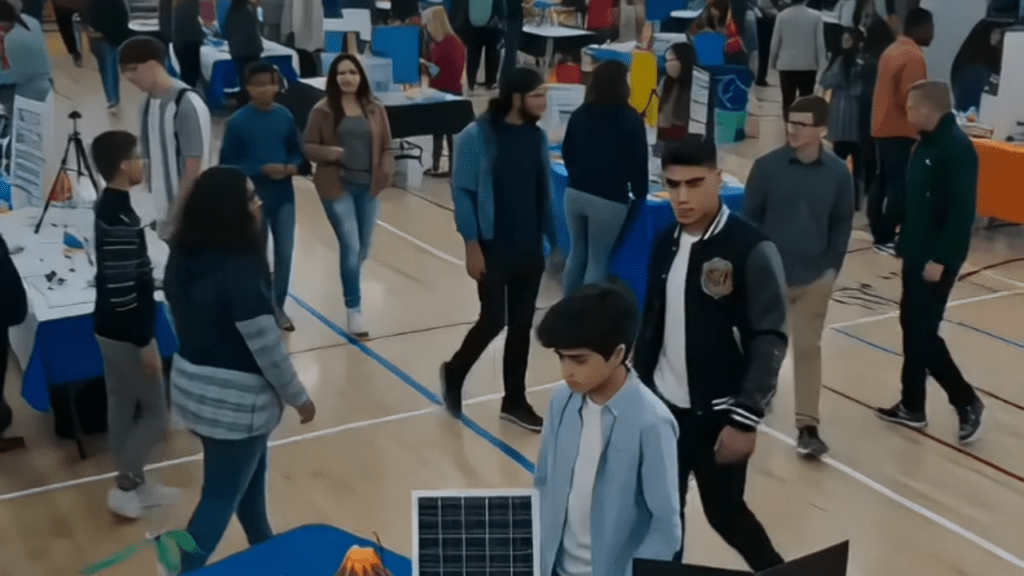
Tommy had been working on his solar-powered water purification system for six weeks. Today was presentation day.
Ray grabbed the lunch bag and told his lieutenant he’d be back in twenty minutes.
He drove the response vehicle to Jefferson High, still in full gear. No time to change. The lunch was already in his hand.
He walked through the main entrance at 11:58, following signs to the gymnasium where the science fair was set up.
He was scanning for Tommy’s blue display board when he heard it.
A sharp sound. A slap.
Ray stopped. Read the room the way he’d been trained—quickly, accurately.
His son. Near the far wall. Hand on his cheek. A bigger boy standing over him, satisfied with what he’d just done.
Ray walked across the gymnasium floor.
He reached Tommy’s display—the blue board, the working model, exactly as Tommy had described for weeks at dinner.
Ray set the lunch bag on the table beside the project. Gently.
Then he turned to the boy.
The senior had been watching Ray cross the gym, reading the gear—the jacket, boots, Captain’s insignia, Engine Company 7 patch.
By the time Ray stopped in front of him, the boy’s assessment was complete.
“That’s my son,” Ray said.
His voice carried without volume—the voice he used on emergency scenes, cutting through chaos.
“Sir, I—” the boy started.
“Don’t,” Ray said.
He looked at Tommy’s face. The mark on his cheek. His posture. Then back at the boy.
“You’re going to apologize to my son. Right now. Specifically. Then you’re going to find a teacher and tell them what happened.”
The boy stared at the Captain’s insignia. At the lunch bag on the table—a firefighter in full gear who’d driven over on his break to deliver forgotten lunch.
“I’m sorry,” the boy said to Tommy. Real. Specific.
“Teacher. Now,” Ray said.
The boy left.
Ray turned to Tommy.
“You came on your break,” Tommy said, looking at the lunch bag.
“You forgot your lunch,” Ray said.
“You’re still in gear.”
“No time to change.”
Tommy looked at the Captain’s insignia. “Did you drive the engine?”
“Response vehicle. Smaller.”
Tommy almost smiled. “You drove a fire department vehicle to bring me lunch.”
Ray looked at the lunch bag. “You forgot it.”
Tommy studied his project—the blue display board, the working model he’d built over six weeks.
“The judge hasn’t come by yet,” Tommy said.
“What time?”
“Twelve thirty.”
Ray checked his watch. 12:04.
“I can stay twenty minutes,” he said.
They stood together at the blue display board—father in firefighter gear, son beside his solar-powered water purification system.
At 12:15, Ray’s radio crackled.
“Go,” Tommy said.
Ray looked at his son. At the project. At the lunch bag.
“Open it,” Ray said.
Tommy opened the bag. Found the sandwich, apple, napkin. Read the note: “Good luck at the fair today.”
He looked up, but Ray was already walking toward the exit—Captain’s insignia catching the fluorescent light.
At the door, Ray stopped. Turned. Found Tommy across the gymnasium.
Raised one hand—brief, certain.
Tommy raised his hand back.
At 12:32, the judge stopped at Tommy’s display. Spent eleven minutes there—the longest stop of the fair.
“The working model is impressive. Did you build it yourself?” the judge asked.
“Yes,” Tommy said.
“Who helped you?”
Tommy looked at the lunch bag. At the napkin tucked inside.
“My dad. He helped me figure out the hard parts.”
The judge wrote on his clipboard.
Tommy won first place.
He called his father from the parking lot.
Ray answered on the second ring.
“First place,” Tommy said.
A pause. Then his father’s voice—quieter than the one he used on scenes.
“Good. I knew you had it.”
Tommy stood with his blue ribbon and lunch bag.
“Dad,” he said.
“Yeah.”
“You can stop packing lunch notes. I’m seventeen.”
A longer pause.
“No,” his father said.
Tommy smiled. “Okay. See you at dinner.”
“See you at dinner.”
Tommy hung up. Stood in the parking lot under the afternoon sun.
Blue ribbon in one hand. Napkin in the other.
The boy who’d slapped him found him twenty minutes later.
“Hey,” the senior said. “I talked to Principal Martinez. Got suspended for three days.”
Tommy looked at him.
“Your dad’s pretty intense,” the boy said.
“He’s a good dad,” Tommy said.
The boy nodded. “Yeah. I can see that.” He paused. “Your project’s really cool, by the way. Deserved to win.”
Tommy held up the blue ribbon. “Thanks.”
The boy walked away.
Tommy looked at the napkin again. “Good luck at the fair today.”
He folded it carefully and put it in his pocket next to the blue ribbon.
Some things were worth keeping.