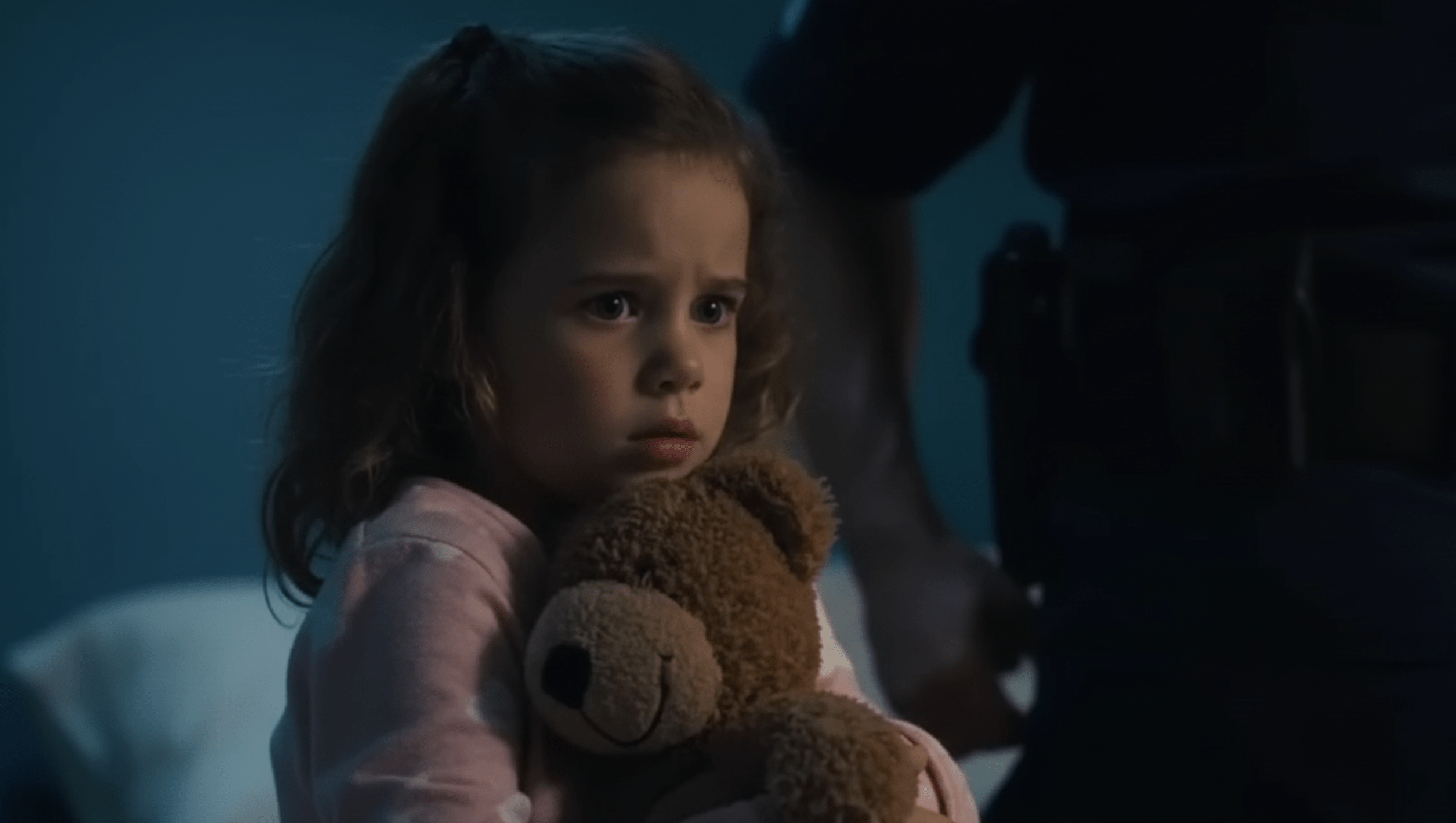
A 5-Year-Old Called 911 About a Voice Under Her Bed—Police Were Not Ready
A five-year-old whispered to 911 that someone was under her bed… But when officers looked, the truth was far more terrifying—and heartbreaking—than anyone imagined.
Dispatchers hear everything. Screams. Silence. Drunk jokes. Pocket dials. After twelve years on the job, Kara believed fear had a shape—sharp, loud, obvious. Then a voice came through her headset that changed that belief forever.
“Please come fast,” the little girl whispered. “Someone is under my bed.”
Kara straightened in her chair. The voice wasn’t playful. It wasn’t excited. It trembled like a leaf holding onto a branch in a storm.
“Sweetheart, what’s your name?” Kara asked gently.
“Mia,” the child said. “I’m five.”
“Mia, are your parents with you?”
“They’re here,” Mia whispered. “But they don’t hear it. They say I make things up.”
Kara typed as she spoke, her fingers slower than usual. In the background of the call, she heard breathing. Mia’s breathing. And beneath it… something else. A faint, irregular sound that didn’t belong.
“Mia, I need you to stay on the phone with me,” Kara said. “I’m sending police to your house right now.”
Ten minutes later, two patrol cars rolled silently onto a quiet suburban street. No sirens. No lights. Sergeant Lewis knocked, and the door opened to two visibly annoyed parents.
“She called again, didn’t she?” the father sighed. “She has nightmares. An imagination.”
“We just want to make sure she’s safe,” Lewis replied evenly. “Won’t take long.”
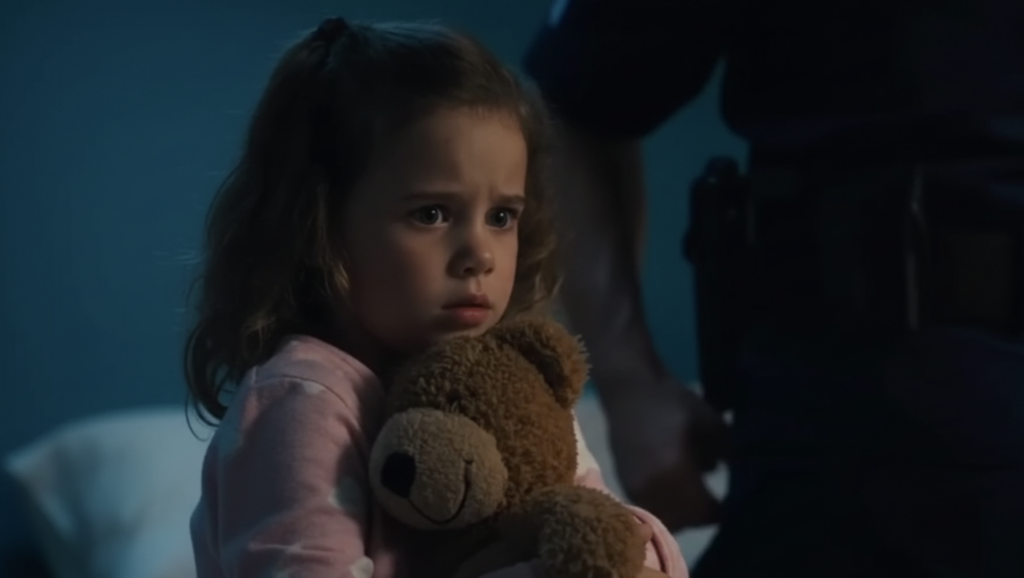
Mia was in her bedroom, sitting cross-legged on the rug in moon-patterned pajamas, clutching a worn teddy bear. She didn’t run to the officers. She just pointed.
“There,” she whispered. “That’s where the voice is.”
Officer Patel knelt and lifted the pink bed skirt. His flashlight swept across dust, a lost marble, a crayon worn down to a nub.
“Nothing here, kiddo,” he said kindly, standing up. “Sometimes sounds—”
“Wait,” Lewis said.
The room fell silent.
No shifting. No breathing. Even the parents stopped whispering in the hall.
Then it came.
A sound so soft it almost slipped past the ear. A papery whisper, dragged through metal. Then—tap… tap… tap.
Mia’s eyes filled with tears. “That,” she said. “That’s it.”
Patel dropped back down, this time angling the flashlight along the wall. That’s when he saw it: a narrow return vent hidden behind the bed frame.
The whisper came again. Clearer now.
“Help.”
Mia’s mother covered her mouth. Her father stumbled back as if the room had tilted.
Lewis radioed for backup and building plans. The vent cover came off, releasing a breath of cold, dusty air. The sound wasn’t coming from under the bed.
It was coming from the walls.
The houses were old—post-war builds with shared ductwork. Patel tapped the wall near the vent. Three knocks.
After a pause, three faint knocks answered back.
“Next door,” Lewis said.
The neighboring house was dark. No cars. No answer at the door. The handle turned easily.
Inside, the home was quiet except for the hum of a furnace. A light glowed in the utility room. Behind a dryer and a loose sheet of plywood was an open crawlspace hatch.
And from below it, a broken voice whispered, “Please.”
They found her curled on the dirt beneath the house. A woman in her sixties. Dehydrated. Shaking. Her arm pinned, leg trapped against a pipe. A medical bracelet caught the light: ALVAREZ, CAROLINE — DIABETIC.
She had gone missing the day before. Slipped while checking a noise. Fallen through an unsecured hatch. Too weak to shout. Too trapped to move.
Her voice had taken the only path left—through the vents, through the wall, into the space beneath a little girl’s bed.
Firefighters freed her. Paramedics stabilized her. She survived because a child listened when adults didn’t.
Back in Mia’s room, Sergeant Lewis crouched in front of her. “You did something very brave,” he said.
Mia hugged her bear tighter. “I didn’t want her to be alone.”
Her mother knelt beside her, tears spilling freely now. “I’m so sorry,” she whispered. “I should have believed you.”
Mia leaned into her. “We can listen next time.”
The report would be short. Clinical. Efficient.
But everyone there would remember the real lesson.
Sometimes the smallest voice in the room is the one telling the truth.