He Mocked A Homeless Kid—Then The Kid Healed Him In Seconds
A millionaire publicly dared a barefoot homeless boy: “Heal me for $1M”… But the boy did it in 18 seconds and everything changed.
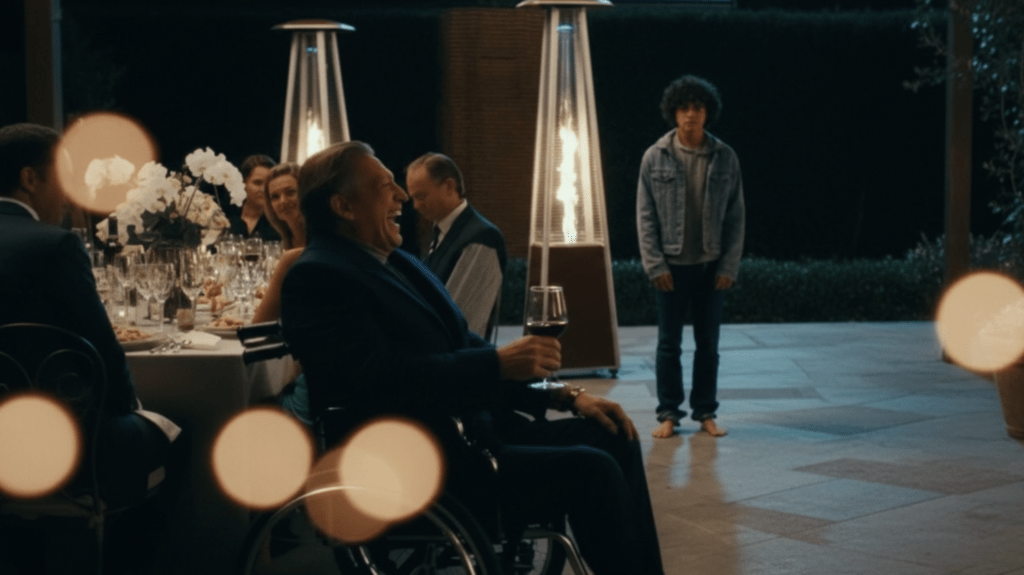
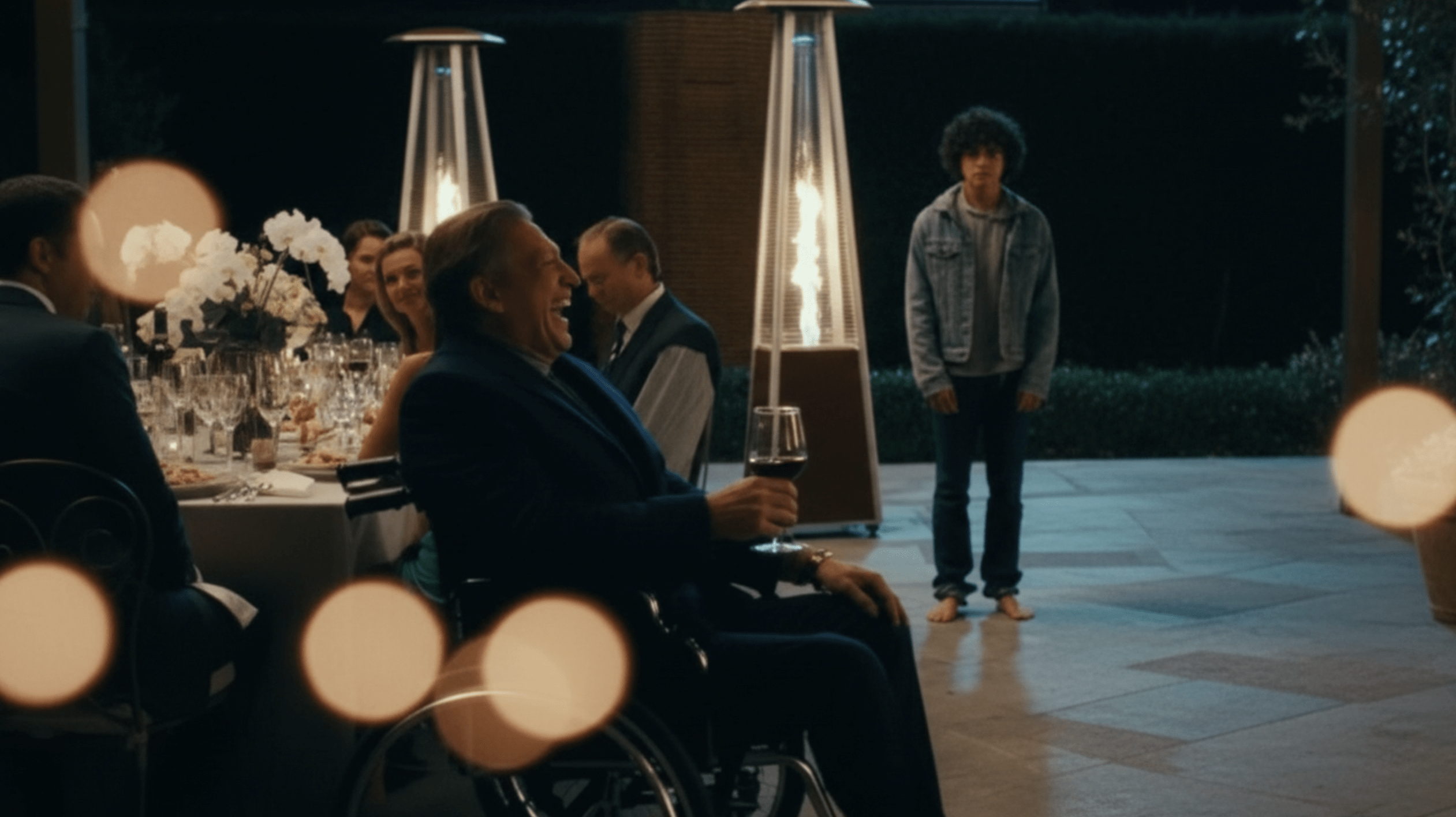
“Get this dirty black kid away from my table before he steals something or gives us all some disease,” Gregory Hamilton said loud enough that the patio heard him.
The string lights flickered. Glasses paused mid-clink. Miles Underwood looked up from behind the shrub line and kept his eyes on Hamilton’s left leg.
“Sir, please. I can help your leg,” Miles whispered.
“How long would this miracle take, boy?” Hamilton sneered.
“Seconds. The journal said seconds.” Miles’s voice shook.
Laughter bloomed like a cold wind across the patio. Hamilton reached for his checkbook and smacked it on the table. “Perfect. Heal me for $1 million. When you fail, the police take you.”
“Okay,” Miles breathed.
Thirty minutes earlier he had followed the smell. Garlic butter and ribeye had led him to the Sterling Oak dumpster and a trash pile of journals. He’d smoothed out a coffee-stained issue of the Journal of Emergency Medicine and read one diagram once.
“My mom used to call it his gift,” Miles remembered the counselor saying. “Photographic memory.”
He’d memorized fifty-one pages. Anatomy, protocols, diagrams. He carried the Ziploc bag in his jacket like armor. He carried his mother’s hospital wristband like a map.
“Someone please listen.” The line his mother said in the ER looped behind his teeth.
“Is it a stroke?” a woman asked as Hamilton’s left leg locked.
“Call 911,” someone barked. Hamilton clenched at his thigh. The foot rotated inward, static and cruel.
“Ambulance is eighteen minutes,” a guest said after a call. Word traveled like frost; eighteen minutes.
Miles read the signs. The rigid, rotated foot. The way Hamilton’s hand pressed at the glutial area. Not a stroke. Acute piriformis or glutial spasm compressing the sciatic nerve. The journal’s words were a photograph in his head: two inches inferior to the greater trochanter, lateral 45°, sustained pressure 15–30 seconds.
He stepped out of the darkness. Shrubs scraped his arms.
“Sir, there’s someone,” Brandon said, pointing.
Hamilton saw him and spat. The crowd tightened like a net. “Get this dirty black kid away from my table.”
Miles didn’t look away from the leg. “I can help.”
“You?” Hamilton barked. “You’re filthy. You’re nobody.”
“Your leg is paralyzed because of muscle compression on the sciatic nerve,” Miles said, quieter now. “It’s not permanent. I can fix it if you let me.”
“Prove it,” Hamilton sneered, sliding the checkbook toward him. “Heal me for a million dollars. Fail and we call the police. Juvenile detention tonight beats the bridge.”
Miles felt security’s hand on his shoulder. He didn’t flinch. “Yes, sir. I still want to try.”
Hamilton grinned like a shark. “Fine. Show us what the garbage taught you.”
Miles opened the Ziploc and held up the pages.
“This is where I learned. Found it in your recycling thirty minutes ago.” He tapped the title. “Journal of Emergency Medicine, July 2024. Acute sciatic nerve entrapment from glutial spasm. Protocol says fifteen to thirty seconds of sustained pressure at eight to twelve pounds.”
Silence hit the table. Hamilton snorted. “You read it once?”
“I remember everything I read,” Miles said. “They tested me when I was six. I’ve been learning medicine for eight months since my mom died.”
Hamilton’s smile flickered. The man in the wheelchair listened, pain and impatience trading places on his face. “Wash your hands,” he said finally.
James the waiter ran water, soap foamed under Miles’s rough fingers. He scrubbed thirty seconds. Dried with a paper towel like a professional. The patio watched.
“Stay in the chair. Don’t move,” Miles instructed, kneeling at Hamilton’s side. Up close the leather smelled like polish and old perfume.
“I can’t promise it won’t hurt,” Miles said.
“Do it,” Hamilton whispered.
Miles found the greater trochanter through fabric, then two inches inferior, lateral, at forty-five degrees. He set both thumbs and pressed. The muscle felt like hardwood.
“Count!” he said.
“One.” Victoria’s voice cracked.
“Two.” Brandon’s phone hovered like a blade.
“Three.”
Hamilton’s breath hitched, then a sharp exhale. “Oh—God, oh—”
“Fifteen.”
The pressure made Miles’s arms burn. He kept his thumbs steady. He watched Hamilton’s face go from white to crimson, sweat bead and fall. People around them counted like witnesses at a trial.
“Eighteen.”
Something inside Hamilton shifted. A soft, audible pop like a joint finding its place echoed as if the patio itself had exhaled.
“Oh. Oh my God,” Hamilton gasped.
Miles stepped back. Hamilton flexed his toes. Motion came. Tears sprung to Victoria’s eyes. Phones erupted. “I got it!” Brandon shouted, voice high with disbelief.
Hamilton pushed himself from the wheelchair with hands that trembled and stood on both legs. He took steps, raw and shaky, and then laughed and cried at once.
“You’re nine,” he said, kneeling, as if the fact was a miracle.
“Nine,” Miles answered.
“You saved me in eighteen seconds,” Hamilton said, voice cracking. “You did what three physicians couldn’t.”
“Why would you do this?” a man asked from a neighboring table.
“My mom—” Miles stopped; the wristband felt like a heart in his pocket. “When my mom was dying, she said, ‘Someone, please listen.’ For six hours she asked. No one listened until it was too late.”
Hamilton’s face changed in a way that had nothing to do with pain. He pulled a checkbook, opened to a page, and wrote a million-dollar figure in blue ink.
“You earned this,” Hamilton said, handing the check forward.
“Take it,” multiple voices urged. “It’s life-changing.”
Miles looked at the paper. He looked at his own shoes, the cracked concrete underfoot, the wristband in his jacket. He shook his head.
“I didn’t do it for money,” he said so quietly that the cameras leaned in. “I did it because someone finally listened tonight. Because when Mom asked for help, nobody listened.”
Hamilton’s chest heaved. “Name?”
“Miles Underwood.”
“Miles Underwood,” he repeated, like a benediction. “Don’t take the check.”
He tore the check in half. Then in half again. The pieces fluttered onto the white tablecloth, ridiculous confetti.
“Money is easy,” Hamilton said. “What you need is a future.”
Phones lit with notifications. Videos posted seconds earlier exploded into the internet. “#18SecondMiracle” began trending. Reporters arrived, shoes squeaking on gravel.
“Miles, what do you want?” Hamilton asked.
“To learn,” Miles said. “Real school. Real books. Real teachers. So no one else’s mom dies because nobody listens.”
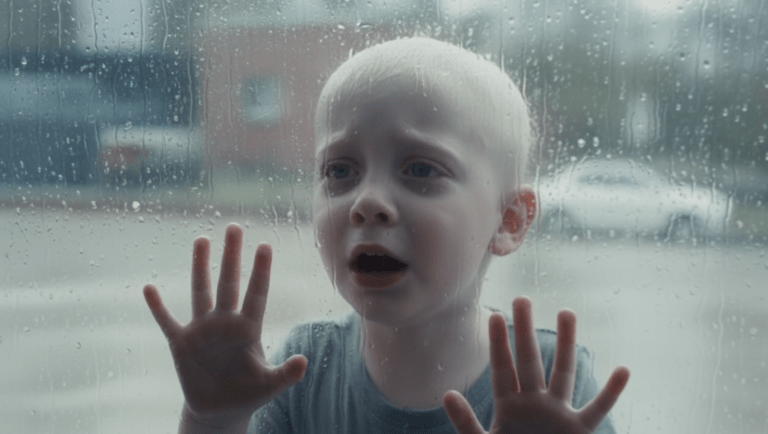
Dr. Patricia Moore of Temple University Hospital pushed through and crouched before him. “You’re the window kid,” she said, the recognition like a key turning.
Miles blinked.
“For months we saw a child watching rounds,” Dr. Moore said. “We thought social services should be called. We never imagined—”
“Enroll him,” Hamilton told her. “Give him a place in your observation program tomorrow. Shadow shifts, conferences—whatever he needs.”
“And a home,” Victoria said through tears. “Tonight. A real bed.”
Hamilton dialed three numbers at once, his voice steady in a way it hadn’t been at dinner. “Unit 8B at Spruce Street, furnished tonight. Full scholarship at Friends Select. Education trust. Two million to fund everything through medical school. A clinic named for Rebecca Underwood. Half a million seed funding now.”
“Done,” Dr. Moore said, voice steady with sudden, practical joy. “Temple will commit staff and training.”
Miles’s wristband felt warm in his hands. He pressed it to his lips.
“You’ll come to Temple through the door instead of the window,” Dr. Moore said, smiling.
“Welcome,” Hamilton added, and he meant it.
News vans queued. Tokens of astonishment streamed live. Hamilton’s phone showed timestamps: 8:48:40 to 8:48:58. Eighteen seconds. The footage spread like light.
“Promise me one thing,” Miles said, voice small and fierce. “Do something for people who still sleep under bridges.”
“Rebecca Underwood Memorial Clinic,” Dr. Moore said immediately. “We’ll open near Mile 34. Emergency diagnostics, walk-in care, outreach.”
Hamilton agreed on the spot. “Half a million from Hamilton properties. Wire it Monday.”
Victoria and Thomas made calls of their own. The night contracted into possibility.
They put Miles in a furnished unit by midnight. He stood in a kitchen full of food and realized the refrigerator door did not rattle like a shelter bin. Clothes lay in piles, sizes marked. A bed sat like an island of permission.
He slept that first night with his shoes on until the second hour when he finally unclipped them and lay with the hospital wristband on the nightstand.
“You’ll start Monday,” Dr. Moore said at breakfast. “Observation program. Friends Select will begin admissions.”
“Really?” Miles asked.
“Really,” Hamilton promised. “And that trust will make sure you don’t ever have to buy a book with lint.”
Months stitched themselves together. Miles’s first week at Friends Select smelled like new paper and possibility. His uniform fit. Teachers learned to be startled into humility by a nine-year-old who could cite a journal article from memory and say the exact technique to decompress a nerve.
The Rebecca Underwood Memorial Clinic opened three months later on a cold February morning. Miles cut the ribbon with the same hands that had pressed thumbs into Hamilton’s hip. A stopwatch logo read 18s beneath the clinic’s name.
“This exists because someone listened,” Dr. Moore said in the ribbon-line press. “Because seconds matter.”
They saw two hundred and twelve patients that month—people who had avoided care for years. They healed sprains and mended wounds, but more importantly they listened. One patient who’d been told pain was imagined received a diagnosis and an antibiotic that turned his life around. A mother who had been refused treatment for her fever in another ER left with a plan and hope, for the first time in years.
Miles returned to the overpass every Saturday. Twenty-three kids gathered around him on cardboard and tarps in a circle of concentration. He taught first aid, cataloging, remembering.
“You come back because you remember where you started,” one child asked.
“Because someone saw me,” Miles said. “Now I see you.”
Friends Select created the Miles Underwood Scholarship. Five homeless or housing-insecure kids a year would receive full tuition and support, selected by a committee that included Miles. They named a reading room after his mother; a plaque read: Someone listened.
Hamilton’s career shifted. Investors asked what had changed. He told them about a nine-year-old who taught him the only kind of leverage that mattered: responsibility. He redirected funds toward access clinics and training programs for residents on listening and rapid diagnostics in underserved communities.
One year from that night Miles stood at Temple’s annual medical conference. Ten years old. The youngest speaker in the hospital’s history. He spoke about diagnostic bias and the cost of silence. The room rose, then rose again, applause washing over him like rain. Hamilton sat in the front row and wept openly.
“Do you ever regret tearing that check?” Victoria asked one afternoon, half laughing, half crying.
“No,” Miles said, folding his hands. “Money would have fixed some things. But the life I wanted didn’t start with a check. It started with someone stopping and listening.”
The Rebecca Underwood Clinic kept its doors open and grew. Monthly numbers ticked upward. The overpass children learned to stitch, to record vitals, to find landmarks on models and each other, to turn trash into textbooks and observation into power.
Thomas Reed never billed for the physical therapy he got through the clinic. He sat in on sessions, came to suturing workshops, and brought his company to sponsor community health days.
Hamilton wrote op-eds about accountability and structural blindness. He funded scholarships, yes, but he also instituted annual audits of the ERs he had influence over, demanding metrics on wait times for uninsured and underinsured patients. He brought Temple and community clinics into partnerships with his development projects so healthcare access traveled with housing.
Miles kept his mother’s wristband on the nightstand, yellow plastic against polished wood, a small stubborn proof that one person’s life could pivot an entire system.
At twelve, Miles led a class at Temple for new residents about what to do when a patient says “someone, please listen.” He closed his lecture with the exact line his mother had spoken, and the room fell utterly silent.
“Listen,” he said. “And when you can, act.”
Justice had a shape: a clinic named for the woman who’d waited too long, a scholarship fund that opened doors, a trust that paid for textbooks and tuition through medical school, and a young man who taught others how to see the invisible.
Karma landed in the quiet things, not as vengeance but as restitution. Hamilton’s public humiliation became his reckoning and his redemption. Miles’s rescue was structural and personal: a home, an education, and a mission to make sure other people’s mothers would not have to beg in a waiting room.
Weeks after the conference, Miles walked the mile from Spruce Street to the old overpass with a backpack and a small team of kids he tutored. They set up chairs on concrete and pulled books from a rolling cart labeled “Underwood Library.”
“Ready?” he asked, scanning faces.
“Ready,” they chorused.
He flipped open a dog-eared anatomy book and pointed to a diagram. “This is where we start,” he said. “This is where we make sure they listen.”
A year later, the clinic’s intake log listed Rebecca Underwood as the founding patient in spirit, a record in a ledger that read like a promise kept. The line that used to read, “someone please listen,” was now followed by, “And someone did.”
Miles kept a snapshot taped to the inside of his locker: a grainy phone screenshot with the timestamp 8:48:58 and a caption that read “18 seconds.” He looked at it whenever he felt small and remembered that sometimes seconds decide lives.
He never forgot the patio that night—the laughter, the insult, the roar of cameras, the pop, the checkbook torn, the hands that reached for him. He remembered Hamilton’s first words after the procedure, raw and honest: “You gave me my life back.”
Miles answered then and he answers still with the same work: teaching, healing, watching windows until they become doors for others.
The clinic stayed open. The scholarship continued. Friends Select interviewed its first cohort of Miles scholars with him on the panel. Hamilton’s name stayed in the paper, but mostly the headlines read the same way they did that night—brief, shocked, then full of action.
One small, yellow wristband sat under the lamp on Unit 8B’s nightstand, and if you asked Miles what justice looked like he would show you the clinic’s monthly report, the kids in his Saturday circle, and the long list of people who no longer had to wait for someone to notice.
He had not come from money. He had come from loss. But he left behind a system a little less silent.