He Called the Busboy “Lazy”—Owner Banned Him and Promoted the Boy
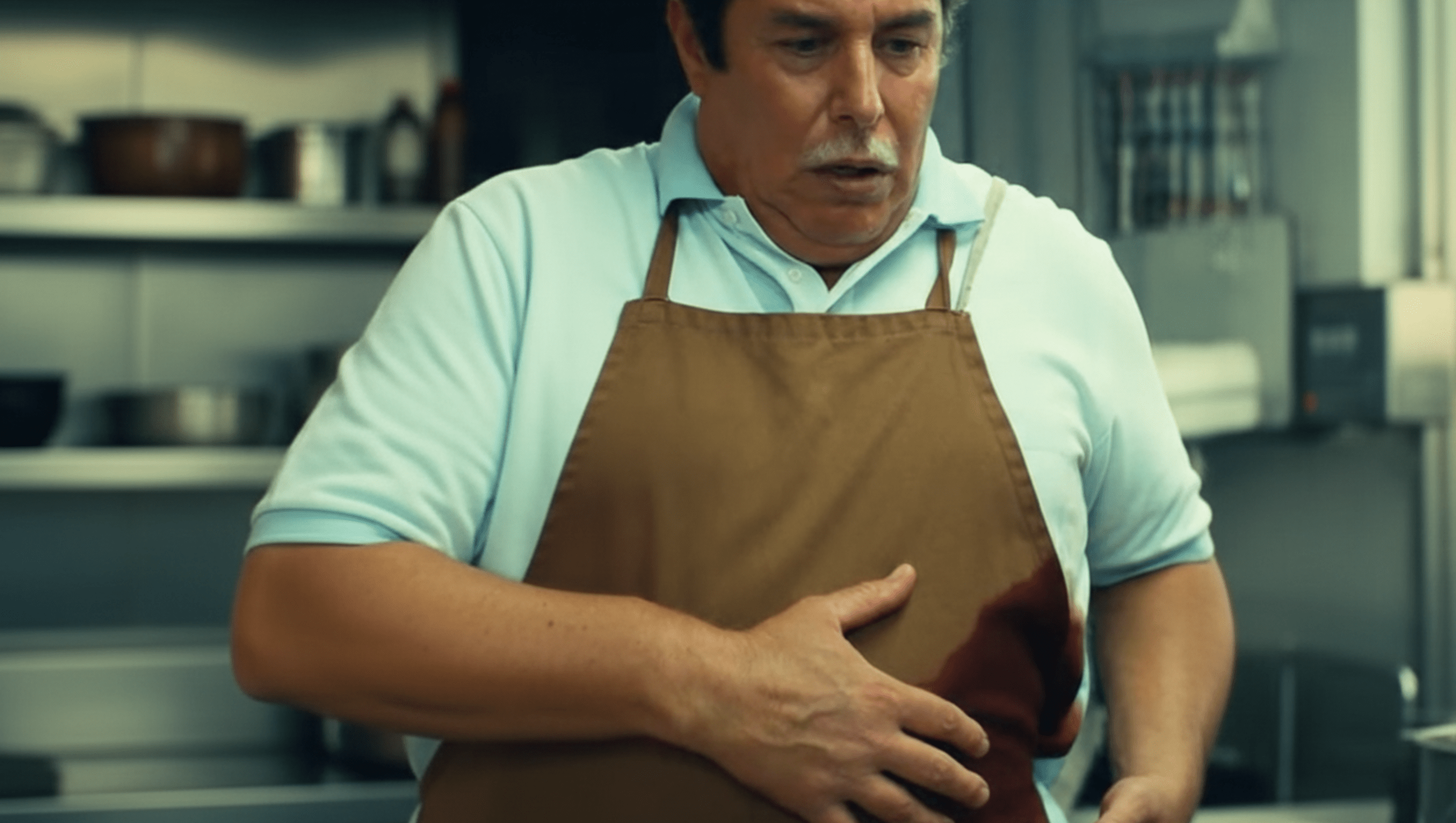
He called Marco “lazy and stupid” across a crowded diner… But the owner banned the customer and promoted the busboy on the spot.
“He’s lazy… and stupid,” the man snapped, loud enough for half the room to hear.
Marco’s hands tightened on a stack of plates. He kept his head down. “Sorry… sorry, sir,” he mumbled.
The suit man sneered. “Sorry doesn’t cut it. Clear my table.”
“You okay, Marco?” Maria asked from the side. Her voice was soft but sharp.
“I’m fine,” he lied. The linoleum felt like a judge.
The bell above the kitchen door jingled. Joe came out slow, boots thudding, face blank until he saw the scene.
“What’s the problem here?” Joe asked, voice low.
“That boy—” the customer pointed, manicured finger. “He’s incompetent. I waited ten minutes. I don’t even understand him.”
Joe looked at Marco. He looked at the customer. “This boy walked a thousand miles to get here,” Joe said, calm as a stone.
The man blinked. “What?”
“He walked a thousand miles,” Joe repeated. “He left everything to build a life. He’s learning. He’s working. You? You’re just complaining.”
A hush moved like a wave. “You can’t even walk to the door without complaining,” Joe spat, and the diner gasped.
“You’re banned,” Joe finished. “Banned for life. Get out.”
The man stormed out. The bell sounded like a verdict.
“You’re doing a good job,” Joe told Marco, hand landing on his shoulder. “Keep your head up.”
Then Joe smiled, loud enough for the room: “Starting tomorrow, you’re a waiter.”
“Wait—” Marco started, stunned.
“Pack your things,” Joe said. “Tomorrow, wait tables.”
The room erupted into applause. Maria hugged Marco until he couldn’t breathe. “You deserve it,” she said.
That night, Marco sat on his cot and stared at the apron folded on the chair. He tasted hope and it was almost foreign.
*
“First, table numbers,” Maria said, sliding a pad to him. “And breathe.”
“I don’t know the words,” Marco admitted, cheeks hot.
“Then point and smile,” she said. “People understand a smile.”
“Will they… judge me?” he asked.
“They already judged you,” she answered, “now let them be surprised.”
She taught him phrases, the way to carry three plates, how to read faces for what they wanted. “Watch their eyes,” she told him. “They’ll tell you everything.”
Orders came hard at lunch. Plates clattered, the kitchen yelled, and Marco’s hands shook.
“Two coffees, medium,” he called, trying to make his handwriting legible.
“Make it strong,” a woman snapped at him when he dropped a plate.
Marco froze. Maria touched his arm. “One thing at a time,” she said.
He found a rhythm: two plates, a smile, and a little English learned between bites of toast.
But some customers tried him. “I’ll wait for someone who speaks English,” an older lady sniffed.
“People think they can push you off,” Maria said at the end of the day, tired. “Don’t let them.”
Joe watched quietly, his weathered hands folded. The scars on his arms glinted under the lights. Marco wanted to ask about them, the burns that mapped his skin, but he didn’t know how.
“You earned it today,” Joe said finally. “You stood tall. Don’t forget that.”
Marco slept little. He wrote English phrases on the walls. He practiced table numbers until they felt natural in his mouth.
*
Two nights later the bell slammed. The banned man was back, red-faced, louder.
“I demand to be served!” he bellowed. “This is a free country!”
Joe stepped out like a depth charge. “I told you you were banned,” he said. The man sneered. “You and what army?”
Joe didn’t answer with force. He moved the way a man who had broken through fires moves—with a steady, terrible calm. He grabbed the man by his collar, dragged him out, and threw him onto the sidewalk.
When the door shut, the diner let out a breath it had been holding for days. Marco felt the weight lift, but it also shifted something else in him—questions about why Joe defended him so fiercely.
That night, in the kitchen after closing, Joe poured coffee for Marco. “You did fine,” he said. “You’ve got grit.”
“Why did you do it?” Marco asked. “Why defend me?”
Joe’s fingers traced a scar. He didn’t look away. “When I was your age, people judged me too,” he said. “I lost things because I listened to other people’s rules. I make sure I don’t let that happen here.”
“Those scars?” Marco asked, nodding at Joe’s forearms.
Joe’s jaw tightened. “I was in a factory once. There was a fire.” He swallowed. “I was young. I made choices I still pay for.”
“I don’t understand,” Marco said.
“You don’t have to,” Joe answered. “Just work hard.”
But the past was not done.
*
Three days later the bell jarred again. The same man pushed in, but this time his eyes were different—empty like someone who had been looking for a target for too long.
“Where is Henderson?” he snarled.
Joe’s face went dark. “He’s in his office,” Maria warned. “You can’t—”
The man barreled past and stomped toward Joe’s small back office.
Marco ran. “You can’t go in there!” he shouted, grabbing an arm. The man shoved him away. “Get out of my way, you little—”
“You’re not going anywhere near him,” Joe said, stepping out.
“You and what army?” the man spat again.
Joe answered with a hand on the man’s collar and the force of a lifetime behind it. He dragged the man out and flung him onto the sidewalk like trash.
The man stumbled, and then he returned—this time with something metal in his hand. “Where is he?” he screamed.
“Stop!” Maria cried. “Please—”
The room froze. The man’s hand lifted, a silver barrel catching the light.
“Put the gun down,” Joe said. The voice itself could have been a command to wind and tide.
The man didn’t move.
“You don’t understand,” he hissed. “You ruined my life. You took everything.”
Joe didn’t shrink. “I saved people that night,” he said. “I did what I could.”
“My sister died!” the man screamed. “You left her!”
The name hit harder than a punch.
“Uncle!” Maria screamed.
The word sank through the diner. The man flinched at her voice. He looked older suddenly, human and torn and red with grief.
“Stop it, Uncle,” she sobbed. “Please, don’t do this.”
He turned, face raw. For a beat, he aimed blindly—and Marco moved.
“I didn’t think,” Marco said later. “I just…moved.”
He threw himself between the gun and Joe.
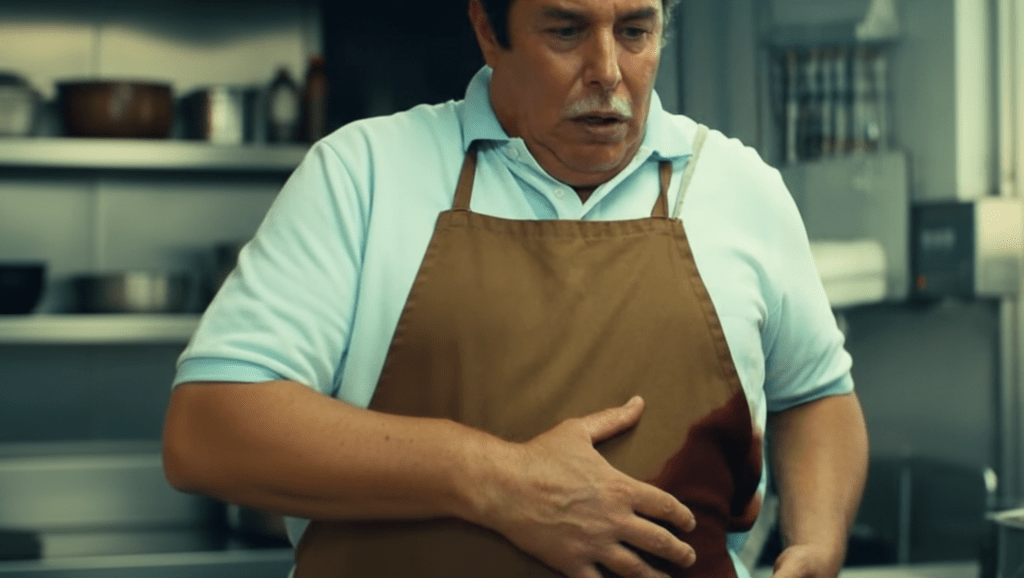
A shot like a cough. A hollow fullness that swallowed the air.
Marco went down.
“Marco!” Maria screamed, voice breaking.
Chaos and slow motion. The silvered gun swung and landed under a table. Mr. Henderson tackled the shooter. They rolled, limbs and desperation, and the diner smelled of gunpowder and coffee.
“Tell me!” Mr. Henderson demanded, pinning him. “What do you want? What do you want from me?”
“The truth!” the shooter rasped. “You said it was an accident. But you knew. You let her—”
“You fool,” Mr. Henderson spat. “I tried. I tried to save everyone.”
“You left my sister to burn!” the shooter shrieked.
Maria covered her mouth. “No—no—”
The word “fire” cracked the room open. Someone sobbed. The past rose like smoke.
Paramedics arrived minutes that felt like hours. Marco’s face was pale, eyes fierce. They told Maria he was being rushed to surgery. She clung to his hand until they sedated him.
“Stay with me,” she begged in the ambulance, fingers pinned under a blanket of beeping machines.
“I’m here,” Marco mouthed. Pain shuttered his voice into a gurgle.
*
Hospital lights are honest lights. They show the bruise beneath everything.
Mr. Henderson sat across from Marco, fingers clenched. “I should have told you,” he said. “I should have told everyone.”
“Tell me what?” Marco croaked.
Joe’s confession began in pieces. A factory, long ago. Lint and sparks, warnings ignored, safety corners cut. “I was in charge,” he said. “I thought I could keep costs down. I thought I could keep people working. I failed.”
“You saved people too,” Maria said once, kneeling beside the bed. “You brought many out.”
“I brought some,” Joe answered. His voice broke like old rope. “I left some.”
“You carry it so hard,” Marco said, the edge in his voice surprising them both.
“Everyone carries things,” Joe replied. “I just carry more noise.”
The prosecutor’s office moved quickly. The shooter—Maria’s uncle—was arrested, charged with attempted murder and related counts. The town that had once gathered for pie now gathered in court.
“Why did you do it?” Detective Miller asked the shooter during the interrogation.
“He lied,” the shooter said, voice a low brittle thing. “He lied about the fire. He lied about what happened to my sister.”
“Did he lie to you about the dead?” the detective pressed.
“He lied and they buried the truth,” the shooter said. “I wanted it unearthed.”
During the trial, stories spilled out. Former workers came forward with stories of outdated sprinklers and ignored memos. The defense danced on nuance, but the prosecution had a simpler story: the shooter brought a gun into a diner and tried to kill a man who had been forgiven and had tried to make amends. The jury saw a grief-stricken man turned destroyer, and they delivered a verdict: guilty.
The shooter was sentenced. He would pay time for the terror he brought into the diner, for the attempt to take another life. Justice, odd and uneven as it often is, arrived. The town exhaled.
*
Marco woke to white walls and the tight smell of antiseptic. Pain lapped at him, constant and rude.
“Hey,” he croaked.
Maria, eyes rimmed in red, laughed and cried at once. “You idiot,” she said. “You scared me out of my mind.”
“You would have done the same,” Marco said, then smiled weakly.
The bullet had nicked his lung and punctured muscle. He would heal. It would be slow, but the doctors promised movement back into life.
Mr. Henderson didn’t leave Marco’s side. He kept saying, “I’m sorry,” like a prayer.
“You don’t need to say sorry forever,” Marco whispered. “Do the thing you promised. Help them.”
Joe nodded, and then he began to do it. He walked to families who had lost people in the fire and spoke his name and the truth aloud. He sat in kitchens and let people say what he had never let them say. He went to town council meetings, he wrote letters, and he gave money towards safety upgrades in factories.
“I can’t fix everything,” he told a woman whose brother had died. “But I can make sure someone hears you now.”
*
Maria couldn’t live with the quiet in her chest. She wanted to do more than grieve. She wanted to make sure the word “accident” never meant “I don’t have to answer.”
She started small: a meeting in the church basement. People came—families who had lost loved ones to neglect, workers who had been scared to speak up, lawyers who wanted to help. She called it the Esperanza project at first, then the Esperanza Foundation. It would help victims of industrial disasters with legal aid, counseling, and advocacy.
“We want safer workplaces,” she told the room. “We want to make sure factories have working sprinklers, up-to-date exits, and people who listen when alarms go off.”
“You think one foundation will fix it?” a man asked.
“No,” she said quietly. “But it’s a start.”
Joe donated to the fund. Marco gave up a portion of his saved tips. The town that had once watched from porches now came in to volunteer.
“The truth matters,” Maria told reporters months later. “If we don’t hold people accountable, it repeats.”
Escalation came in the form of a public hearing. Company executives were subpoenaed. There were apologies that smelled like lawyers, but there were also new regulations and small fines that suddenly mattered.
*
Months after the trial, the diner—now refurbished and renamed “The Phoenix Diner”—reopened in a bright little strip on the other side of town.
“Yellow, like hope,” Marco said, sliding a coffee over to a regular.
“You two did this?” a woman asked.
“We did,” Marco said, and Maria laughed, wiping her hands on a towel. “We all did.”
The menu mixed eggs and empanadas, meatloaf and arepas. The house special was named “Grit” in Joe’s honor.
People came. Survivors, lawyers, families who had stood at the trial. The diner hummed again, this time with the deliberate sound of people who had chosen to return.
One morning Detective Miller stopped by with a paper. The shooter’s appeal had been denied. Justice had, for the time being, held.
Joe received letters too—some that forgave, some that could not. He read them all. He knew he could not erase the past, but he could try to make the future safer.
*
Years passed like slow-burn seasons. Marco’s scar faded in the mirror but remained like a map. Maria stayed fierce, the foundation’s director. Joe found a small house in Vermont and occasionally sent postcards: “Keep shining,” he wrote.
Marco and Maria married under a willow beside the community center. “You always jump in,” Maria teased during their vows. “You always will.”
“Not if you ban me first,” he answered.
They laughed. The community came. Detective Miller cried during the vows. Old Mrs. Rodriguez baked a pie that tasted like home.
The Esperanza Foundation grew. It sponsored safety inspections, gave emergency grants to families, and pushed for clearer laws. Corporations grumbled but the city council listened. A new rule required up-to-date sprinkler systems in older factories. Names that had been quietly whispered into kitchen drawers became public and were given consequences.
“You did what you could,” Marco told Joe once over the phone.
“You kept my kid alive,” Joe answered. “We both kept something alive.”
One spring afternoon, Marco and Maria stood on the porch of their modest house. Their daughter, Sofia, chased butterflies through a small garden of herbs and beans. Maria’s second pregnancy showed like a soft curve on her belly.
“Happy anniversary,” Marco murmured, kissing the soft of her neck.
“Happy anniversary,” she answered.
They watched Sofia tumble into giggles and then run back for more. The scar on Marco’s chest felt like a medal. The pain of the past had not left, but it had been folded into something else: purpose, family, work that mattered.
The shooter sat in a distant prison cell, sentences being carried out. He had tried to unearth a truth and instead brought himself ruin. The court had found him guilty of attempted murder and other crimes. In that, there was a form of closure—an official consequence for choosing violence.
Joe kept giving, in his quiet way. He still sometimes sat alone and traced his scars, remembering faces. He used his remaining savings to fund scholarships for children of factory workers and to support the Esperanza Foundation.
At a foundation gala, Maria stood at the podium and looked out at the crowd—a group stitched together by grief and stubborn hope.
“We cannot bring back what we’ve lost,” she said. “But we can make sure fewer people lose the same way. We can hold people to account. We can heal.”
Marco stood at the back, hand in Maria’s, watching the people who had once been strangers now become family.
The diner bell chimed for the afternoon rush. Sofia’s laughter drifted through an open window. The past remained—a shadow beneath the sunlight—but the town had learned a hard lesson: neglect has a price, and when grief pushes someone too far, the results can be catastrophic. Justice had been served to the shooter. The community had demanded accountability from institutions and from individuals who profited by silence.
Marco remembered Joe’s first words that set him on this path: “Grit is worth more than gold.”
He smiled, thinking of how a life built on small acts—defending a busboy, teaching a boy table numbers, a woman starting a foundation—had become the answer to years of anger and loss.
“Dinner rush,” Maria said, squeezing his hand. “Let’s go earn it.”
They opened the doors and stepped into noise and light and the ordinary miracle of people sharing food. The past was still there, but so was the future. They had paid the price for truth and hurt, and they had built something honest out of the ashes.
Karma came in many forms: a man sent to prison for aiming a gun at a man trying to atone, a community that refused to forget the factory fire’s victims, and a young waiter who survived because he chose courage over fear. The wound healed into a scar—and a family planted a garden over it.
They lived. They forgave, where possible. They kept fighting where forgiveness wasn’t enough. And in the end, justice, accountability, and love offered them a closed, honest resolution: the shooter paid for his violence, Mr. Henderson owned his mistakes and worked to make amends, and Marco and Maria built a life that honored the lost by protecting the living.