She Was Accused of Stealing the Heirloom — Then the Boy Spoke
She was dragged out of the Aldridge estate accused of stealing a priceless heirloom… But the accuser was the matriarch who had hidden the jewel herself.
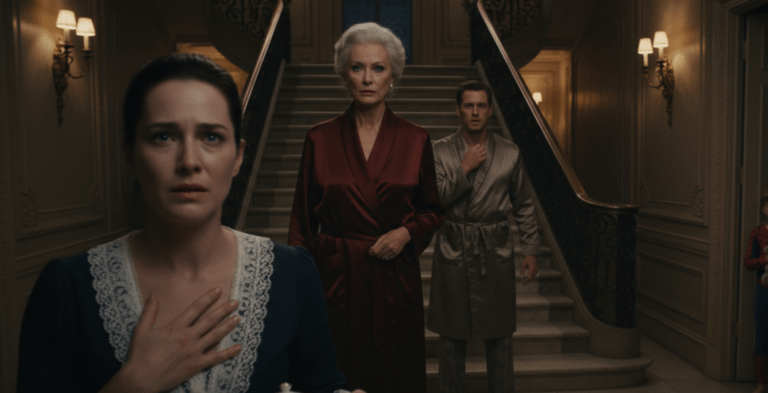
“You took it,” Eleanor Aldridge said, flat as a verdict.
Lucia froze with the soup ladle in her hand. “I—Mrs. Aldridge, I swear, I didn’t touch anything.”
“No lies.” Eleanor’s chin lifted. “You’ve been too comfortable here. Too close to the boy.”
Daniel stood in the doorway, shoulders tight. He didn’t speak. He never spoke when his mother sharpened the air.
“Call the police,” Eleanor said. “If she’s innocent, we’ll find out.” Her eyes didn’t leave Lucia.
Neighbors stared from the gate. A patrol car pulled up. Lucia’s hands trembled as someone photographed her as if she were already guilty.
“Please,” Lucia whispered. “Please, Daniel, you know me.”
Daniel swallowed. “Eleanor—”
“You asked for this,” Eleanor cut in. “I’ll not have our name tarnished.”
Escalation: They called the police, and Lucia was led out in front of Noah.
“Noah, don’t look,” Lucia mouthed. Noah pressed his face to the glass door, small fingers fogging the pane.
“Mom, she’s my Lucia,” he said later, voice cracking between sobs.
“You can’t see anyone now,” Eleanor lied and drew Noah away.
At the station, an officer questioned Lucia without giving her a lawyer. She answered because she thought honesty would be her shield.
“Where were you at eight last night?” the officer asked.
“In the nursery. I put Noah to bed. I cleaned the parlor. I went home.”
“No signs of forced entry,” the officer said, and then, with bureaucratic coldness, “You’ll have a court date.”
Lucia left with her name on a sheet of paper that branded her: suspect.
“You can’t do this,” she told Mrs. Ramirez, her neighbor, as she sat in the tiny living room of her rented apartment that night.
“You must get a lawyer,” Mrs. Ramirez said, hands wringing. “They will crucify you.”
“I don’t have money,” Lucia said. “I have… memories. A child who believes I’m his mother.”
Escalation: The papers printed the accusation as fact. Headlines called it “Aldridge Heirloom Vanishes — Maid Accused.” Lucia’s phone filled with threats and whispers.
“People think I stole for greed,” she said to Mrs. Ramirez. “I’ve worked for them for years.”
“They’ll believe the family,” Mrs. Ramirez whispered.
Lucia’s world narrowed to two things: the court date and the empty ache of Noah’s absence. She clutched the drawing Noah had given her through the estate fence — a crooked sun and two stick figures holding hands.
Then Noah came.
He knocked at Lucia’s door as the rain started. He was soaked and shivering, clutching the drawing.
“Lucia!” he cried before she could open. “I missed you.”
“Noah,” Lucia said, voice breaking. She pulled him in. He smelled like soap and the Aldridge library — old paper and dust.
“Do you know she lied?” Noah whispered, huge eyes searching her face. “Grandma said you stole, but I saw her, Lucia.”
“You saw her?” Lucia felt the ground tilt.
“No. I woke up for water, and Grandma was by the jewelry room. She had something shiny. She put it in a little box. She said, ‘No one will believe a maid.’ I was scared.” His hands were too small on her sleeve. “I drew us to remember.”
Lucia pressed his drawing to her chest. “You must tell someone.”
“I tried,” Noah said. “She said I dream. She said… she said she loves me more if I stop.” He started to cry. “I don’t want to go back.”
Escalation: Noah’s visit gave Lucia courage. She visited a legal aid center and tried to piece together a defense.
At the legal clinic, a weary intern offered what help she could.
“Cameras?” the intern asked, scrolling. “Was there footage?”
Lucia nodded. “There were cameras near the jewelry room. But the one by the hallway was off that night.”
“That’s odd,” the intern said. “They wrote it down as a technical fault.”
“They blamed me without it,” Lucia said. “They didn’t look.”
Days passed. Eleanor filled the estate with a hired lawyer, Dr. Victor Hale, a man polished and brutal with words. He held press briefings.
“He’s good,” the intern said, jaw clenched. “Power knows how to present guilt.”
Escalation: The media ran Eleanor’s narrative. “Housemaid Steals from Aldridges,” the banners declared. Lucia’s neighbors turned away.
“Why would they do this?” Mrs. Ramirez asked, angry in a small-town way.
“Because they can,” Lucia said. “Because my life makes a better story than theirs.”
Lucia prepared for court alone until Sophie Carter found her.
“You’re Lucia?” Sophie asked, watching her from the clinic doorway. She was young, sharp, and had stayed up three nights reading every article.
“Yes,” Lucia said, cautious hope flickering.
“You don’t have to take the court-appointed lawyer,” Sophie said. “I’ll represent you. I don’t have a firm yet, but I have cause and no patience for bullies.”
“Why me?” Lucia asked.
“Because you sat in the articles and I felt wrong,” Sophie said simply. “I want to fix it.”
Escalation: Sophie dove in. She tore through timelines, interrogated witnesses, and found gaps in police notes.
“How was the camera off?” Sophie demanded at the station. “Who signed the maintenance log?”
“No one knew,” the officer said. “It was recorded as malfunctioning.”
“Who had access to the room?” Sophie pressed.
“Family only,” the officer said. He couldn’t say more.
Sophie smiled thinly. “Then we’ll look at the family.”
In the weeks before the trial, a smear campaign mounted. Eleanor whispered to reporters that Lucia had debts, a false past, motives. People who had once waved when Lucia passed now crossed the street.
Lucia answered questions when she could. She kept Noah’s drawing in her pocket like a talisman.
“You’re brave,” Sophie told her. “But we need proof.”
“Do you think Noah will be listened to?” Lucia asked.
“We’ll make them listen,” Sophie said.
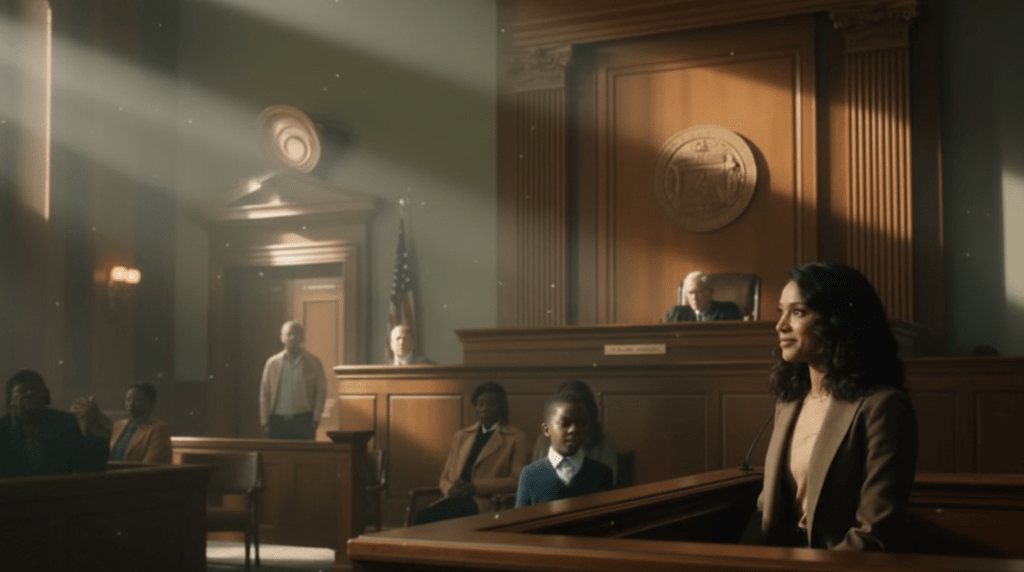
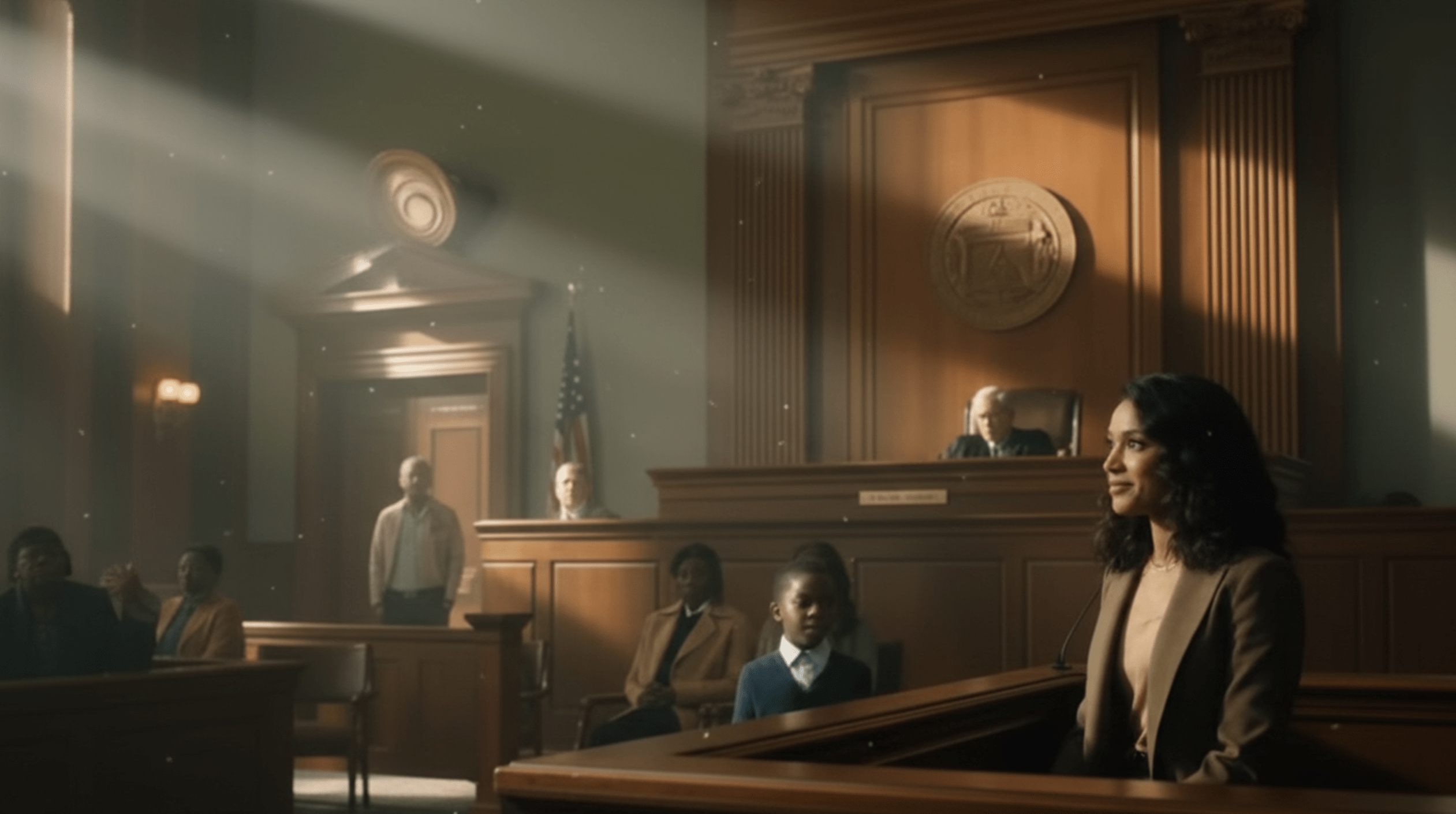
Escalation: The trial began in a packed courtroom. Reporters scribbled. Eleanor sat like a matriarchal statue, Dr. Hale at her side. Daniel sat beside her, hands clenched, face pale.
“You look at me,” Lucia said when Sophie guided her to the stand. She spoke quietly but each sentence landed.
“I loved this family,” she told the judge. “I loved the boy. I cleaned. I cooked. I would not steal from someone who gave me a life.”
Dr. Hale rose like a tide. “Ms. Morales has had access,” he said. “She had motive. She had opportunity. Why was the camera off? Why was the jewel missing the morning after Ms. Aldridge discovered it?”
“Because people lie,” Sophie shot back. “Because Mrs. Aldridge had reasons to hide it. Because the family protected itself rather than seeking truth.”
“Objection!” Dr. Hale barked. The judge banged his gavel. “Speculation.”
Sophie didn’t stop. She called witnesses: a former housekeeper, quiet with fear, who said Eleanor had made accusations before to scare staff away.
“She said, ‘Do you want to be here when the family loses everything?’” the housekeeper testified.
“A lie to protect her status,” Sophie said aloud.
Escalation: The prosecutor played the footage of a frantic search in the estate. It showed staff turning drawers, opening cabinets. Viewers felt the humiliation all over again.
“Why did Mrs. Aldridge demand the police?” the prosecutor asked Dr. Hale.
“Her instinct was to preserve family property,” Dr. Hale said smoothly. “She believed the most likely suspect was someone with access.”
“But she didn’t check her own access?” Sophie asked. “No log of visitors?”
“No,” Dr. Hale said. “But that isn’t proof of anything.”
The judge watched the exchange like a man counting coins. Lucia’s throat tightened as every word seemed to push her further from the truth.
That’s when Noah stood.
“No!” he shouted from the gallery, and the courtroom flinched.
“Noah?” Daniel barked, immediately protective.
The bailiff moved to escort the child out. Sophie’s voice was sharp. “Judge, this is highly relevant.”
Eleanor rose, lips white. “This is a child.”
“No,” Daniel said, quieter. He didn’t know which voice he was following—his mother’s or his conscience. “Let him stay.”
The judge hesitated, then nodded. “We will hear the child if the court finds it necessary.”
Noah walked to the stand, small chin trembling. He told the story with the brittle clarity of a child who had watched adults lie.
“I woke to get water,” he said. “Grandma was walking in the hall. She had a little wooden box. She put something shiny inside it and whispered, ‘She’ll take the blame.’”
The courtroom breathed around the sentence. Reporters leaned forward like predators.
“Is that a dream?” the prosecutor asked.
“No.” Noah’s voice broke. “She had a scar on her hand and the box made a clicking sound.”
Sophie turned and mouthed to Lucia: “Hold on.”
Escalation: The judge ordered a search of Eleanor’s office. “We will not ignore a child’s testimony,” he said.
Daniel’s face crumpled. He had watched his mother put her hand on his shoulder and say that she would protect the family. It had sounded right, proper.
“Where did you last see it?” the detective asked, while a team searched.
“In a drawer,” Daniel whispered, stunned at his own memory. He hadn’t wanted to think of it. “In a dark drawer.”
They found the safe.
Daniel’s knees buckled when the detective opened it and lifted out a velvet pouch. Inside, the family jewel sparkled like accusation turned confession.
“No,” Eleanor said, small now. “That’s not—”
“Mrs. Aldridge, you’re under oath now,” Sophie said. “Did you hide this jewel?”
Eleanor’s voice cracked. “I—” She looked at Daniel, then at her own hands. “I thought… I thought Lucia would be easy to push away. She was taking his place.”
Sophie pushed, “You planned to frame her?”
Eleanor’s façade fell. “It was supposed to be temporary,” she said, a child arguing with a parent in public. “I panicked—she was too friendly with Noah. I told myself the family would be safer.”
Escalation: The gallery gasped. Cameras flashed. A dozen reporters tried to ask Eleanor a question at once, but the courtroom was a chessboard and the judge was moving the pieces.
“This court finds that evidence was suppressed,” the judge said. “Ms. Morales is exonerated.”
Lucia’s shoulders shuddered. Tears leaked out of her and then flooded her face.
Daniel stood and walked toward her, but it was Noah who ran. Noah flung himself into Lucia’s arms and sobbed, “You’re my heart, Mommy.”
Lucia wrapped him as if she could stitch the broken hours into a safe fabric. Cameras captured the tableau.
Eleanor was led out in handcuffs. “You will face charges for perjury and obstruction,” the prosecutor said. “This court will not tolerate power used to destroy an innocent person.”
The press after the trial swung like a pendulum. The same outlets that had torn Lucia down now wrote about the tragic matriarch undone by fear.
“You should ask for more than clearing,” Sophie said to Lucia after the verdict, walking her out.
“I don’t want revenge,” Lucia said. “I want to live.”
But Daniel would not let it stop there. He faced his mother in a cold office the next day.
“You made me complicit,” he said. “You gave me silence while she suffered.”
Eleanor’s face was ashen. “I didn’t want to lose him.”
“You’ve lost everything,” Daniel said. “You’ve ruined lives.”
Escalation: The investigation revealed a pattern of Eleanor’s intimidations — former employees came forward. Donations to charity events had masks of impropriety. The board demanded accountability.
A judge sentenced Eleanor to house arrest and heavy financial penalties for her actions and ordered restitution to the household staff she had attempted to destroy.
Lucia watched the court outcome from a bench as if looking at a map of a life she might never again walk. The judge’s words were justice, but justice was not a balm.
“You deserve more than words,” Daniel told her. He stepped close, earnest and raw. “I failed you. I cannot bring back the time you lost. But I can give you something else.”
“What?” Lucia asked, wary.
“A foundation,” Daniel said. “A trust to help women who are falsely accused by powerful people. Funded by us. Led by you—if you want.”
Sophie blinked. “This could change more lives than a single apology.”
Lucia closed her eyes. She thought of Mrs. Ramirez, of the way neighbors had turned their backs. She thought of Noah’s small hand and the drawing he had given her.
“I don’t want to be in the headlines,” she said. “I want peace.”
“Then make peace for others,” Daniel said. “Not for me. For them.”
Escalation: Months later, Lucia walked into a modest office with a plaque: The Morales Legal Relief Fund. She sat at a plain table and signed papers, then spoke into a small camera for the foundation’s launch.
“This is for people who have no one to speak for them,” she said. “For those who are silenced by power.”
Sophie stayed on as lead counsel. The foundation offered pro bono representation to women and men crushed by influence. The first clients were two former domestic workers whose employers had accused them of theft to avoid benefits. Lucia listened to them like a mother, like someone who had been through the storm and survived.
Noah split his time between school and Lucia’s apartment, where she now kept a key. He called her before bed and told her about a math test or a new book he liked. Daniel, chastened and more present, attended board meetings at the foundation and learned to defer.
Eleanor lived under house arrest, her social invitations revoked, her wealth taxed for restitution. Her statement to the press was small and broken: “I was afraid.” It did not fix what she had done but it did not excuse it.
Escalation: The first case the foundation took ended with a public apology for a cafeteria worker wrongly accused of stealing funds. The news ran an image of Lucia handing the woman a check and a handshake. Cameras lingered on Lucia’s hands — calloused, steady.
Lucia attended the hearing where the judge imposed the sentence on Eleanor. She sat with Sophie and with Mrs. Ramirez at her side. When the judge pronounced the penalties, Lucia felt an odd quiet joy: a sound like a lock opening.
Outside the courthouse, a reporter approached her mic-first.
“Do you want revenge?” the reporter asked.
“No,” Lucia said. “I wanted truth. We have it. Now I want to give truth to others.”
Daniel bowed his head and then, publicly, said, “I failed someone who loved my son like a mother. I am sorry.”
Lucia accepted that apology without embracing him. She had no need to erase the wounds; they had become a map.
Months later, a room full of volunteers cheered as Lucia cut a ribbon at the foundation’s new office. Noah held the scissors with her, grinning. “We did it, Lucia,” he said.
“You did it, too,” she replied, kissing the top of his head.
A reporter asked Eleanor, from a distance, whether she regretted her actions.
Eleanor stared at the crowd. Her voice was a cracked instrument. “I do,” she said. “I am paying for what I did.”
Karma had been served: legal consequences, financial penalties, public disgrace. Justice had been messy but clear.
The foundation’s first year saved two lives from wrongful conviction. Lucia slept in a small apartment that now felt like a home. She still hummed the lullabies she had sung in the Aldridge nursery, but now she taught them to other women to sing to their children.
One evening, Lucia sat on a bench by the river with Noah at her side. The sun set beyond the skyline, ordinary and forgiving.
“Are you happy?” Noah asked.
Lucia looked at him, at lines of life etched into his small face. “Yes,” she said. “I am safe. You are safe. That is enough for me.”
Daniel had been given back his father’s trust and pledged to run the company with accountability. He visited the foundation often. He kept his distance from power, and learned to listen.
Eleanor watched the ribbon-cutting video from inside her guarded home. Her world had contracted to walls and regret. The jewels were returned to the family vault, but they had lost the most valuable thing: unquestioned authority.
Lucia’s name was cleared in the papers, not as a headline but as part of a story that showed the cost of lying for power. People who had once pointed fingers now offered quiet apologies. Lucia accepted some. She declined others.
The last scene is simple: a small office, phones ringing with requests for help, a wall calendar filled with appointments, and Lucia, center, giving a woman a cup of coffee and a look that said, “You are not alone.”
Justice had been done. Eleanor was punished and stripped of influence. Daniel made restitution and chose transparency. Lucia’s dignity, once stolen like a jewel, was restored — and she used it to pull others out of the dark.
“Thank you,” the first woman at the foundation whispered one morning, tears in her eyes.
Lucia smiled. It was not a triumphal smile. It was the soft, steady arc of someone who had watched cruelty, felt it, and turned it into a force for others.
“It’s why we do this,” Lucia said. She looked at Sophie and Noah and then down at the stack of files waiting for their attention.
Outside, a boy on a bicycle rode by. Noah waved. Lucia waved back, and for the first time in a long time, the wave was simple and clean — no strings attached, no price to be paid. Justice had been served, accountability placed, and Lucia’s life moved forward, whole.