Her Son Tried to “Help” His Parents… But the Truth Was Deadly
She thought she was just repairing her daughter-in-law’s broken phone… But what she found inside exposed a plan that nearly cost her life.
When I look back now, I can pinpoint the exact moment my life split in two—the moment before I walked into Bennett Electronics with Claire’s cracked phone, and the moment after. I had always imagined that betrayal came with warning signs, with instincts whispering in your ear. But this one didn’t. It came quietly, wrapped in the familiar face of the son I had loved for thirty-four years.
My name is Linda Barrett. I am sixty-six years old, retired, and for most of my life I believed I understood the people closest to me. I believed love created safety. That loyalty protected you. That if you raised a kind boy, he would grow into a good man.
I believed wrong.
It started on a normal Thursday afternoon. Claire arrived at my door looking frazzled, her hair slightly out of place, her phone in her hand like it was burning her fingers.
“Linda, please—can you take this to that repair guy you like? It won’t turn on. I have a presentation tomorrow.”
I said yes because that’s what I always did. I helped. I showed up. I trusted.
Two hours later, everything changed.
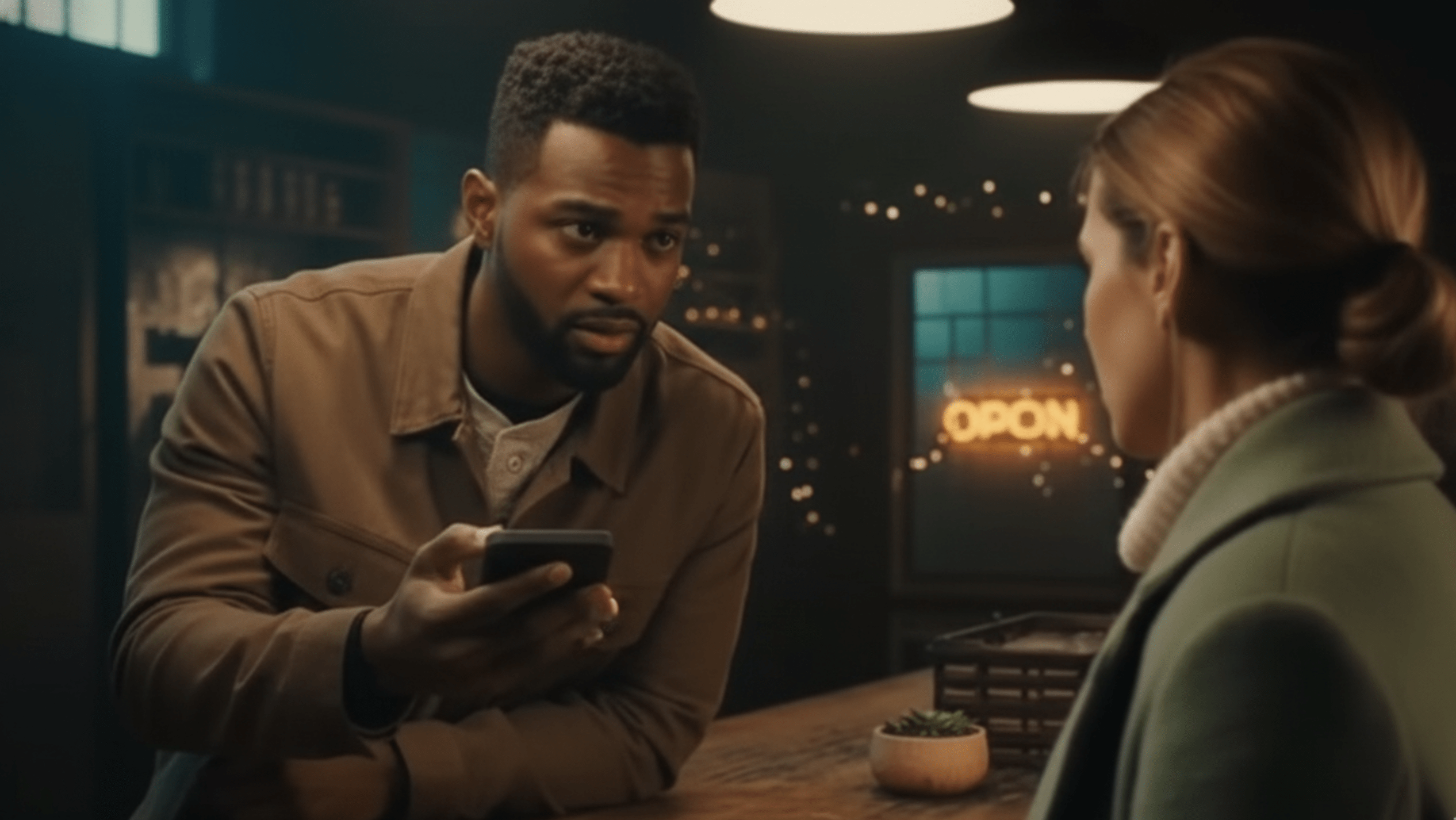
When I returned to the repair shop, Evan didn’t smile. He didn’t joke like he usually did about aging electronics or customers who didn’t know their passwords. Instead, he looked at me the way a person looks at someone standing on the edge of a cliff.
“Mrs. Barrett… I think you need to see something.”
He opened the phone, unlocked it with the passcode Claire had given me without hesitation, and tapped on a folder called “Backup Plan.”
Inside were messages between Michael and Claire. Not affectionate, everyday messages. Not reminders. Not jokes.
These messages were cold. Technical. Step-by-step.
They talked about “timing events correctly,” “accessing accounts,” and “nudging medical records in the right direction.” There were notes about medications—mine and George’s. There were conversations about withdrawals that “needed to stay under the radar.” There were timestamps aligning with purchases we had never made.
And worst of all, there were messages from Michael—my son—written in a tone I didn’t recognize.
I felt my stomach turn to ice.
“This is not real,” I whispered.
But Evan was steady, calm. “Mrs. Barrett, you need to protect yourselves.”
I left the shop feeling like I had stepped out of my own skin.
When I reached home, George immediately saw something was wrong. I showed him everything. We sat side-by-side at the kitchen table, staring at the evidence like it might dissolve if we blinked too long.
Our world, the one we built together over forty years, cracked open.
That night we combed through our accounts. Small withdrawals, subtle transfers, strange password-reset requests. The pieces formed a chilling pattern. Claire had been planting comments for months about my “forgetfulness.” Michael had mentioned concerns about my “confusion.”
They weren’t warning signs—they were foundations. Carefully laid groundwork.
The next day confirmed it.
When I went to see Dr. Whitaker, he told me he had been documenting concerns about cognitive decline—concerns reported by my son.
Fabrications. Every last one.
I demanded he correct the record, and he did, stunned by the truth I laid out on his desk. But the damage already done made the truth even clearer:
This was not a misunderstanding.
It was a plan.
That night Michael called, cheerful, polished, too smooth.
“We’ll come by for dinner, Mom. We miss you.”
I hung up and looked at George.
He whispered, “We have to act like nothing is wrong.”
We cooked our own food, opened nothing they brought, and hid a recorder beneath the table. When they arrived, they brought wine—my favorite—and chocolates from the little store downtown.
“Mom!” Michael hugged me so tightly it didn’t feel like affection—it felt like possession.
During dinner, they watched us closely. Every gesture. Every bite. Every breath.
Michael leaned forward casually. “So, how was your doctor visit? Claire said he was concerned.”
I smiled with a kind of calm I didn’t know I had.
“He examined me. And he found absolutely nothing wrong.”
The flicker in their eyes was unmistakable.
A fracture in the façade.
The next morning, Claire showed up with forged documents—powers of attorney giving them full control of our finances and medical decisions.
She claimed it was “just precaution.”
I told her to come inside.
The moment she saw George flipping through the papers, she panicked.
Her voice trembled. Her hands shook. She left so quickly she nearly tripped over the doormat.
That afternoon we went straight to Attorney Rachel Monroe. A sharp-witted woman who didn’t sugarcoat.
“Mr. and Mrs. Barrett,” she said after hearing everything, “you’re not safe. Not tonight. Not in that house.”
Police were brought in. Surveillance installed. We were moved to a hotel under different names.
The next evening, officers called us into the station.
“We have movement,” one said.
On the screen, Michael walked into our home carrying two grocery bags. He moved like he’d done it a hundred times—checking the corners, scanning the windows, opening drawers. He replaced our medications with identical bottles containing altered pills. He poured something into the wine they had brought the night before.
The officer whispered, “This is attempted poisoning.”
I heard George exhale a sound I never want to hear again.
The next morning, as Michael and Claire rushed out of our house with packed bags—cash, flight reservations, medicine bottles—they were stopped, surrounded, handcuffed.
Claire kept whispering, “This wasn’t supposed to happen.”
As if she were the one wronged.
The next day, they asked if I wanted to speak to Michael.
I walked into that small interview room with a heart that felt both heavy and empty. My son sat there, hands cuffed, eyes red.
“Mom,” he whispered, “you don’t understand. We were planning to help you. To help all of us.”
I looked at him—the boy I raised, the man who broke me—and said, “No, Michael. You were planning to erase us.”
He looked away like he couldn’t bear the truth reflected in my eyes.
And in that moment, I understood something terrible:
He didn’t think he was evil.
He thought he was entitled.
He thought our lives—our savings, our home, our trust—belonged to him.
He convinced himself that logic justified betrayal.
But logic isn’t love.
And love is the one thing he had long forgotten.
The case is ongoing. The pain is real. The healing will take years. But George and I are safe. And I have learned a truth no parent ever wants to face:
Sometimes the greatest danger lives in the very person you taught to walk.