She Humiliated a Child at Lunch… Then Reality Hit Hard
I went to surprise my daughter at school… But when her teacher dumped her lunch in the trash and said, “You don’t deserve to eat,” she had no idea who I really was.
People love to say that once you have more money than you could ever spend, life becomes easy.
No fear. No helplessness. No moments where your heart drops into your stomach.
My name is Noah Grant, and that’s a lie people tell themselves.
On paper, I’m the founder of Grant Systems—a global tech company built from a rented Denver office into something analysts dissect on financial news. I own homes in different cities, sit on boards that decide other people’s futures, and sign documents worth more than most people earn in a lifetime.
But none of that prepared me for the moment I watched my six-year-old daughter learn she could be humiliated for being small.
My wife, Hannah, died giving birth to Lily. Since then, my life has existed in two worlds. One where I’m decisive, respected, untouchable. And another where I’m just a dad who practices braiding hair on YouTube tutorials and sneaks glitter onto Tooth Fairy money.
Lily is everything. She has Hannah’s eyes—the kind that assume the world is kind unless proven otherwise.
When it was time for school, I chose Maple Ridge Academy not because it was elite, but because its brochure promised character, kindness, community. I didn’t want Lily treated differently because of my name, so I hid it.
On the forms, I wrote “software consultant.”
At pickup, I drove a plain Honda.
At events, I stayed quiet.
I wanted her to be Lily, not “the rich man’s daughter.”
On a Tuesday that changed everything, I finished a brutal international merger before noon. Instead of celebrating, I pulled on an old hoodie, grabbed two cupcakes from Lily’s favorite bakery, and decided to surprise her at lunch.
I signed in. Walked down halls covered in crayon rainbows and Be Kind posters. I actually smiled.
Then I stepped into the cafeteria.
I found Lily immediately—because she didn’t look like herself.
She sat at the end of a table, shoulders curled inward, hands clenched in her lap. Standing over her was Ms. Porter, a lunch supervisor who, weeks earlier, had practically fawned over me when I attended Back-to-School Night in a suit.
Now her face was hard.
“There’s milk everywhere,” Ms. Porter snapped. “You were told to carry the tray properly.”
“I’m sorry,” Lily whispered. “My hand slipped.”
Ms. Porter slapped her hand away when Lily reached for her sandwich.
“You’re careless,” she said. “And careless children don’t get rewarded.”
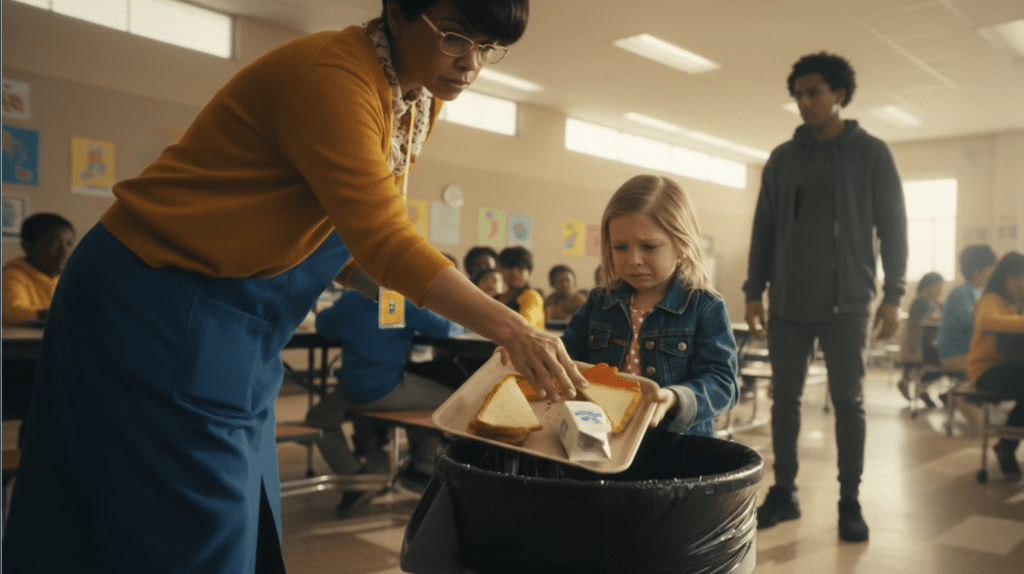
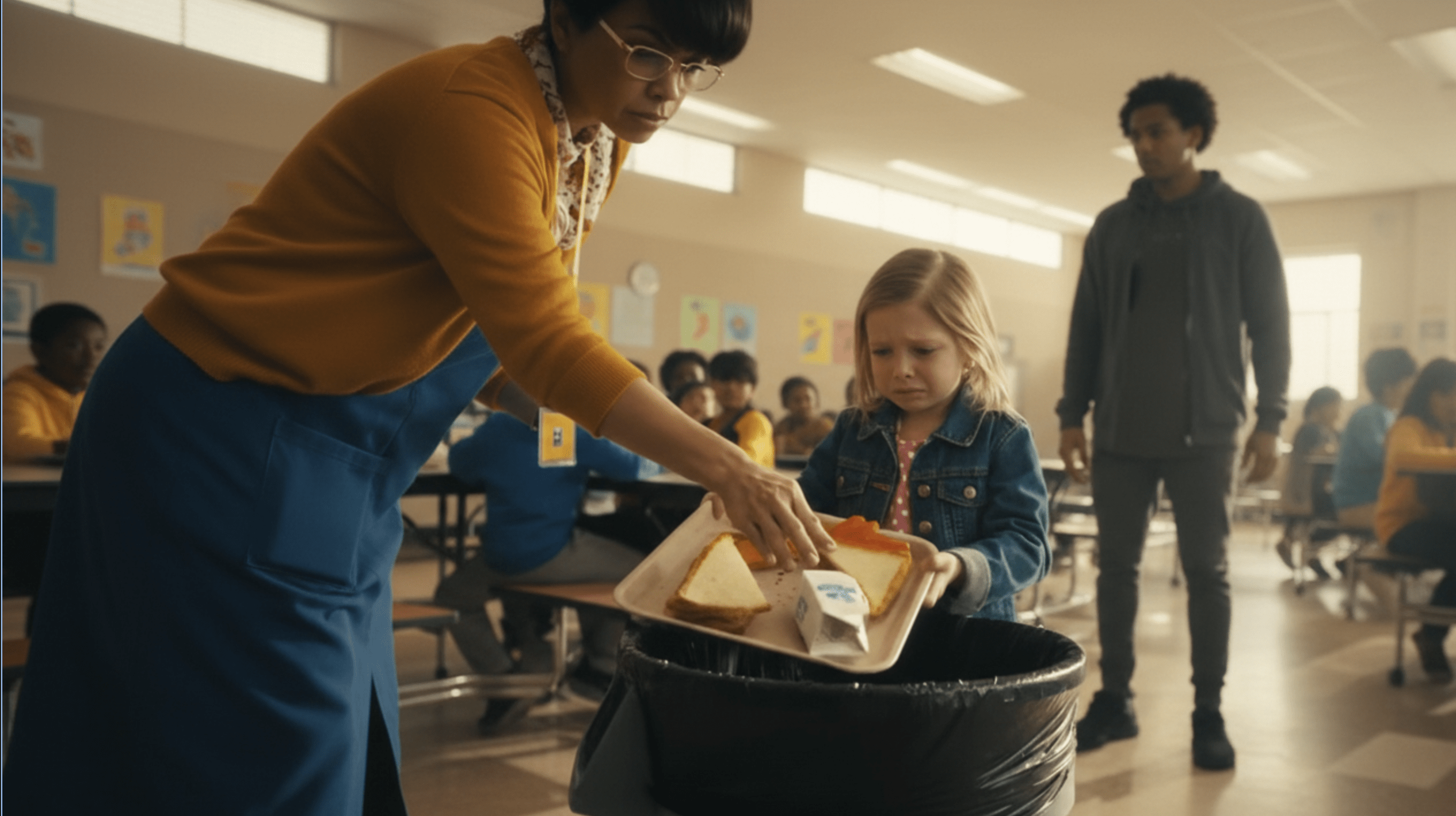
Before I could move, she lifted Lily’s tray and dumped it straight into the trash.
My daughter made a sound I’ll never forget—part sob, part disbelief.
“You don’t need food today,” Ms. Porter said coldly. “Sit there and think about your behavior.”
Something in me went still.
I stepped forward.
“You just threw away my daughter’s lunch,” I said.
Ms. Porter looked me up and down—hoodie, stubble, visitor badge.
“And who are you supposed to be?” she asked. “Maintenance?”
“I’m her father.”
She laughed. “I expected… more. That explains her manners. Kids copy what they see at home.”
She called security. Told the principal I was aggressive. Claimed she felt unsafe.
Then Mark Randall, the principal, rushed in—and froze when he finally read my badge.
“Noah… Grant?”
“Yes,” I said. “And I just watched your employee tell my child she didn’t deserve to eat.”
Ms. Porter scoffed—until I mentioned the eight million dollars my foundation had donated to that school.
The room shifted instantly.
Children spoke up.
“She throws lunches away all the time.”
“She says mean things.”
“She told him he was charity.”
Security escorted Ms. Porter out.
But that wasn’t the end.
That night, she went to the media—crying, saying she was bullied by a “large, intimidating man.” She hinted at lawsuits. Public opinion wavered.
Then another parent contacted me.
What we uncovered wasn’t one cruel teacher—it was a system.
Children on scholarships or from non-elite families were targeted. Pressured. Humiliated. Their parents quietly encouraged to withdraw.
Each withdrawal made room for a full-pay family… and a “donation.”
Ms. Porter wasn’t a rogue employee.
She was the gatekeeper.
So I did what I do best.
The Grant Foundation purchased Maple Ridge’s outstanding debt and assumed control. The principal was removed. Records were handed to prosecutors. Staff were reviewed. Families invited back.
At a press conference, I said only this:
“This is not about a lunch tray.
It’s about adults deciding which children are worth kindness.”
Two months later, I walked Lily back into that cafeteria.
New staff. New policies. New energy.
She sat with friends. Ate her sandwich. Laughed.
And as I left, I realized something no headline could capture:
All the money in the world doesn’t matter—
unless you’re willing to use it when someone small needs protection.