MMA Fighter Saw Assault Through Train Window – What He Did Next
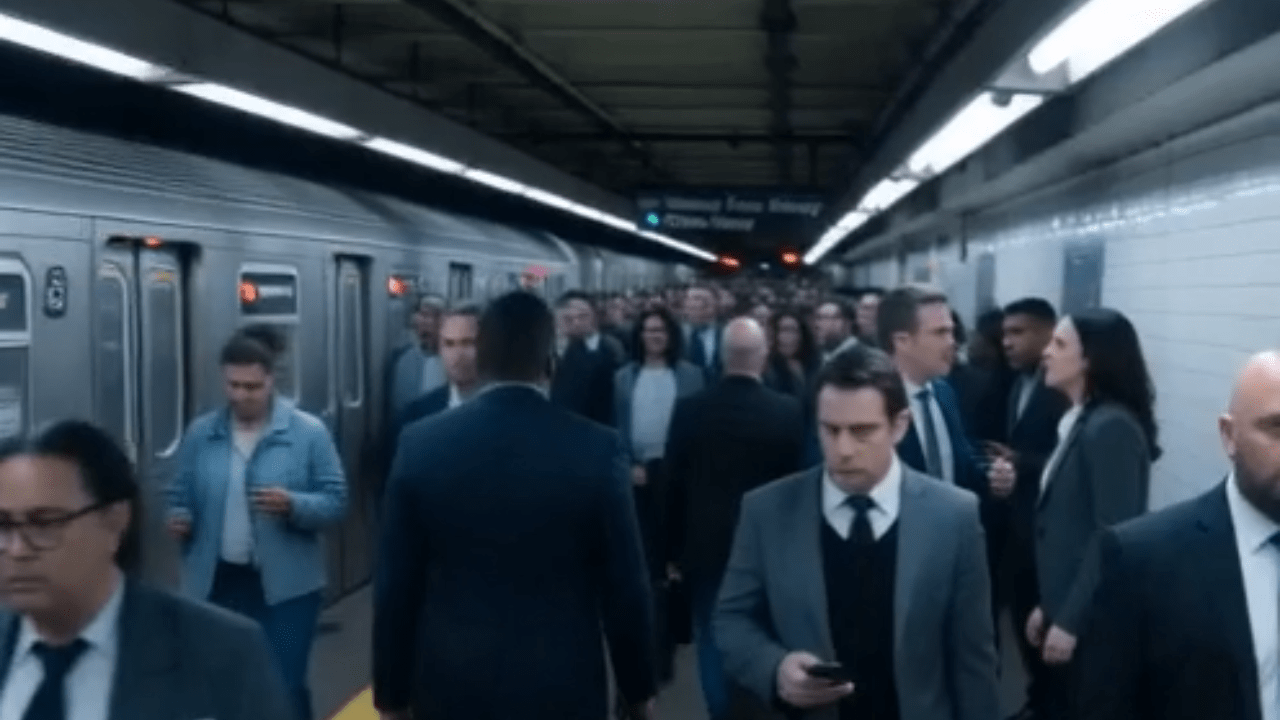
A man slapped a quiet woman on a crowded subway platform during rush hour in front of hundreds… But the man who stepped off the next train had been watching through the window since the last stop — and he went to the next stop just to come back.
Darius Cole had fought professionally for six years. Twelve wins. Two losses. The kind of record that didn’t make you famous but made people in gyms across the country know your name.
He’d had his weigh-in that morning at the hotel three blocks from Madison Square Garden. Tomorrow night was the fight — regional title, the kind that mattered to the people who followed regional titles.
He was taking the subway home because that’s what he did. Grew up taking it. Didn’t see why winning twelve fights should change that.
He got on at 34th Street. Second car. Found a spot near the door and watched the city go by underground.
At 42nd Street a woman got on the platform. Work clothes. Tired in the way people were tired at six PM on a Tuesday. She found a space near the yellow line, waiting for the next train.
Darius watched from the window as the doors closed.
The train pulled out.
He watched through the window as the platform slid past — and saw the man approach her. Read the body language in two seconds. The specific angle of aggression. The way the woman’s shoulders came up.
The train moved. Darius watched the platform disappear.
He looked at the subway map above the doors. One stop.
He got off at 49th Street. Walked back down the platform. Took the downtown train.
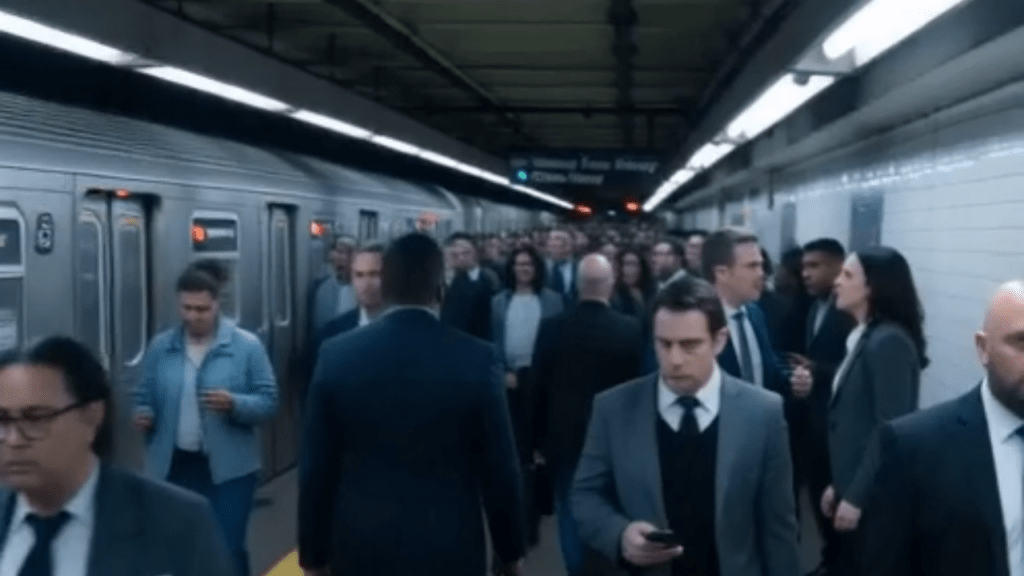
The 42nd Street platform was still processing what had happened when Darius stepped off the train.
He found her in three seconds.
She was against the wall now, hand on her face, the crowd having created space around something without getting involved. A circle of distance that was its own kind of abandonment.
Darius set his duffel bag on the platform floor. The specific sound of it — deliberate, placed.
He moved through the crowd toward her.
People stepped aside. Not because of his size — he was average height, welterweight build. Because of the hoodie. The name on the back. The embroidered record on the sleeve that fight fans read instantly.
He reached her. One hand on her shoulder — steadying.
“You okay?” he said.
She looked at him. At the hoodie. At the duffel bag on the platform floor.
“Yes,” she said. Then — “No.”
“I know,” he said.
He turned to the man.
The man had been watching him cross the platform. Had been reading the hoodie. Had reached the embroidered numbers on the sleeve and was finishing a calculation.
“You’re going to apologize to her,” Darius said. “Right now. In front of everyone who just watched that.”
The man looked at the platform. At the hundreds of commuters who had stopped moving. At the stairs where people had paused mid-step.
“I don’t know who you think you—” the man started.
“I know who I am,” Darius said. “The question is whether you know what happens next if you don’t apologize to this woman in the next ten seconds.”
He said it the way he said things in the ring — flat, specific, no performance. The voice that had nothing to prove because it had already proved things in places this man would never go.
The man looked at the hoodie one more time. At the name on the back. At the record on the sleeve. At the duffel bag on the floor.
At the face above the hoodie — the calm of someone who had been hit by professionals and learned to keep everything useful.
“I’m sorry,” the man said. To the woman. His voice had lost its register entirely.
“Say her name,” Darius said.
The man looked at the woman. “What’s your name?”
“Sarah,” she said quietly.
“I’m sorry, Sarah,” he said. “I shouldn’t have done that. I was wrong.”
Darius looked at him for three more seconds.
“Go,” he said.
The man went. Through the crowd, up the stairs, gone in the specific way of people who have correctly assessed that departure is the only option.
Darius picked up his duffel bag. Looked at the woman.
“You need anything?” he said. “Someone to call? I can wait.”
She looked at him. At the hoodie. At the bag.
“You came back,” she said.
“Saw it from the window,” he said. “Went to the next stop.”
She shook her head — processing something that didn’t fit into ordinary Tuesday evening categories.
“I’m okay,” she said. “I think.”
Darius nodded. Looked at the platform. At the crowd resuming — slowly, hundreds of people who had been holding something and were now releasing it.
“You sure?” he said.
“Yes,” she said. More certain this time.
He picked up his bag strap.
“Fight tomorrow night,” he said. “If you wanted to know why the hoodie.”
She looked at the name on the back as he turned.
“Will you win?” she said.
Darius thought about it.
“Plan to,” he said.
He walked toward the exit stairs. Hood still down. Name still visible. The platform moving around him again — the rush hour current resuming.
A teenage boy on the stairs took a photo as he passed. Darius didn’t notice.
The photo posted at six forty-seven PM. Just watched this guy step off a train, walk back to the platform, handle something nobody else would handle, and leave. Fight night tomorrow apparently. Going to watch.
By midnight the post had been shared forty thousand times. By morning it had been shared four hundred thousand times. By fight night it had been shared four million times.
The arena was sold out for the first time in three years.
Darius won by decision in the fourth round.
In the post-fight interview the reporter asked about the subway.
Darius looked at the camera.
“I grew up on that subway,” he said. “It’s my city. You don’t let things happen in your city.”
“Were you worried about the weigh-in? Fighting the next day?”
Darius looked at his hands.
“I’ve been hit by professionals,” he said. “That man was not a professional.”
The arena laughed. Darius didn’t.
“It wasn’t funny,” he said. “What he did to that woman. It wasn’t funny at all.”
The arena went quiet.
“I just did what anyone should do,” he said. “The fact that it’s news is the problem. Not the solution.”
He looked at the camera one more time.
“Do better,” he said. “All of us. Do better.”
He walked off the interview platform. The arena stayed quiet for a moment longer than arenas usually stayed quiet.
Then it applauded. Not for the fight. For the subway.