Bully Slapped Girl—Then Turned Around And Saw THIS
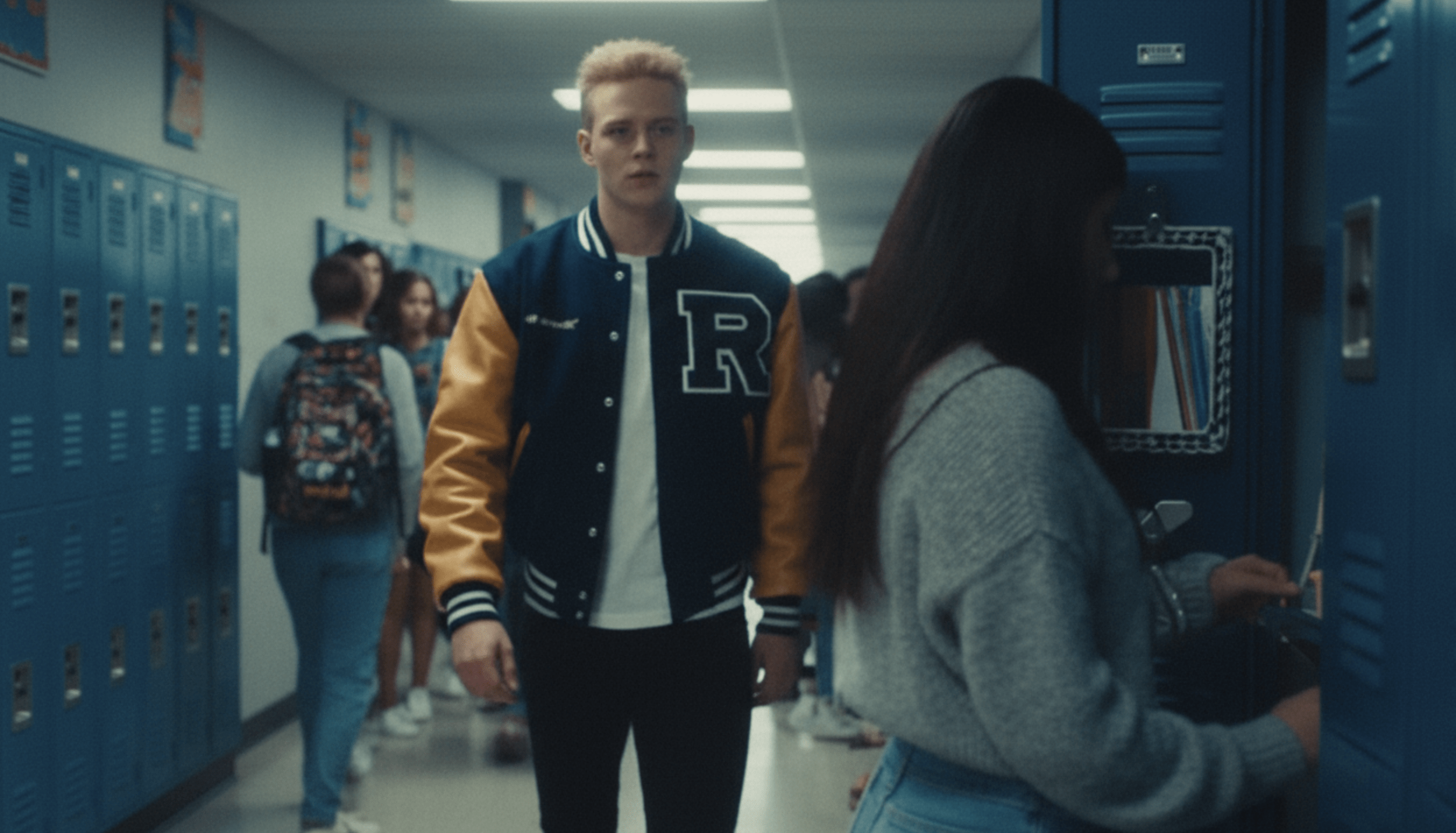
A senior boy slapped a quiet girl in the school hallway… But when he turned around, he found the same face looking back at him—standing, unmarked, three feet away.
People had been confusing Elena and Marco Torres their whole lives.
Same dark eyes. Same jaw. Same way of going still when something was wrong. Their mother said she could always tell them apart—she said this with complete confidence and was wrong approximately forty percent of the time.
At Jefferson High they’d developed a system. Elena wore her hair down. Marco kept his short. Simple. Effective. The kind of solution that worked until it didn’t.
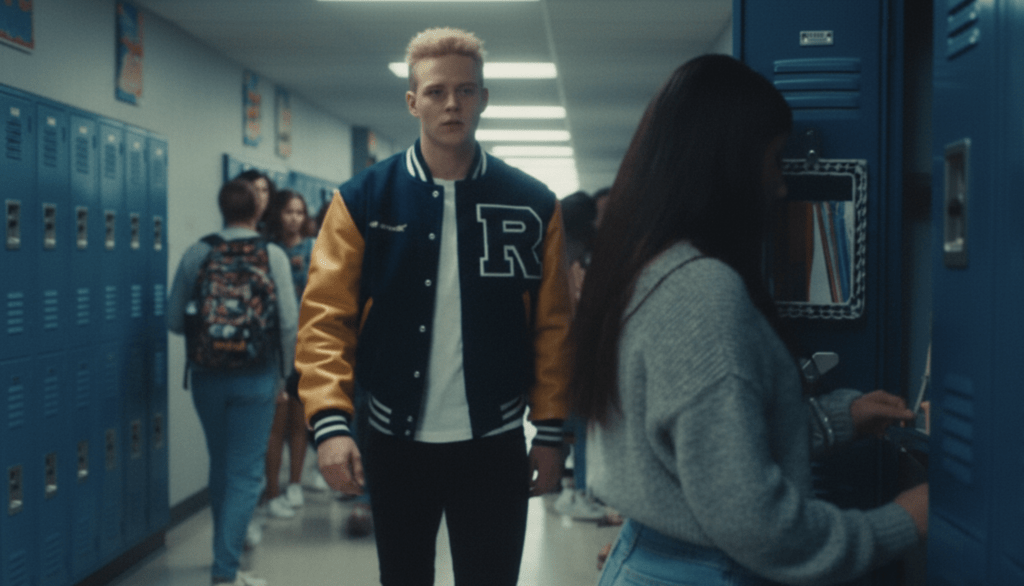
Tuesday morning. Main hallway. Seven fifty-eight AM.
Elena was at her locker. Marco was three feet behind her at the water fountain—facing away, bent down, drinking.
He heard it before he saw it.
The sound. Then the locker rattling. Then the specific silence of a hallway choosing not to intervene.
He straightened up. Turned around.
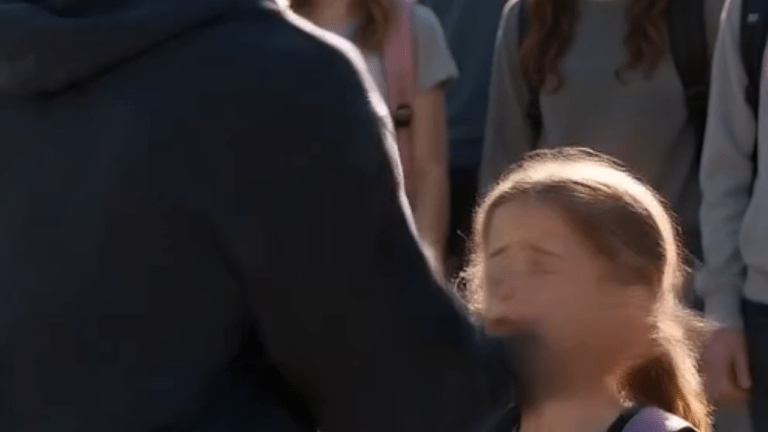
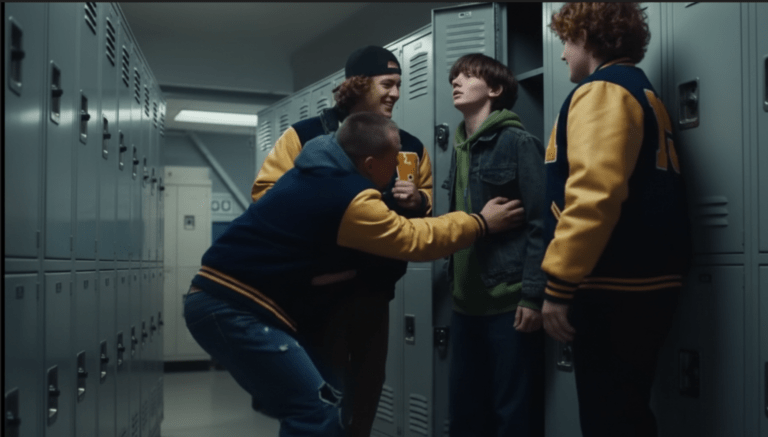
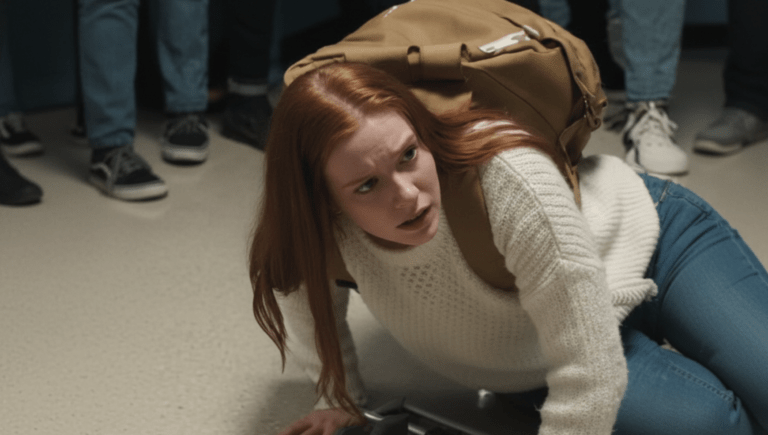
His sister had her hand on her face. Her back against the lockers. A boy—Connor Walsh, senior, the kind of person who moved through Jefferson High like the rules were suggestions written for other people—was standing over her with his back to Marco.
Marco looked at his sister’s face. At her hand on her cheek. At the red mark above it.
He looked at Connor’s back.
Then he walked forward and stood directly behind Connor—close enough that when Connor turned around there would be no space between them.
“Hey,” Marco said.
Connor turned.
What happened to Connor Walsh’s face in that moment was something Marco had seen before—not often, but enough. The specific sequence of a person’s expression going through confusion, then recognition, then the wrong conclusion, then a deeper confusion that had no conclusion.
Connor looked at the face in front of him.
Dark eyes. Same jaw. The same face he’d just hit—standing upright, unhurt, three feet away, looking directly at him.
Connor looked back at Elena. At her hand on her face. At the mark on her cheek. Back at Marco.
“What—” Connor started.
“We’re twins,” Marco said. “In case you’re trying to figure out what you’re looking at.”
Connor’s mouth closed.
“Same face,” Marco said quietly. “Different experience of the last thirty seconds.”
The hallway was very still.
Marco looked at Connor for a long moment. Not aggressive. Not performing. The specific stillness he shared with his sister—the going still when something was wrong that their mother could never quite explain.
“You’re going to apologize to her,” Marco said. “And then you’re going to think about what it means that you looked at this face—” he gestured briefly to himself “—and decided it was something you could hit.”
Connor looked at Marco’s face again. At Elena’s face. Back at Marco.
The same face. One with a red mark on it. One without.
“I’m sorry,” Connor said. To Elena. His voice had lost everything it normally carried.
“Now go,” Marco said.
Connor went.
The hallway slowly resumed around them. Students looked away. Conversations started again. The moment dissolved into the regular chaos of a Tuesday morning.
Marco turned to his sister.
She was looking at him—at his face, which was her face, which was the face Connor had hit and the face Connor had seen standing behind him unmarked.
“The look on his face,” Elena said.
“Yeah,” Marco said.
“When he turned around.”
“Yeah.”
Elena touched her cheek. The mark was already fading. “Did you plan that?”
“I was at the water fountain,” Marco said. “I just stood up.”
Elena looked at her brother. At the identical jaw and the identical eyes and the seventeen years of being the same person in two different bodies.
“It worked though,” she said.
Marco thought about it. “The face helped,” he said.
Elena laughed—the real one, the one that came out when fear finished leaving. Marco watched it happen the way he’d watched it happen their whole lives—the specific laugh his sister had that was different from his even though their faces were the same.
Their mother could always tell them apart when Elena laughed. That part she’d never been wrong about.