He Came Home Early… Then He Slammed Proof Down
He flew home early from Tokyo to surprise his family… But he caught his wife grinding their baby’s dinner into the garbage disposal while the kids begged.
The garbage disposal was already roaring when I stepped into the kitchen.
I froze with my briefcase still in my hand.
Victoria’s manicured fingers held a spatula like it was a scepter, pushing roast chicken toward the spinning mouth. She was smiling—small, satisfied.
“Victoria,” I said, steady enough to cut through the noise.
She jolted, then snapped into a bright, rehearsed grin. “Michael! Oh my God—darling, you’re home!”
“I saw you,” I said.
“What are you talking about?” she laughed, too high. “I was just—cleaning up.”
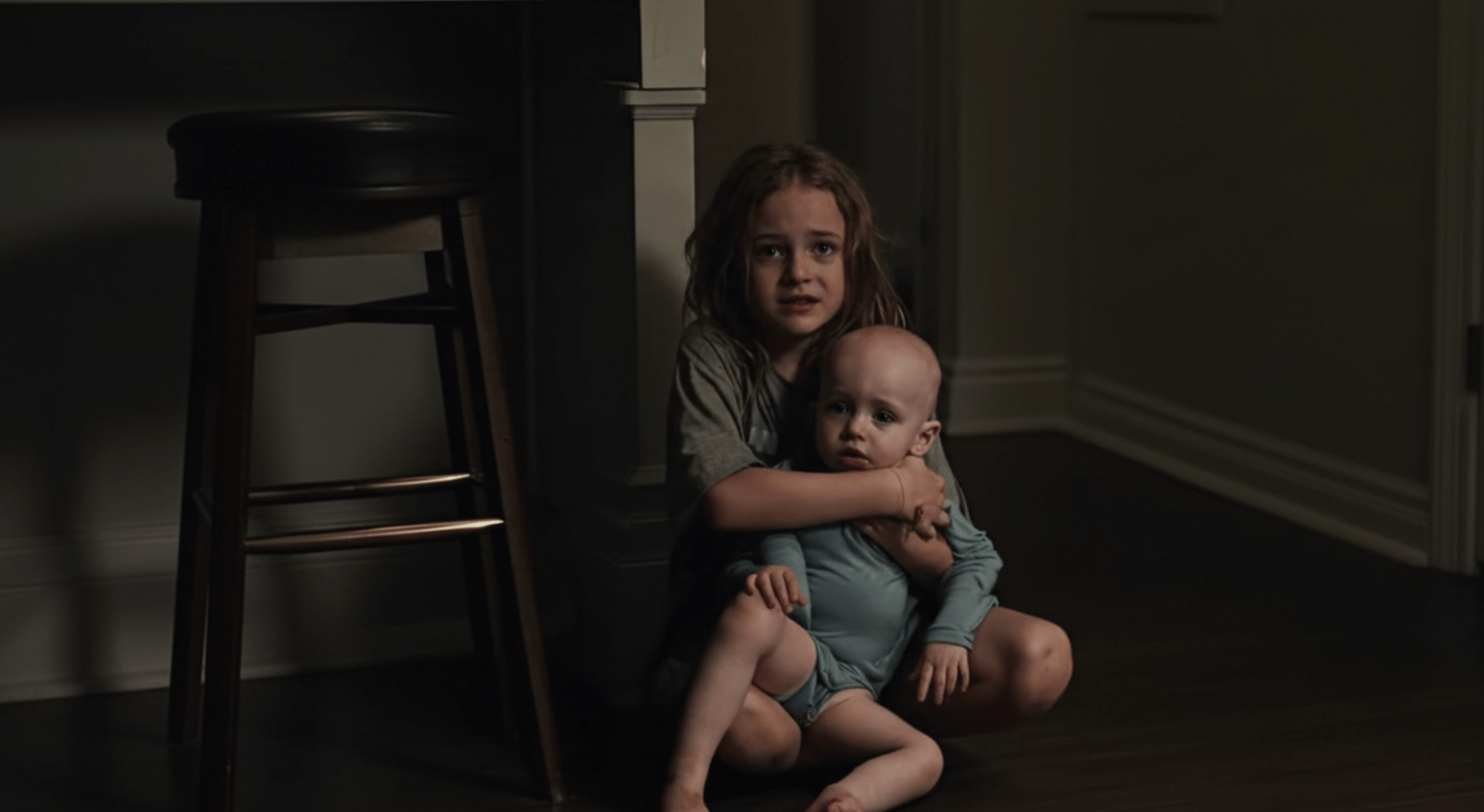
From the far corner, Emma was on the floor with Thomas in her arms.
Not cuddling. Holding him up like he might disappear if she let go.
“Please,” Emma whispered. “Please, he’s hungry.”
Victoria didn’t even look at her. “Stop begging. It’s embarrassing.”
“Embarrassing?” My voice cracked on the word.
Victoria finally glanced at the corner, annoyance flashing. “I told you. He’s sick.”
Thomas lifted one trembling hand toward the counter like he recognized food as an idea, not a guarantee.
I took one step in. “Turn it off.”
Victoria blinked, offended. “Excuse me?”
“Turn. It. Off.”
Her jaw tightened. She flicked the switch. The disposal died with a wet, final churn.
The silence was worse.
“Oh, don’t get dramatic,” she said. “You’ve been gone. You don’t understand the routine.”
Emma’s voice was so small I almost missed it. “He ate toothpaste.”
Victoria’s head snapped toward her. “Shut up.”
Emma flinched hard, curling around Thomas. “I’m sorry.”
“Emma,” I said, trying not to scare her, “why would he eat toothpaste?”
“Because he was hungry,” Emma whispered. “Because the pantry’s locked.”
Victoria exploded. “She’s lying!”
I turned slowly. “The pantry is locked?”
Victoria’s smile returned like a mask being glued back on. “For safety. Kids get into things.”
“Give me the key,” I said.
“What key?” she snapped.
Emma lifted her shaking finger toward Victoria’s throat.
A thin gold chain.
A small key resting against diamonds.
My stomach dropped.
I held out my hand. “Now.”
Victoria backed up half a step, then lifted her chin. “Michael, you’re tired. Jet lag. You’re seeing things.”
“Give me the key,” I repeated.
She laughed, sharp. “Or what?”
I walked past her without touching her, straight to the pantry door. The handle had scratches around it like someone had tried to pry it open with their nails.
I turned back. “Victoria.”
She ripped the key off her neck and slapped it into my palm like a dare. “There. Happy?”
My hand shook as I unlocked the pantry.
It opened too easily—like it had been opened a hundred times and closed fast.
Inside: shelves that should’ve been full.
They weren’t.
A few cans lined up like props. A half-empty box of crackers on the highest shelf. Empty cereal bags rolled tight like trash. No bread.
No snacks.
No kid food.
On the bottom shelf, a single plastic container with steak leftovers—marked with a sticky note that said “V.”
No names for the kids. Just hers.
I turned, and my voice came out quiet. “Where is their food?”
Victoria crossed her arms. “They get what they earn.”
Emma made a sound—half sob, half swallow.
“What does that mean?” I asked.
Victoria’s eyes glittered. “It means I’m not raising spoiled little parasites.”
I took a breath through my teeth. “Emma, stand up.”
Emma tried. Her knees wobbled. She shifted Thomas higher, apologizing to him under her breath like it was her fault her body was tired.
“Let me take him,” I said.
Victoria stepped between us. “No.”
I didn’t raise my voice. “Move.”
She got closer, nearly chest to chest, perfume punching the air. “You’re not taking them.”
“Move,” I said again, and this time it wasn’t a request.
Victoria’s fingernails dug into my forearm. “You don’t get to walk in here and—”
“Dad?” Emma whispered, terrified. “Please.”
Victoria’s eyes flicked to Emma, then back to me. “One more word and you go in the closet again,” she warned Emma casually, like reminding a kid to brush their teeth.
I saw red.
My briefcase hit the counter with a hard slam that made the utensils jump.
Victoria startled. “Don’t you throw things at me.”
“You put my child in a closet?” I said.
She rolled her eyes. “It’s a time-out. She exaggerates everything.”
Emma’s sleeve slid up as she adjusted Thomas.
Four bruises.
Finger-shaped.
Adult-sized.
I stared at them until my vision narrowed.
“Emma,” I said, barely able to keep my voice from breaking, “did she do that?”
Victoria answered for her. “She bruises easy.”
“Emma,” I said again, softer, “tell me.”
Emma’s lips trembled. “She grabbed me. Because I stole crackers.”
Victoria scoffed. “You stole.”
“She stole food,” I said, voice flat. “For a toddler.”
Victoria snapped, “He wouldn’t stop crying!”
Thomas made a weak, wet cough, like even crying was too expensive.
I reached for him, slow and obvious.
Victoria shoved my shoulder.
Hard.
“Don’t touch him!” she hissed.
That was it—the point where whatever life I thought I had ended.
I pulled my phone out. “I’m calling 911.”
Victoria’s face transformed instantly—fear and rage wrestling under her skin. “If you call, I’ll tell them you hit me.”
“Go ahead,” I said, eyes locked on hers. “I want them here.”
Emma whispered, “Dad, she’ll—”
Victoria lunged toward the hallway. “Emma, closet. Now.”
“Stop,” I barked.
Victoria whipped around, spatula lifted like a club. “Don’t talk to me like I’m—”
I stepped in close enough that she actually hesitated. “Try it,” I said quietly. “Hit me. Give me the bruise. Please.”
Her grip faltered.
Emma stood frozen, shaking.
I pointed toward the stairs. “Emma, grab a bag. Shoes. Your hoodie. Nothing else.”
Victoria’s voice went syrupy. “Honey, don’t listen. Daddy’s confused.”
I didn’t look away from Victoria. “Emma. Go.”
Emma moved like she expected pain with every step.
Victoria tried to block her, but I shifted into her path. Not touching—just taking space.
“You’re not taking them,” she said again, but now her confidence was cracking.
“Move,” I said.
“Michael,” she snapped, “this is my house too.”
“And those are my children,” I said. “And you’re done.”
Emma came back down with a school backpack, straps twisted from shaking hands. “I— I got his pajama pants.”
“Good,” I said. “We’re going to the hospital.”
Victoria laughed, loud and fake. “Hospital? For what? A stomach bug?”
I walked to the counter and pointed at the disposal. “Because I watched you throw away his dinner.”
Victoria leaned in, voice sharp. “You don’t know what you saw.”
“I know what I saw,” I said.
She stepped closer, whispering like a threat. “If you leave, you’ll regret it.”
I turned to Emma. “Open the front door.”
Emma did it fast, like she’d been waiting her whole life for permission.
Victoria’s voice followed us. “You’ll come crawling back!”
I didn’t respond until we were on the porch and the night air hit my face like a slap.
Then I said it, loud enough for her to hear through the open door.
“No,” I told her. “You will.”
—
At the ER, the moment the triage nurse saw Thomas, everything changed.
She didn’t ask casual questions. She hit a button under the desk.
A red light blinked.
“Code Peds, Bay 1,” she called out, and suddenly we were surrounded by movement.
Emma grabbed my sleeve. “Dad, are they mad?”
“No,” I said fast. “They’re helping.”
A nurse took Thomas from my arms with practiced gentleness.
Thomas didn’t even protest.
That’s what broke me.
A toddler should scream when strangers take him.
He just stared.
The doctor’s face hardened as she pressed fingers into Thomas’s tiny abdomen.
“How long has he been losing weight?” she asked.
“I didn’t—” My voice failed. “I didn’t know.”
Emma whispered, “Since summer.”
The doctor looked at Emma’s bruises, then at me. “We need blood work, fluids, and a full exam.”
A security guard appeared by the curtain like he’d been there the whole time. “Sir, please stay here.”
“Am I— am I in trouble?” I asked, because my brain couldn’t find any other words.
He shook his head once, controlled. “We just need order.”
The pediatrician returned, expression like stone.
“We have severe malnutrition,” she said. “Dehydration. Hypoglycemia.”
My knees went soft. I grabbed the rail of the hospital bed.
She kept going. “These bruises—on the child and on your daughter—are consistent with grabbing. This is not an accident.”
Emma started crying silently, shoulders bouncing like she was trying to make it small.
The doctor turned to a nurse. “Call Child Protective Services. Now.”
I swallowed hard. “Do it,” I said. “Call everyone.”
—
At 3 a.m., while Thomas slept with an IV taped to his tiny arm, Emma sat beside me in the waiting area and pulled a pink notebook from her backpack.
Her hands were trembling so hard the spiral rattled.
“I wrote it down,” she said.
My throat tightened. “Why?”
She stared at the floor. “In case I died.”
I opened it.
Dates. Lists. Little notes like a kid trying to be “good” at surviving.
“Monday: we got crackers because I said sorry.”
“Wednesday: pantry locked again.”
“Friday: closet for two hours.”
“Sunday: Thomas ate paper.”
I turned pages with my fingertips like they were radioactive.
One page had a drawing—stick figures at a table.
Victoria was drawn bigger than everyone else, with a giant plate.
The kids had empty hands.
I covered my mouth.
Emma whispered, “She wears the key. Like jewelry.”
My phone buzzed with bank notifications I hadn’t seen because of the flight.
I opened my account app.
ACCOUNT NOT FOUND.
Then another.
BALANCE: $0.00.
A pending transfer stamped with today’s date.
Emma said it like she was reporting weather. “She drained them.”
The room tilted.
I stood up so fast the chair scraped. “I’m calling my attorney.”
Emma flinched at the sound. “I’m sorry.”
“No,” I said, kneeling in front of her. “You saved him.”
She shook her head hard. “I didn’t.”
“You did,” I told her. “You kept him alive long enough for me to get here.”
Her face crumpled. “I tried to feed him toothpaste.”
“I know,” I said, voice breaking. “You were trying.”
—
Harold arrived at dawn in the same suit he wore to court, eyes puffy like he’d cried on the drive.
He took one look at Emma, then at Thomas through the glass, and his whole face fell.
“My God,” he whispered.
“I want emergency custody,” I said. “Now.”
Harold nodded. “We’ll file for emergency custody and a protective order.”
“And criminal,” I added. “I want criminal.”
He swallowed. “Starving an infant qualifies as attempted murder in this state.”
“Attempted murder,” I repeated, tasting the words like poison.
Harold’s voice went steady, lawyer-strong. “We’re going to do this clean. Evidence. Witnesses. Medical reports.”
“Witnesses,” I echoed, thinking fast. “Patricia.”
Harold blinked. “The housekeeper?”
“Victoria fired her,” I said. “Patricia saw things.”
Harold was already texting. “I’ll get an investigator.”
—
By noon, the internet had already decided Victoria was the victim.
My phone was full of messages with screenshots.
Victoria outside a police station, wearing fake bruises and sunglasses, chin lifted like a saint.
Headline: BUSINESS EXECUTIVE ACCUSED OF ABUSE — WIFE SEEKS PROTECTION
I stared at it until my hands went numb.
Harold’s jaw clenched. “She’s controlling the narrative.”
“She’s lying,” Emma whispered.
“I know,” I said. “And we’re going to prove it.”
Harold’s investigator called an hour later. “We found Patricia,” he said, voice tight. “She has a nanny cam.”
My stomach dropped. “A nanny cam?”
“She hid it after she got suspicious,” he said. “She recorded the kitchen.”
Harold held out his hand. “Get the footage.”
The investigator hesitated. “There’s a black SUV parked near Patricia’s place.”
Harold’s eyes flashed to me. “Victoria’s trying to reach her.”
I grabbed my jacket. “Send security to Patricia. Now.”
Harold nodded, already barking into his phone. “Two cars. No mistakes.”
—
Detective Morrison met us in the hospital hallway that afternoon.
No small talk. No sympathy face.
Just work.
“We have probable cause,” she said. “Judge signed the warrant.”
“For what?” I asked, though I already knew.
She ticked it off, crisp. “Assault. Child endangerment. Kidnapping risk. Grand larceny. Attempted murder.”
Emma’s knees buckled and she sat down hard.
“Is— is she coming here?” Emma whispered.
Morrison looked at her. “Not if we do our job.”
She held up a plain tablet. “You should see this.”
Harold started, “Detective, maybe not in—”
“I need him to understand,” Morrison said, and pressed play.
The screen showed our kitchen. The angle was high, like something hidden.
Victoria at the counter, eating steak off a white plate.
Thomas reaching.
Victoria’s voice was calm. “Hungry?”
Thomas nodded, tiny face hopeful.
Victoria smiled and sprinkled something onto a cracker.
“Open wide,” she cooed.
Thomas opened his mouth.
The scream that came next didn’t sound human.
He clawed at his tongue, choking, crying, gagging.
Victoria took a sip from a glass and watched like it was a show.
“That teaches you to beg,” she said.
My stomach lurched.
I turned and vomited into a trash can so violently my eyes watered.
Emma was making a sound—thin, broken—like she was trying not to scream.
Detective Morrison paused the video. “We have twelve clips.”
I wiped my mouth with shaking hands. “Find her.”
“We will,” Morrison said.
Harold’s voice was a low growl. “She’s done.”
—
For the first time in weeks, I felt something like control.
We had the evidence.
We had the medical reports.
We had the diary.
We had the warrant.
Then the hospital alarms started.
“Code Red! Smoke on third floor! Evacuate!”
Nurses rushed. Doors swung. People shouted directions.
I grabbed Thomas’s IV pole and Emma’s hand.
“Stay with me,” I told her.
“I am,” she said, white-faced.
We moved with the crowd, fast.
I turned once to check behind us.
A person in blue scrubs pushed through the chaos—mask, cap, head down.
At first my brain didn’t register it.
Then the scrubs bent into Thomas’s bassinet.
My heart stopped.
“Hey!” I shouted. “What the hell—”
The figure lifted Thomas with practiced ease.
Emma screamed, “Dad!”
The person looked up.
Even with the mask, I recognized the eyes.
Victoria.
She didn’t run.
She walked like she owned the building.
I sprinted.
“STOP!” I roared. “That’s my baby!”
Victoria glanced back and smiled with her eyes.
A security guard turned too late.
Victoria shoved through a service door, shoulder first, and it slammed shut between us.
I hit it and yanked.
Locked.
“Open it!” I screamed.
Emma was sobbing, clawing at my arm. “Dad, please!”
I slammed my shoulder again. The door rattled.
A nurse yelled, “Sir, stop!”
“My son!” I screamed back. “She took my son!”
Detective Morrison appeared like a ghost in the smoke, already moving. “Which way?”
“She went through service,” I said. “Elevators!”
Morrison’s radio crackled. “All units, possible abduction. White female disguised as staff. Infant taken toward service elevators.”
I ran for the stairwell.
Down two flights, the air colder, smelling like concrete.
The parking garage opened in front of me like a cavern.
A gray sedan peeled out, tires squealing.
“VICTORIA!” I chased it anyway, stupid with panic.
The car vanished around the ramp.
My phone buzzed.
Unknown number.
I answered with shaking hands. “Hello?”
Victoria’s voice slid through, calm as ever. “That was close.”
My vision went bright. “If you hurt him—”
“You have six hours,” she said, cutting me off. “No cops or the baby dies.”
I was breathing too hard to speak.
She continued, like giving meeting notes. “I’ll text you a location. Come alone.”
The call ended.
I stared at my phone like it might explode.
Emma clung to my shirt, crying so hard she could barely stand. “She’s gonna kill him.”
“No,” I said, though I didn’t know. “No. I won’t let her.”
—
The FBI arrived because Detective Morrison made the right calls to the right people.
Agent Miller was mid-40s, blunt, no patience for emotion.
He held up his hand. “You are not going alone.”
“I am,” I said.
“You go alone, you die,” Miller snapped. “Or the baby dies.”
Harold stepped in. “He’s the father. She’ll talk to him.”
Miller pointed a finger at me. “We’ll wire you. You’ll wear a tracker. SWAT will be staged.”
Victoria’s text came through.
A pin on a map.
OLD MILLER FARM.
A message underneath: BRING THE MONEY. NO GAMES.
I laughed once, humorless. “Money.”
Harold’s face tightened. “She drained the accounts. She thinks there’s more.”
“There’s not,” I said.
Miller nodded. “Good. Then you can stall.”
“I don’t want to stall,” I said. “I want my son back.”
Miller’s eyes hardened. “Then do exactly what we say.”
I looked at Emma, sitting hunched in a hospital chair, arms wrapped around herself like a shield.
“Emma,” I said softly, “you’re staying with Harold.”
She shook her head violently. “No. No, please.”
Harold crouched. “Sweetheart, I promise, you’ll be safe.”
Emma’s eyes were wild. “Nothing’s safe.”
I knelt in front of her, forcing her to look at me. “You were brave. Now let me be brave.”
Her voice cracked. “Bring him back.”
“I will,” I said, and meant it like a vow carved into bone.
—
Night swallowed the farm.
The silo rose against the sky like a dark fist.
Agent Miller’s team stayed back in the fields, unseen.
My wire itched under my collar.
I stepped toward the silo door, hands empty, heart pounding loud enough to hear.
A speaker crackled from above.
“Walk forward,” Victoria’s voice said.
I moved inside.
The smell hit me—grain and oil and rust.
Metal stairs spiraled up along the wall.
Victoria’s voice echoed. “Keep your hands where I can see them.”
“I’m here,” I called. “Victoria, don’t do this.”
Her laugh bounced off the steel. “You mean don’t do what you did to me?”
“What I did?” I said, climbing. “I came home.”
“You humiliated me,” she snapped. “You turned them against me.”
“You starved them,” I shot back.
“Shut up,” she screamed, and something clanged above—like she kicked the railing.
I reached the top platform.
There she was.
No scrubs now.
Just Victoria, hair messy, eyes bright with fury.
Thomas dangled from her grip by his pajama collar, feet kicking weakly.
Below him was a grain pit with an open grate—dark, deep, hungry.
My blood ran cold.
“Victoria,” I whispered, “please.”
“Where’s the plane?” she demanded, gun in her other hand.
“There is no plane,” I said carefully. “Put him down.”
She shook Thomas once, rough. He made a small choking sound.
“Don’t!” I lunged a half-step.
The gun snapped toward my face. “Freeze.”
I stopped, hands raised.
Victoria’s smile was sickly sweet. “Kneel.”
I swallowed and dropped to my knees on the metal platform.
The wire in my ear crackled faintly—Agent Miller whispering, “Hold.”
Victoria’s eyes narrowed like she could smell the setup. “Beg.”
My throat burned.
“Beg,” she repeated, louder. “Like you begged last time.”
I didn’t know what she meant, but I didn’t need to.
This was her drug: power.
So I gave her what she wanted, because my son was in her hand.
“Please,” I said, voice shaking. “Please, Victoria. Just hand him to me.”
She tilted her head, listening to me like music.
“Say you were wrong,” she said.
“I was wrong,” I said.
“Say I’m his mother,” she demanded.
My stomach turned.
But Thomas whimpered, and it ripped the air out of me.
“You’re his mother,” I forced out.
Victoria’s shoulders loosened with satisfaction. Her grip on Thomas relaxed a fraction.
The grain pit yawned beneath him.
I saw the exact instant her fingers slipped on the fabric.
My body moved before my brain.
A sharp crack cut the air.
Victoria jerked—her shoulder snapping back like she’d been punched.
Her gun flew from her hand and clattered across the platform.
Victoria screamed, high and furious.
And Thomas—Thomas slid.
“No!” I screamed, launching forward.
My hands caught his pajama fabric at the last possible second.
My knees slammed the grate. Pain shot up my legs.
Thomas dangled, kicking weakly, a thin weight that should’ve been heavier.
“I’ve got you,” I choked out. “Daddy’s got you.”
I hauled him up with everything in me, rolling him onto the platform.
He was crying—thin, ragged, alive.
I crushed him to my chest.
Behind me, boots thundered.
“Police! Don’t move!” a voice barked.
SWAT flooded the platform like a black wave.
Victoria shrieked, scrambling backward. “He hit me! He’s abusing me!”
A SWAT officer pinned her. Zip ties snapped tight around her wrists.
Victoria fought, spitting rage. “You can’t do this! I’m the victim!”
Detective Morrison’s voice cut through, ice-calm. “Save it for the judge.”
Victoria twisted her head toward me, eyes feral. “You’ll pay for this.”
I stood slowly, Thomas clinging to me.
“No,” I said, voice dead steady. “You will.”
They dragged her past me.
For a second, her mask fell.
She looked… scared.
Good.
—
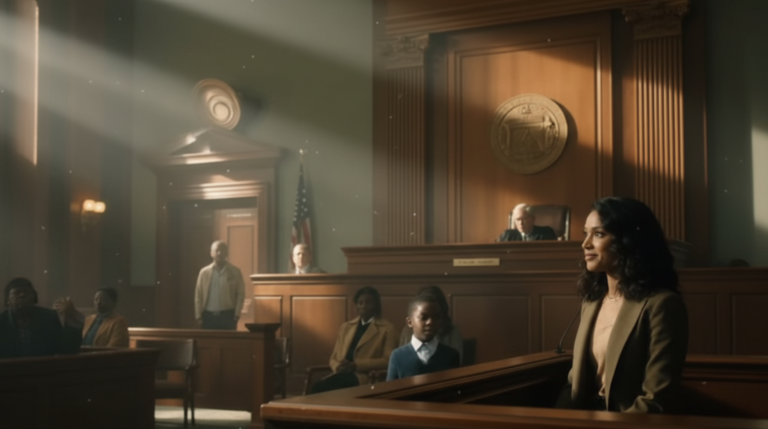
The trial didn’t take long once the videos hit the courtroom.
Victoria sat in a tailored suit, hair perfect again, like she thought presentation could erase evidence.
It couldn’t.
The prosecutor held up Emma’s pink notebook.
“This child documented starvation,” she said.
Victoria’s attorney tried. “She’s a disgruntled teen.”
Emma took the stand anyway, hands shaking, voice clear.
“She locked us in the closet,” Emma said. “She said food was for good kids.”
Victoria scoffed audibly.
The judge snapped, “Ms. Hale, one more outburst—”
Victoria rolled her eyes like the judge was inconveniencing her.
Then Patricia testified.
Then the detective played the kitchen footage.
The ghost pepper cracker.
Thomas screaming.
Victoria sipping wine.
In the jury box, a man covered his face with both hands.
A woman shook her head slowly, tears spilling.
Victoria sat very still.
Her mouth tightened.
For the first time, she looked like she realized she wasn’t in control.
Harold leaned toward me and whispered, “This is over.”
I held Emma’s hand in one grip and Thomas’s in the other.
Thomas had a small stress ball from therapy in his lap, kneading it with his fingers.
He glanced up at me. “We’re leaving after, right?”
“Yes,” I whispered. “Right after.”
The verdict came back.
“Guilty on all counts.”
Victoria’s face went blank.
Not tears.
Not regret.
Just calculation crashing into reality.
At sentencing, the judge didn’t raise his voice.
He didn’t need to.
“What you did was prolonged torture,” he said. “You weaponized food, isolation, and fear against children who depended on you.”
Victoria finally snapped. “They made me do it!”
The judge stared at her. “Forty years in state prison.”
A sound broke from my chest—half sob, half breath I’d been holding for too long.
Emma put her face against my shoulder and cried like she was finally allowed.
Victoria was led away in cuffs.
She twisted, trying for one last performance. “Michael! Tell them! Tell them!”
I didn’t stand.
I didn’t shout.
I just watched the door close.
And when it clicked shut, something inside me unclenched.
—
We sold the mansion the next month.
Emma didn’t want to step inside it again.
Neither did I.
We moved into a smaller house where the kitchen felt like a place you lived, not a stage you survived.
The first thing I did was remove the lock from the pantry door.
I set the little latch on the counter and asked, “Want to do the honors?”
Emma picked it up like it was poisonous, then dropped it into the trash.
“It’s gone,” she whispered.
“It’s gone,” I repeated.
Thomas went to therapy. Emma did too.
I went, even when it made me feel weak, because my kids needed a dad who could sit in pain without running.
The first time Thomas asked for seconds, I had to turn away so he wouldn’t see my face.
“Dad?” he said, worried. “Are you mad?”
I crouched beside him. “No. I’m happy.”
He studied me like he didn’t trust happiness yet.
Then he nodded once. “Okay.”
Years passed, but not in a blurry way—more like each normal day was a brick laid down on top of the nightmare until it couldn’t reach us anymore.
On a Saturday morning, Emma was at the stove flipping pancakes with theatrical seriousness.
Thomas, seven now, stood beside her in socks, arguing like it was a courtroom.
“That one is burnt,” he declared.
Emma smirked. “It’s rustic.”
I sipped coffee and watched them like it was the most expensive thing on earth.
Thomas pointed at the open pantry. “We still got cereal?”
“We’ve got three boxes,” I said.
Emma glanced at me. “No locks.”
“No locks,” I agreed.
Thomas climbed onto a chair and poured syrup so aggressively it splattered the plate.
“Hey,” Emma said, laughing, “calm down.”
“It’s my syrup era,” he said, dead serious.
I laughed—real laughter that didn’t end in panic.
Later that afternoon, Harold texted me a photo.
Victoria in prison intake, hair flat, face bare, eyes dull.
Under it, one line: APPEAL DENIED.
I stared at the screen, then set my phone face down.
Emma looked up from the table. “What?”
“It’s finished,” I said.
Thomas frowned. “She can’t come back?”
“No,” I told him. “She can’t come near us again. Ever.”
Thomas’s shoulders dropped, like he’d been holding that question inside for years.
Emma released a long breath and leaned back in her chair. “Good.”
I walked to the pantry, pulled out a box of snacks, and set it on the table without thinking.
Emma’s eyes followed it.
Thomas reached in, grabbed a granola bar, and tore it open like it was the easiest thing in the world.
He took a bite, chewed, and smiled with crumbs on his lips.
Nothing dramatic.
Just safe.
That was the payoff.
Victoria got forty years, ensured by video proof, medical evidence, and a brave girl’s notebook—and we got our life back, full pantry and all.