She Recorded One Lunch Fight—What Played Back Shocked Everyone
They cheered when my brother broke my nose… But a secret recording flipped the room and exposed him.
“The bell rang,” I said. “He walked up like he owned the hallway.”
“Relax,” Evan whispered, smiling as he passed me. “You can’t touch me.”
I tasted metal before I saw the floor.
“I didn’t feel it at first,” I told the principal. “Just white. And then blood.”
“Where’s your family?” the nurse asked.
“My mom is here,” I said. “She—”
My mother came running down the corridor with every other adult behind her. For a second I thought she was coming for me.
She didn’t stop.
“Mom!” I called. “Please—”
She ran past and wrapped her arms around Evan like he’d been hit by a bus.
“He attacked me!” Evan sobbed, voice breaking, one arm clinging to his chest.
“She assaulted my son,” my mother said, so steady it sounded rehearsed.
“That’s not what happened,” I said. “He—”
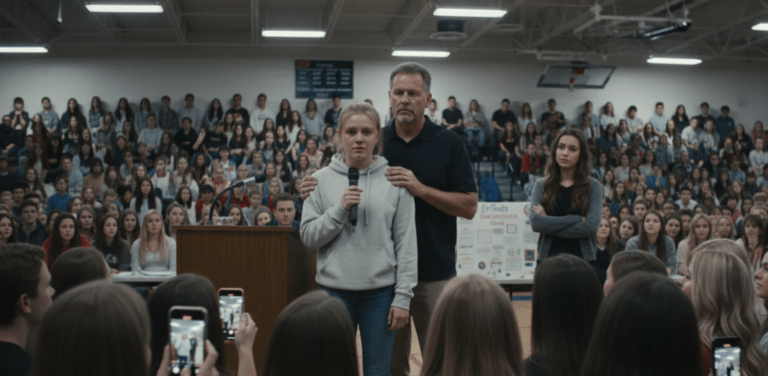
“Office. Now,” the principal said. He didn’t ask me anything. He led me through the crowd of staring faces and phones pointed like daggers.
Two weeks earlier I had pulled the little phone out of my pocket and kept it recording.
“Why would you do that?” my best friend had asked.
“Because,” I said, “if he ever did this in front of everyone, I wouldn’t be the only one who saw it.”
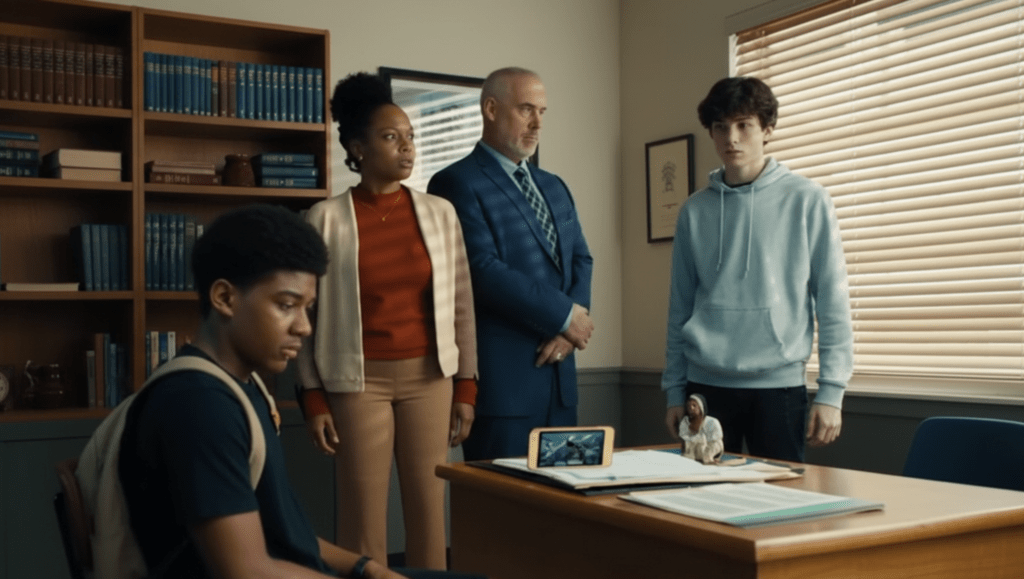
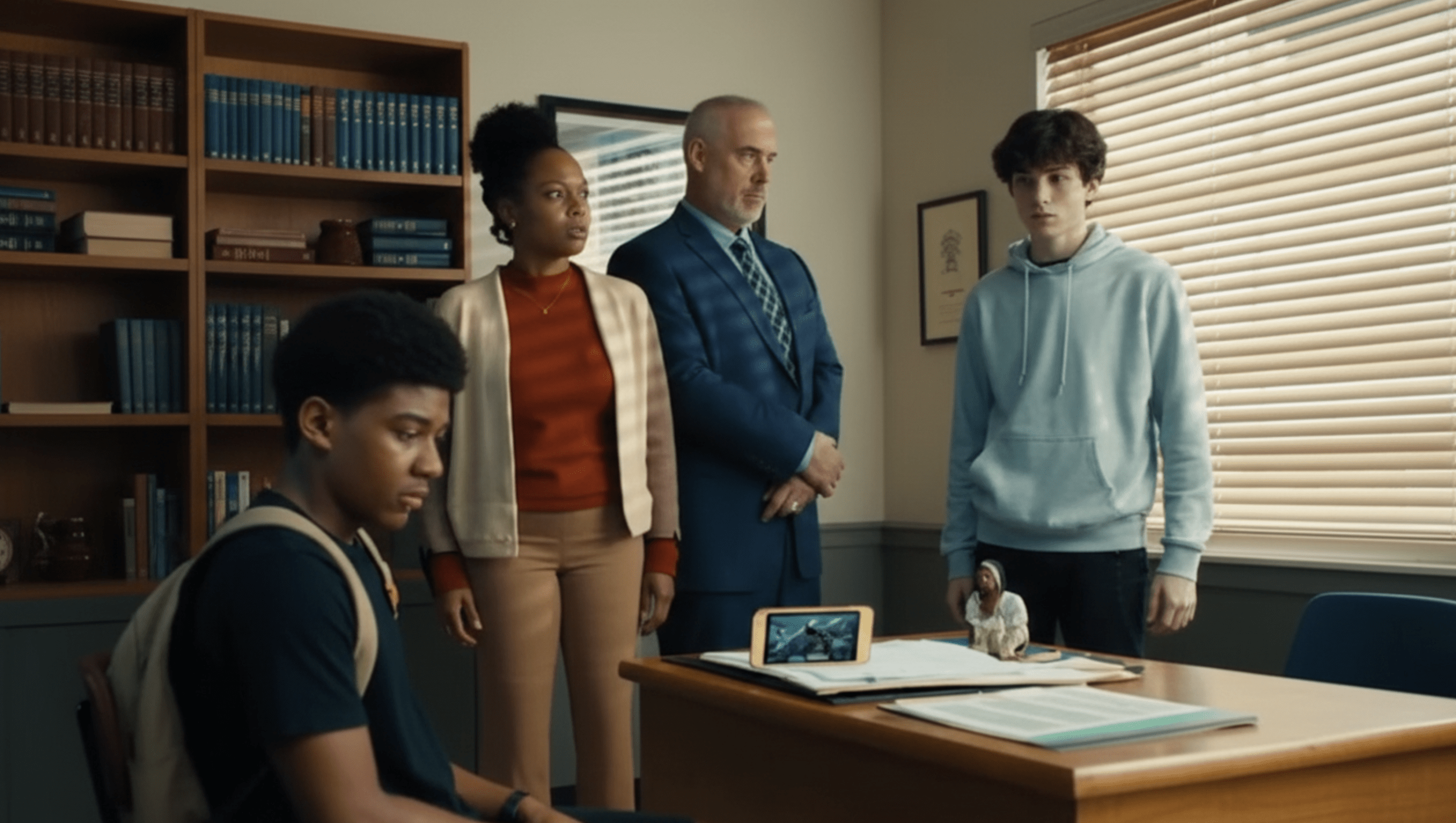
They closed the office door. The principal sat like a judge. Evan kept his head down, blowing his nose, tears shining.
“Let’s clear this up,” the principal said.
My mother stared at me as the principal reached for my phone.
“Is that yours?” she asked.
“It is,” I said. “I recorded it. Please, just—”
He pressed play.
Evan’s voice filled the small room. Calm. Arrogant.
“You know Mom will believe me. Always.”
“You know the line,” one of his friends laughed in the video.
“Come on, cry today,” Evan said in the recording.
Then the shove.
Then a hard, clean punch.
Then laughter—high, cruel.
Silence in the office swallowed the sounds coming from my phone.
My mother’s hands covered her mouth. My father’s jaw worked like he was swallowing something too big.
“That’s enough,” the principal said after a long beat. He stopped the video and turned it off.
Evan lit up, panic cracking his practiced sadness. “That’s not— I didn’t—”
The principal didn’t let him finish. “I’ve seen enough.”
“Suspension,” he said. “All involved.”
“You’re kidding,” my mother whispered, staring at Evan like trying to peel off a mask.
At home that night my mom sat at the foot of my bed and wept without sound.
“I didn’t see it,” she said. “He always did this—small things—and I thought you were being dramatic. I should have listened.”
“My dad knocked,” I said. “He actually knocked and said, ‘I failed you.'”
“You mean he admitted it?” my friend asked later, incredulous.
“He did,” I said.
The next day the hallways changed. It wasn’t loud or flashy. It was small things like doors not slamming behind students who used to shove me aside. It was a teacher stopping to ask, “Are you okay?” not to make a show but because she meant it.
“People apologized,” I said. “Some couldn’t even meet my eyes.”
“Do they mean it?” someone asked.
“Some did,” I said. “That counts.”
Evan stopped talking to me. He watched me from across the cafeteria sometimes, but the smile was gone. The people who cheered him on were suspended along with him.
“I thought he’d be favored forever,” I told my counselor. “I thought my family would always choose him.”
The counselor put a hand on my folder. “Proof changes things,” she said.
“Proof changes everything,” I repeated. It was a sentence I had repeated until it no longer hurt to say.
He had been “special.” That was the word my parents used like armor. At home he got second helpings, new shoes, explanations. I got quiet lessons in gratitude.
“You have to be patient with him,” my dad would say without looking up from his phone.
“Patience,” Evan said once as he walked by my room, slow and smug. “You’ll see.”
It started as tiny injuries: a shoulder drop in the hall, a boot tucking into my ankle on the stairs, a stack of books sent spilling like some awkward ritual.
“Oops,” he said each time, with a smile that made the teachers laugh. “Sorry, accident.”
When he and his friends bumped into me, it was “Oops” with cameras out and snickers chasing my face.
At school they laughed at his jokes and excused his hands when they weren’t gentle. At home they called him “special” and patted him on the head while telling me to “be the bigger person.”
“What did you expect me to do?” I asked once. “Ask them to stop?”
“Be grateful you have a brother,” my mother told me. “Be patient.”
So I waited until I couldn’t anymore.
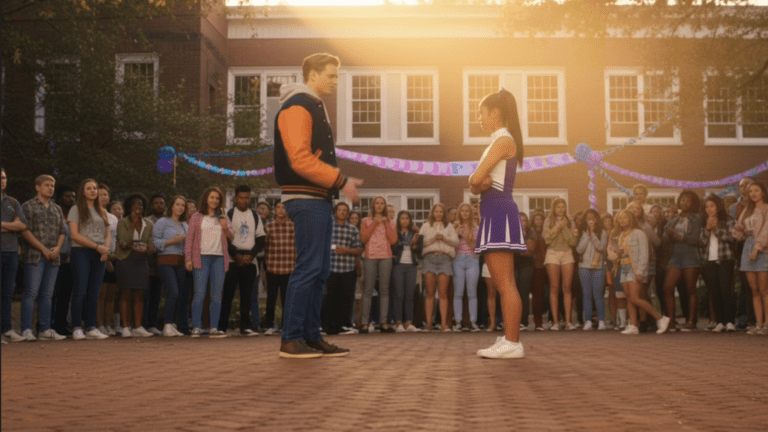
The cafeteria was crowded that day. Trays clacked. Voices rose. Evan leaned across the table like a king leaning over his court.
“Cry today. I dare you,” he murmured.
I stood up.
He shoved me.
I pushed back.
Then a fist knocked me sideways and the world exploded into white.
They cheered.
“No one asked if I was okay,” I said. “They filmed it. They cheered.”
“Why didn’t you fight back?” someone asked.
“I did,” I said. “I stood. I shoved. It wasn’t enough.”
My mother ran in like she always did in movies, but for him. For Evan.
“She attacked me,” he wailed to the crowd.
“She attacked him,” my mother repeated, voice perfectly torn.
I sat in the principal’s office while my friends turned into witnesses and the room smelled like institutional coffee and old wood.
“You filmed this?” the principal asked.
“Yes,” I said. “Two weeks ago I decided I wasn’t going to be invisible if he did this in public again.”
He hit play. The video was clean and simple. Voices. The shove. The punch. Laughter. My brother’s voice loud and sure. My face in it.
“Why didn’t you show this to us earlier?” my father asked afterward, voice small with guilt.
“Because two weeks ago it hadn’t happened yet,” I said. “Because I was afraid they wouldn’t believe me.”
“Why wouldn’t we?” my mother asked, still dazed.
“You called him ‘special,'” I said. “You made space for him. I was the one who had to shrink.”
After the video, there were consequences. Evan was suspended. His friends were suspended. Teachers who had laughed at jokes that were meant to hide aggression apologized in the hallways, eyes wet.
“She didn’t deserve that,” one teacher told me. “I should have watched better.”
My parents changed. Not like a play change, but like something that had been locked clicked open.
“My mom cried that night,” I said. “No excuses. Just apology.”
“And your father?” someone asked.
“He knocked on my door,” I said. “He said, ‘I failed you.'”
It was a sentence I had waited to hear for years. It didn’t undo anything, but it opened a space where some truth could get in.
At school it didn’t become perfect overnight. People whispered for a week. Then it settled into something quieter. The laughter that used to chase me faded. A teacher stopped by and asked if I wanted to sit with her class sometimes. I said yes.
“Evan stopped talking to me,” I said. “He sits with his friends, but the shine is gone.”
“Do you feel better?” my friend asked.
“I feel safer,” I said. “And I feel seen.”
“That’s a win,” she said.
There was fallout. Evan’s suspension was recorded at the board meeting. They called the parents in. The principal explained about favoritism and the harm it causes when adults protect children who consistently hurt others.
“It was clear,” the principal told the school board. “We can’t excuse this behavior.”
For the first time, the word “consequence” touched our halls.
“Did he ever say sorry?” someone asked.
“He didn’t,” I said. “He sent a text once. It was empty. ‘This sucks.'”
“Not an apology,” my mother said, angry.
“No,” I said. “Not at all.”
My mom stopped saying “special” like a shield. She stopped explaining his behavior away with easy phrases.
“I didn’t see it,” she told me, “but I will listen now.”
My dad started coming to parent nights. He asked questions that were not about numbers or college brochures. He asked about how the school handled bullying. He asked how to support his child that hadn’t been supported.
It wasn’t dramatic. It was work.
“You must forgive them?” a counselor suggested.
“Forgiveness isn’t automatic,” I said. “I don’t owe him anything. I want peace.”
And peace came in small measures. No jokes about him at lunch. No slammed lockers at my back. People saying my name without the curl of laughter at the end.
One day a boy who had been one of the loudest in the crowd came up to me and said, “I’m sorry. I laughed.”
“Thank you,” I said. “I needed to know some of you saw it was wrong.”
Karma looked like suspension letters and tearful apologies. It looked like a principal who finally acted. It looked like my parents seeing clearly instead of choosing favorites.
“But did it fix everything?” someone asked.
“No,” I said. “It didn’t fix the past. But it stopped the pattern.”
I replayed the day in my head sometimes. The voice that had told me to be patient. The shove. The punch. The video that made it impossible to say otherwise.
“It was proof,” I told a group in workshop. “It was simple proof. It changed the room.”
My brother lost the shield he had used for so long. He lost the automatic favors. He lost the cheer.
“And me?” someone asked.
“You got a seat at the table people actually look at,” I said. “You got to be heard.”
I closed with this: silence protects the wrong people.
“If you are bleeding quietly,” I said to the group, “find a way to make the truth visible. Evidence matters when the adults you trust don’t.”
My mother hugged me that night. Not like before, like a patron or a defender of the golden child, but like someone who had finally realized a long mistake.
“I should have believed you sooner,” she whispered.
“You did when it mattered,” I said.
The school changed its policies. The board updated the disciplinary steps. Teachers got clarity on what “special” could not excuse. Evan’s suspension was temporary, but consequences stayed in his records. He had to meet with the counselor. He had to attend restorative sessions that you could tell were uncomfortable for him.
“And the crowd?” someone asked.
“They stopped cheering,” I said.
That was the quiet win.
“Is he still your brother?” my friend asked later.
“He is,” I said. “Blood doesn’t switch. But he is not my protector. He’s just someone who had to face a consequence.”
We ended the story the way it actually ended: with accountability and space to breathe.
“Justice sometimes looks small,” I told my counselor. “A suspension. A parent’s apology. People stopping their laughter.”
“That’s still justice,” she said.
And it was.
There was a closed ending to it. Evan was suspended. The teachers who enabled him were called out. My parents admitted their blindness and started to unlearn it. I stopped getting shoved by strangers in the hall. The boy who hit me had to own what he did in front of people who mattered.
“I’m not healed of everything,” I said. “But I got evidence, I got acknowledgement, and I got safety.”
That was the payoff—the day the record played and the room changed. It didn’t erase scars, but it served justice where silence had protected the wrong person. Peace settled like a quiet room after a storm, and the people who had cheered had to live with the knowledge that cheering had consequences.
I tell this because someone reading might still be bleeding quietly. Speak, record, and demand to be seen. It might not fix every wound, but it can end the loop of protection that lets the cruel keep their power.
“You’re safe now,” a teacher said to me once.
“I am,” I said.
It wasn’t revenge. It was right. And that was enough.