She Locked a Bald Child Out—His Grandpa Showed Up Armed
They locked my chemo‑patient son in the freezing rain for violating the dress code…
But they didn’t know his grandfather was a four‑star general.
“Get to the school. NOW.”
The four‑word text hit like ice. My hands slipped off the steering wheel.
“Leo,” I breathed.
“Mom?” Leo’s small voice came from the door inside the cafeteria—only it wasn’t my Leo. That voice on the video would be mine in a minute.
I was running before I thought. I tore through the parking lot, mud spraying, heart like a fist.
“He’s back! He did chemo Friday!” I told Mrs. Gable at drop‑off. “He needs to be inside.”
“We’ll take good care of him, Ms. Miller,” she said, smiling a practiced smile. “Saint Jude’s Academy prides itself on inclusivity.”
“Inclusivity,” I repeated once I could breathe, and left instructions that looked like a doctor’s chart.
When I rounded the corner of the playground, he was there.
“Leo!” I screamed.
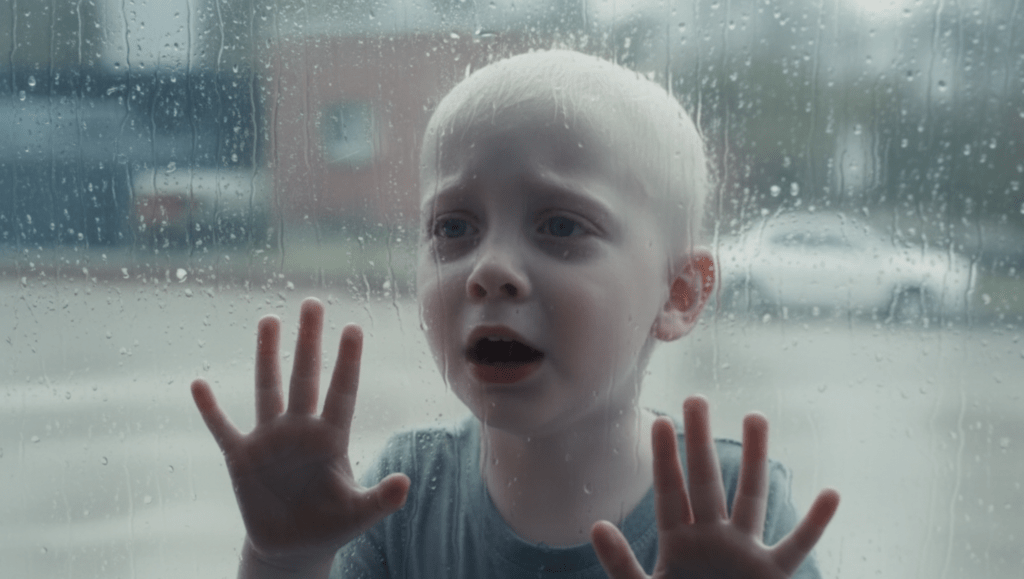
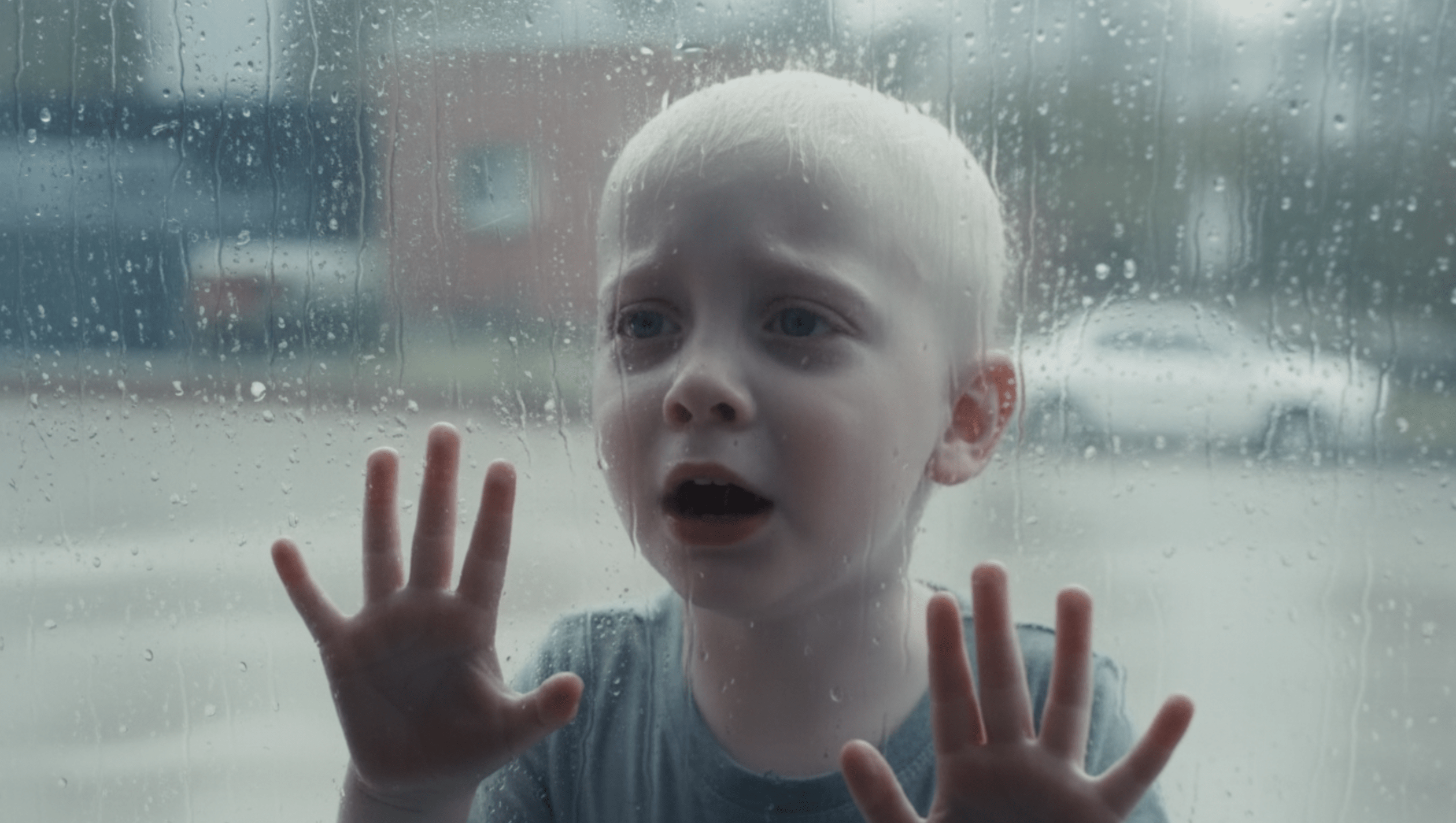
He stood with his hands flat against the cafeteria glass, shoulders shaking, beanie gone, head wet with rain. His lips were blue.
“He’s seven!” I screamed.
“Ms. Miller,” Mrs. Gable said, opening the door an inch like the world was not on fire, “please lower your voice. You are disrupting the lunch period.”
“Disrupting?” I pushed. “He has leukemia. He just finished chemo. Do you have any idea what you did?”
“He violated the dress code,” she said, calm as if she were reciting policy into a broken machine. “He refused to remove his hat indoors. Policy requires removal. Non‑compliance results in removal from the general population.”
“Removed into thirty‑degree rain?” I grabbed the handle. She planted her foot.
“If he dies,” I whispered, the words tumbling out cold, “I will kill you.”
She laughed. “Threatening faculty is a felony. Security will be called.”
“I’m not leaving him!” I shoved, wedging my foot under the door as she tried to close it.
“He threw a tantrum,” she said. “We had to ensure safety.”
“He’s seven,” I screamed. “He’s sick.”
“He needs discipline,” she snapped.
He did not have the strength to stand when my breathe reached him. He slid down the brick and closed his eyes. My fingers were slipping on the wet glass.
“Please,” I begged. “Please. Just let him in.”
The ground started to hum.
Mud flew as three matte‑black SUVs barreled through the playground gate like instruments of weather. Doors swung open. Men in tactical gear dropped to the ground, methodical and precise.
A man in a long trench coat walked from the back seat. He wore Dress Blues beneath the coat, medals catching the gray light. He carried authority the way other people carried names.
“Dad?” I said, as if expecting anything else.
He stepped up to the door, took my boy, and said, “Breach it.”
The door shattered like a promise.
“Secure the perimeter,” he said. “Doc.”
“Who are you?” Mrs. Gable blurted, voice small.
“My name is Frank Miller,” he said. “And you just endangered my grandson.”
The medic—Doc—moved like a practiced hand. “Hypothermia. Core temp dropping. Start passive rewarming, then active.”
“Mom?” Leo whispered, eyes glassy.
“I’m here,” I said, wrapping his cold arms around him.
Mrs. Gable clutched her coffee like a lifeline and shrieked about calling the police. My father did not raise his voice. He walked thirty feet in measured steps and laid Leo across a table the way a surgeon lays out tools.
“You locked an immunocompromised child out in freezing rain?” he asked.
“It’s policy,” she said. “I follow the rules.”
“Policy,” he said, like a verdict. “You don’t get to hide cruelty behind policy.”
“Call the police,” she barked.
Sirens came. Two officers swung into the cafeteria, hands on holsters. The first officer saw the Dress Blues and snapped to attention.
“General Miller, sir!” he barked.
Mrs. Gable’s face turned white. “Arrest them! He’s trespassing, assaulting staff!”
“What’s the nature of the emergency?” the officer asked.
“A kid froze!” I said. “She locked him out because of a hat.”
“She broke the door!” Mrs. Gable wailed.
“She endangered a child,” my father said. “Is the child safe now?”
“We’re stabilizing him,” Doc said. “IV here, warm blankets.”
The officer swallowed. “Understood, sir. We’ll stand down for medical.”
“Take him to Walter Reed,” my father said.
“No,” the officer replied. “There’s an ambulance two minutes out.”
“Cancel it,” my father said. “We’re taking him.”
“Sir, do you require an escort?” the officer asked.
“Don’t involve them,” my father said. “We are leaving.”
Mrs. Gable stormed toward them like a lioness with a clipboard. “This will be on your record—the media will love this. You can’t break into a school!”
The room snapped with tension. I clutched Leo and felt the humidity leave him as warmth crept back.
“And if they report us,” my father said, “we will own the narrative.”
He was already moving, people flowing like a current around him. Men set Leo in a medical pod in the back of an SUV that smelled like equipment and disinfectant and safety. I climbed in, shaking.
“Why now?” I asked, when the engine hummed and the rain hit glass like tiny drums. “Why break in? You could have helped before.”
“I couldn’t break one rule to save my daughter,” he said. “You told me to stay out. I stayed out. Today I didn’t.”
He looked down at Leo sleeping in his oversized coat, a child’s face folded into safety.
“Gable will spin this,” he said. “She’s already calling the Superintendent. She’ll say we assaulted staff. She’ll say you incited violence.”
“She locked him out!” I cried.
“She is filing with CPS right now,” he said. “She’ll say you endangered him. We don’t have time to be polite.”
“What do we do?” I asked.
“We own the footage,” he said. “We have what we need. We leak the truth.”
We left the school in a storm of mud and headlights. The SUVs cleared the gate at his estate like beasts returning to lair. The house—The Fortress—rose like an accusation out of the trees.
“You built an ICU?” I said, following him upstairs.
“We prepared for worst,” he said. “Doc will finish. Meet me in the study.”
The study smelled of old money and plans that never failed. Screens lined one wall, pictures of service and power. A bank of live feeds played news loops: “Billionaire General Attacks Suburban School,” “Kidnapping Investigation Underway.”
Onscreen, Mrs. Gable stood before reporters, small and indignant. “They stormed my school,” she said. “They were violent. My staff is traumatized.”
“She’s good at acting,” my father muttered. “She deleted the school tapes. But not all tapes are deleted.”
He tossed a folder at me. Eviction notices. Speeding tickets. A statement from Mark—my ex.
“Sarah is unstable,” Mark had written. “She refuses help. She exposes the child to risk.”
“He left,” I said. “He left on day one.”
“I know,” my father said. “But paper looks like truth to courts.”
“Take him and run,” I said. “We’ll hide. We’ll avoid CPS.”
“You’ll go to jail,” he said. “They’ll take Leo into foster care. You won’t survive the paperwork.”
My throat closed. “So what, I sign over parental rights to you?”
“You move home,” he said. “You let me fight. I will put my money where my mouth is. My lawyers, my influence. But you obey me.”
“Obey you?” I laughed, a dry sound. “You made my life hell. You never helped.”
“I made you hard so you’d survive. You survived. But you didn’t have to.” He stepped closer. “I want my family back, Sarah.”
The buzzer on his desk flashed red. “Report,” he said.
“General, there’s movement at the main gate. CPS and police with a warrant,” the security chief said.
“Do not open the gate,” he ordered.
My head spun. Agents at the gate. The paper would mean emergency custody. My son could be taken.
He stood, buttoned his jacket the way he used to button it when the world had simple enemies. He picked up a small black phone. “I’m calling the Pentagon,” he said.
“You can’t call the military for a custody fight!” I said.
“Watch me,” he said.
He leaked the footage to every outlet. Not the edited, panicked clips. The raw sled of truth: my voice screaming, Leo at the glass, Gable sipping coffee.
The next minutes were a hurricane. News vans queued at the gate. Cameras trained like teeth. Police and CPS arrived under the glare of the lenses.
My father walked out in his Dog‑tags and medals, no umbrella, rain thrumming. He stopped at the gate and addressed the microphones like a courtroom.
“Open the gate,” he commanded.
Ms. Vance, CPS, held a warrant up like a banner. “General Miller! We have an order for immediate removal—”
“Who filed it?” he asked.
“Confidential,” she snapped.
“It was Principal Gable,” he said. “The woman who left my grandson to freeze.”
He turned the estate’s security monitors to the school feeds. The glass door clip played on a loop for the world to see. People quieted. The reporters inhaled as if hearing a verdict.
“Turn that off!” Mrs. Gable screamed, pushing through the crowd.
The officer who’d saluted him earlier stomped forward, hands steady. He took Mrs. Gable, cuffed her, and read three counts so clean it sounded like a bell: reckless endangerment, criminal negligence, filing a false report.
Her face broke. The cameras chewed it. The court of public opinion shifted like tectonics.
“Your footage is authentic?” Ms. Vance asked, voice small now.
“It is,” my father said. “Investigate the school. I will not have my grandson taken from my daughter.”
They did not take him.
They did, however, take Mrs. Gable.
Inside, Doc packed Leo for transport. My father had already issued a strategy: press conference, legal team assembled, a demand letter to the school board, scholarship fund language drafted on a tablet.
“You did what?” I asked later, voice raw in the study.
“I called favor,” he said. “I called an old friend at the VA. I ordered a statement. I leaked the footage. We go on air in twenty.”
“You’re going nuclear.”
“I am a father,” he said simply. “There is no honor in watching a child die.”
The press was a maelstrom. My voice, raw and ragged, read as truth. My father stood behind me, an unblinking monument. “My daughter is not perfect,” he said into microphones. “She is brave and she loves her son. The school failed us.”
The school board convened emergency meetings. The Superintendent tasted panic. Mrs. Gable hired a lawyer, but tapes don’t lie. The lawyers moved in ivory clocks and pointed phrases; my father moved in conviction and cameras.
CPS delayed. They launched an investigation into Saint Jude’s. The district ordered a full audit of the dress code policy.
“Settlement,” my father’s lawyer said later, hands steepled. “They will pay. They’ll agree to a fund. They will revoke Gable’s license. They will publicly apologize. You won’t have to testify in every hearing.”
“You’re sure?” I asked.
“I’m sure,” he said. “We have what we need.”
Years of sleepless nights—IV bags, chemo schedules, missed rent—flashed behind my eyes. “Why now?” I said again, softer.
“Because I saw your video and I couldn’t stand it,” he said. “Because nobody weeps alone under the sky while others drink coffee.”
He opened the family album later while Leo slept, and I saw my father as a man, not a rank. He showed me pictures of me as a child in a too‑big uniform shirt, my serious face, his rigid love.
“You ran because I was hard,” he admitted. “I thought tough love would protect you. It turned you away.”
“I didn’t want your world,” I said.
“You survived without me,” he said. “And I am ashamed of what I missed.”
He didn’t demand everything back. He offered a partnership: legal muscle, resources, and a rebuilt life. I took it because my son needed cold to be kept out of his lungs, not fury to live in his heart.
The school board paid more than money. We got an endowed scholarship in Leo’s name, to fund children with cancer, to train teachers on medical accommodations, and a clause to fire any principal who puts policy over a child’s life.
Mrs. Gable’s license was revoked. She lost her job, her reputation, and her pension in bureaucratic rust. The police record had her cuffs and the press had her sigh. Public comment turned on her like a winter wind.
“Justice,” I said, the word small in my mouth.
“Accountability,” my father corrected. He sat on the porch watching Leo chase a dog around the lawn. “Justice is making sure it never happens again.”
Six months later the house breathed like a living thing. The pediatric ICU suite became a playroom with monitors hidden behind murals. Doc came for checkups like family. My father, General Miller, learned to make pancakes and to laugh in a way that didn’t feel like an exercise.
“Higher, Grandpa! Higher!” Leo shouted on the swing.
“Ready to take off, cadet!” my father roared, pushing until my son’s legs cut the sky.
Remission papers arrived like letters that heal walls. “Clear scans,” the oncologist said. We cried like people who’d been holding their breath for years.
“Settlement finalized,” the lawyer texted. “Scholarship endowed. Board agreed to terms. Gable’s license revoked. Fund will be managed by an independent trust.”
I sat on the patio, the sun warm, the noise of children and soldiers playing in the yard. My phone slid from my hand to the table. The papers were meaningless without the small boy dancing in the grass.
“You okay?” my father asked, watching me.
“I think so,” I said. “We won.”
He smiled then, something soft and messy that didn’t exist in service photos.
“You did,” he said. “You fought. I only showed up late.”
We watched Leo fall into my father’s arms, two wrestlers rolling on the lawn, dirt and laughter braided together.
“You’re my hero, Mommy!” Leo said, breathless.
“My hero?” I hugged him until he squealed.
My father sat back on the grass, looking at them both, the hard lines in his face finally softened into relief.
“You’re my family,” he said to me. “That’s all I’ve ever wanted.”
“In the end,” I said, voice thick, “the school paid. Mrs. Gable paid. And Leo? He got to live.”
“That’s the punishment that mattered,” my father said. “And the repair we had to make.”
He kissed the top of Leo’s fuzzy head. “Semper Fi, little man. Always faithful.”
“Always faithful,” Leo echoed.
We had consequences: arrest, license revocation, public apology, scholarship, and a legal settlement that kept us afloat without a fight. We had a reckoning: a principal whose rigid rule cost more than her job ever paid. We had an ending: a boy home, a father back in the role he’d denied himself too long, and a mother who finally let the armor down.
The war was over.
The good guys had won.