She Dumped Industrial Paint on My Daughter—I Called in Black Hawks
They dumped industrial blue paint on my seven-year-old’s grandmother-made dress… But I diverted Black Hawks and the division to turn a playground into a courtroom.
“Ava calls it her ‘Magic Dress,’” I said, more to myself than to anyone in the mirror.
“She only wears it on special days,” my wife said from the doorway. “Today’s her birthday.”
“You look like a cloud, Mommy,” Ava whispered to herself when she twirled in the hall.
“I’ll be back by three,” I promised, kissing the top of her head. “Tea, just me and you.”
“You better be,” she said, beaming.
“You will,” I said. Then I left for the briefing.
“Recess,” the PA announced across the sun-blanched field.
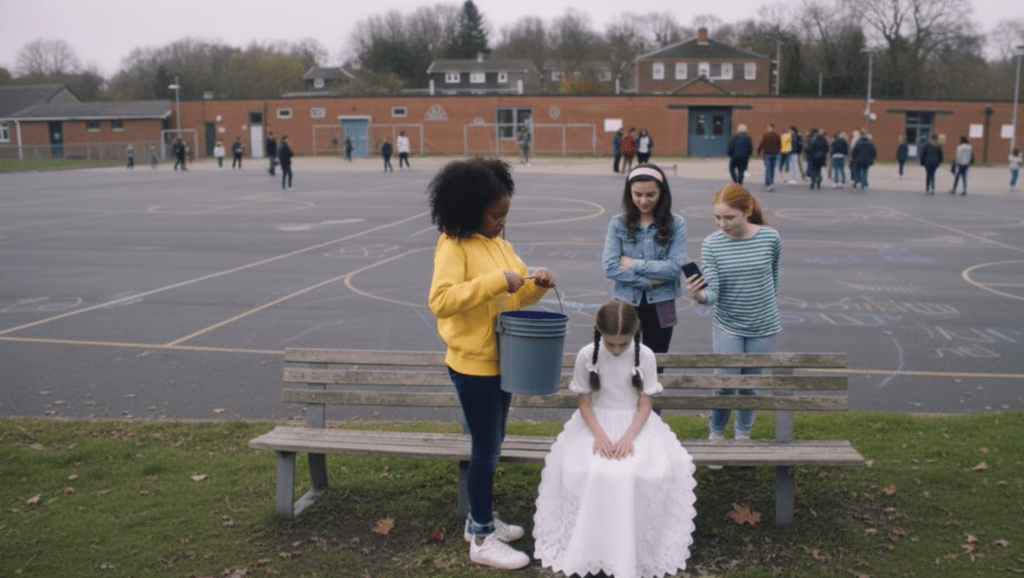
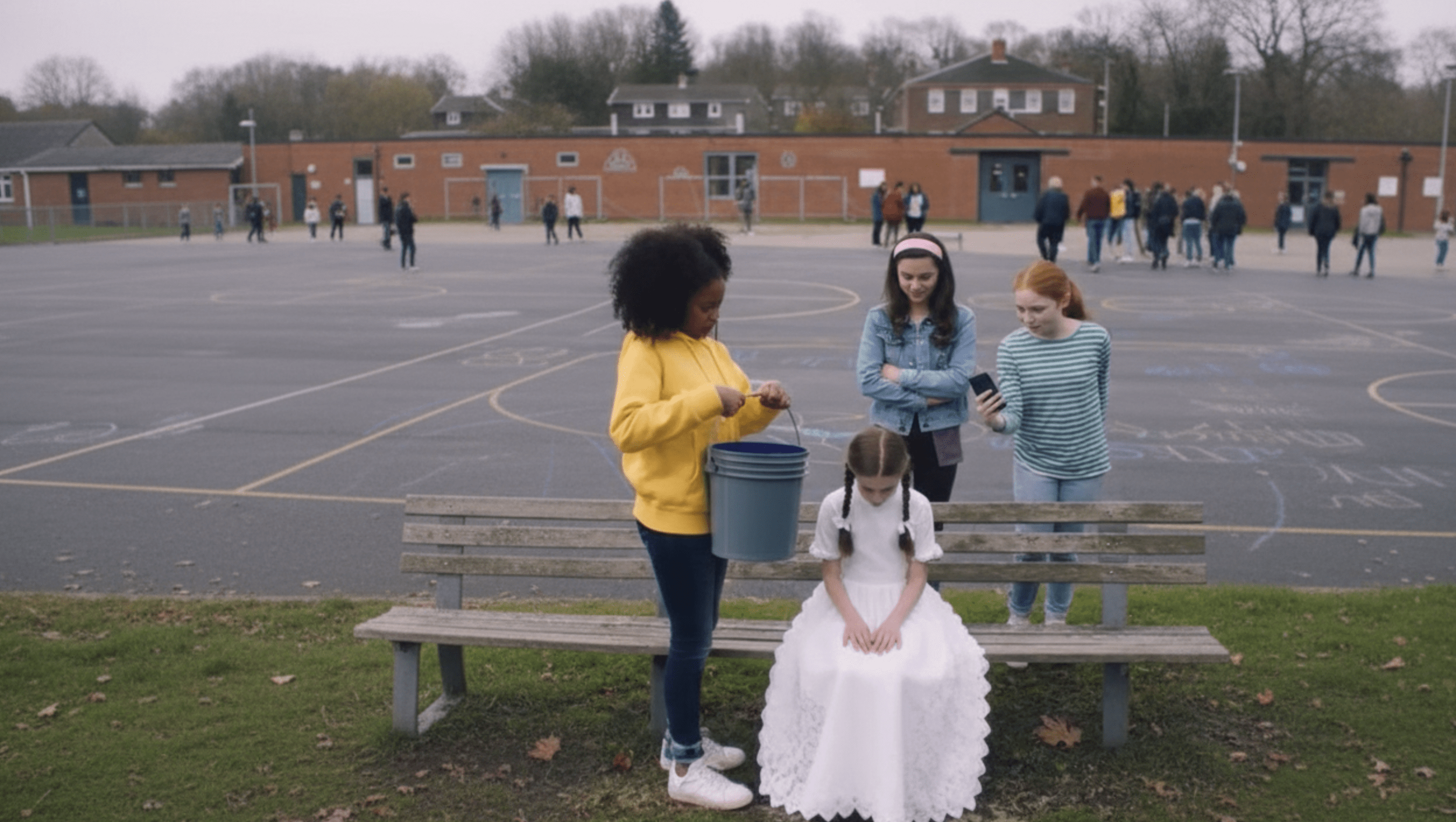
Ava sat on a bench, her book open, fingers smoothing the lace like she was petting a cat. She didn’t notice the shadows.
“Look at her,” a voice slithered. “Does she really think she’s a princess?”
“That dress is ancient,” another girl chimed. Laughter broke like glass.
Ava looked up. “It’s not a rag. My grandma made it.”
The older girl, Chloe, sneered. “Looks like something a maid would wear.”
They were holding buckets. Big plastic art buckets, but they weren’t filled with tempera.
“We think it needs a makeover,” Chloe said.
“Please, no!” Ava stood.
“She can run,” another girl said. “But she can’t run from paint.”
“One… two… three!” they counted, smirking like it was a game.
The paint hit.
Ava’s face changed the instant the blue struck. There was a thump of impact, a cold slap, lace collapsing into a smear. The color ran through the silk, the thread, the folds my mother-in-law had coaxed into life with her hands and patience.
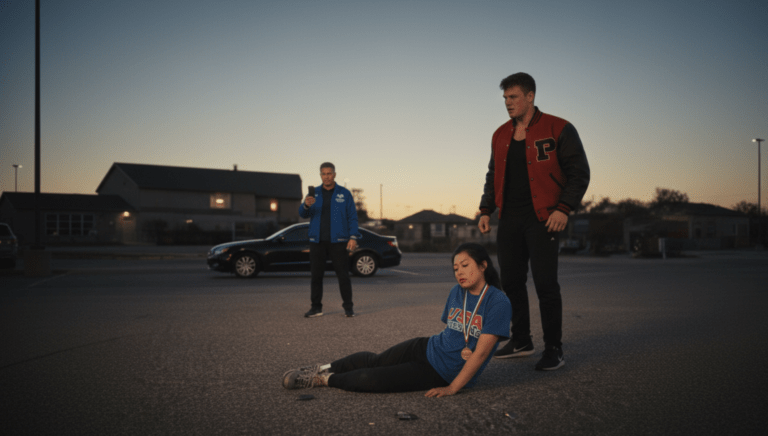
Ava fell to the concrete. She didn’t scream. She looked at the dress and made a sound like the ocean—small, breaking.
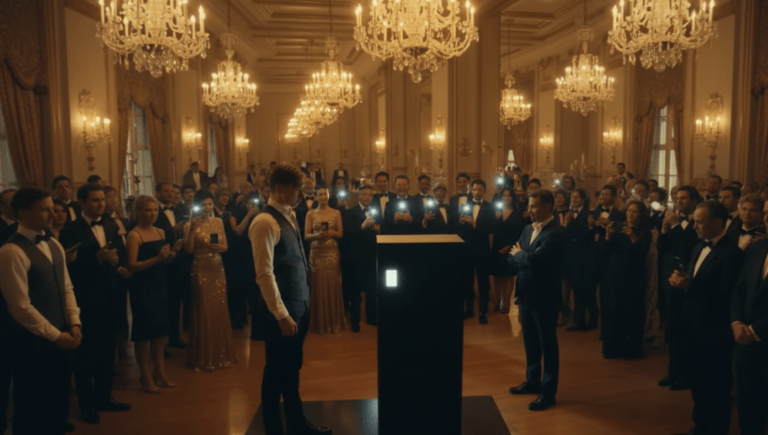
“Now you look like a Smurf!” Chloe shrieked and snapped a photo.
“Post it,” someone laughed. “The Blue Trash of St. Jude’s.”
The teachers were clustered by the paved track, talking about curriculum and donations. Nobody moved.
Ava tasted blue. Her eyes burned. She coughed and tried to stand, but the paint was heavy and thick and stupid.
She sobbed once. Then she sobbed again.
My phone vibrated five miles away.
I didn’t dial the school. I didn’t call the police.
“Abort the briefing,” I told my Sergeant Major without preamble. “Mobilize the Honor Guard and the 1st Reaction Team. We’re going to St. Jude’s.”
“Sir?” he said.
“Now,” I said. “Bring the Black Hawks.”
There was no time for debate.
“They flew in like thunder,” one of the mothers later said.
Three UH-60s carved the sky. The rotors dropped umbrellas and flattened hedges. The boys guarding the soccer ball froze.
A convoy hit the gravel. An armored vehicle pushed the iron gate open like it was paper. SUVs and troop carriers rolled onto the grass.
“Clear the perimeter!” barked my Sergeant Major.
The soldiers flowed like water, creating a channel from the lead SUV to the bench where Ava sat.
Chloe dropped her phone. It cracked. The preview photo stared up like an accusation.
I climbed down from the rear step. The uniform was not incidental; it was the argument I brought with me.
“Ava,” I said, kneeling. The blue smeared across my trousers before I noticed. “Ava.”
Her lashes were sticky. She peered up, the color a halo on her cheekbones.
“Bố,” she whispered. “They killed the dress.”
“They didn’t kill your magic,” I said, wiping paint with my thumb. “You carry the magic.”
I put her in my arms. Blue smeared across my chest, across medals I had worn into deserts and mountains. I didn’t care. The stain was a message.
“Who did this?” I asked, not shouting, because quiet orders do more damage than roars.
Chloe tried to disappear behind her mother’s skirts. Mrs. Vanderwaal’s white Porsche idled nearby.
“It was a prank, General,” Mrs. Vanderwaal stammered. “Children—this is overblown. We can pay for the dress.”
“You think a check will buy a memory?” I asked. “You think money can stitch back bones?”
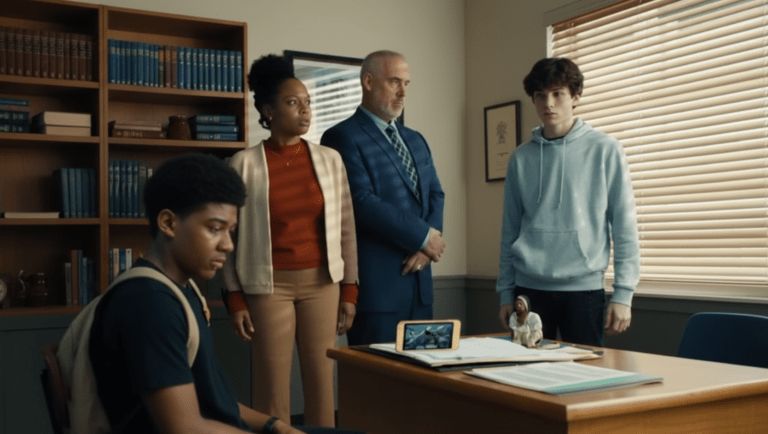
Mr. Sterling, the principal, hurried over. “This is a private school—”
“It’s got a ‘Zero Tolerance’ policy,” I said. “I read it on the way in. And I also happen to be the liaison for the National Defense Education Grant that funds your science wing.”
Mr. Sterling went pale. The world shifted under his shoes.
“By the end of this hour,” I said, “I want expulsions for the three who did this, and I want a public apology to every family in the district.”
“Expulsion?” Mrs. Vanderwaal shrieked. “My husband will hear about this. He’s a senator.”
“Tell the Senator I look forward to our next budget hearing,” I said. “I’ve been meaning to review his discretionary spending.”
She turned white enough to match the Porsche.
“Sergeant Major,” I said.
“Sir?” he answered.
“Document everything,” I said. “Photos, paint samples, witness statements. Forensics on that paint.”
“Right away, Sir.”
Chloe’s cracked phone showed her outstretched arm with blue on it. It was the perfect before.
“Smile, Chloe,” I said. “You’ll be in the ‘before’ slides at a very long lecture.”
I put Ava in the SUV and we left. No lights. No sirens. Just a convoy that looked like a message.
“My office just rang,” my Sergeant Major said quietly in the cab. “The Senator’s on the line. He’s demanding an inquiry. Unauthorized use of assets.”
“Good,” I said. “Let them call. I’ve been thinking about retirement anyway.”
The Senator did call. He did not come alone.
That evening Senator Richard Vanderwaal stormed into my study with two men in tow and an attitude he’d bought at campaign rallies.
“Thorne!” he roared, slamming his briefcase. “You mobilized troops to a grade school. You endangered my daughter. You’ve ruined your career.”
“Sit down, Richard,” I said, not looking up from my notes. “You’re getting spittle on my carpet.”
“Don’t you ‘Richard’ me!” he yelled.
I slid an evidence bag across my desk. Inside: a sample of blue, viscous and mean.
“This is not paint,” I said. “This is industrial floor sealant with cobalt pigment. It’s corrosive to eyes and respiratory tracts. Your daughter didn’t grab tempera from the closet. She took this from the maintenance shed.”
His bravado wavered.
“My daughter—she didn’t know—” he stammered.
“Ignorance isn’t a defense for assault, Senator,” I said. “And while we’re on the topic, your ‘library fund’ has a lot of money flowing through one account tied to defense contractors. Contractors under audit for overbilling my division.”
“You’re bluffing,” he said, too quiet.
“I don’t bluff,” I said. I stood, and the blue on my medals looked like war paint. “Here’s what happens. Your daughter writes a handwritten apology to Ava. She volunteers on weekends at the children’s hospital for a year. Mr. Sterling resigns by Monday. You fund the restoration of that dress by the best conservators we can find. If it can’t be restored, you make a large, public donation to a charity I choose.”
“And if I refuse?” he barked, searching for courage.
“Then I stop playing the career game,” I said. “And I start using my contact list. Donors don’t like public audits. Contractors don’t like subpoenas.”
He swallowed. His lawyer mouthed something and shook his head. Pride receded.
“Monday,” he muttered, leaving like someone whose legs had been struck.
“You owe me a favor, General,” Mr. Sterling said weakly, before vanishing.
Ava slept that night with a new bear and a blue-stained handprint on her pillowcase. I sat with my retirement papers on the desk like a bookmark in a life I was closing.
“Are the bad people gone?” she asked at bedtime.
“They’re gone,” I said. “And your dress is going into very good hands.”
The next Monday the school looked like it had been wrung out.
No helicopters. No armored vehicles. Still, the news hadn’t drained away. Mr. Sterling’s desk was cleared. Senator Vanderwaal issued a statement about “realigning priorities” and “family values” and then, quietly, nothing.
I drove Ava myself, no convoy, no theatrics. She chose a blue sundress. She held my hand like it was the only anchor in town.
As we approached, a line of soldiers stood at attention on the steps. Dress uniforms, white gloves, crisp medals. Not a show for me—this time they were for her.
“General on deck!” my Sergeant Major called. The salute that followed was crisp and then turned to Ava, who stopped like a student called to the flag.
“For me?” she whispered.
“You’re a Thorne,” the Sergeant Major said. “We’re here so you don’t have to walk alone.”
She stood straighter than I’d seen her. She walked between them and into the double doors like a small, armored person.
The inquiry that the Senator had demanded evaporated. A few phone calls, a voicemail left out of rhythm, and the Pentagon pulled its own teeth. People who could have made a fuss found themselves suddenly busy, overseas, or otherwise occupied.
“You pulled strings,” someone accused.
“I used my leverage,” I said. “There’s a difference when your daughter is the target.”
“Will the dress be okay?” Ava asked later that day, hugging a lunchbox like it was treasure.
“They sent it to the Smithsonian textile lab,” I said. “They think they can save at least the lace.”
“That’s Grandma,” she whispered, eyes wet again.
“Grandma’s work made more than fabric,” I said. “It made this girl.”
I saw the Senator’s press conference where he thanked “constituents for understanding” and announced a new focus on “ethics in charity.” Mr. Sterling’s resignation letter cited “personal reasons.” Chloe’s parents moved their family across town.
“I’ve been in wars,” I told my Sergeant Major as we watched the fallout settle like dust. “I’ve stood on ridgelines and watched men fall. This felt different.”
“How so, Sir?” he asked.
“Because it was exactly the fight I wanted,” I said.
I signed the retirement papers that week.
The Honor Guard came again, this time at the school doors after the initial storm. My Sergeant Major and ten soldiers stood like a small fortress of civility.
“You did this for a birthday,” a reporter asked later. “Was it necessary?”
“It was necessary to teach an entire town that small hands matter,” I said. “And it was necessary to remind a few men that influence isn’t a permit to harm.”
Ava’s dress came back months later. The conservators at the Smithsonian had done miracles. The lace was singed in one place, a faint blue tint remained in a fold, but the embroidery—my wife’s mother’s loops and knots—sat reborn under glass. The dress was cleaner than any of us deserved.
Chloe’s father’s name appeared, anonymously, in a contractor audit. Funding lines shifted. Mr. Sterling enrolled in a leadership course and wrote a, now-infamous, apology to parents which read like a man learning to be small.
My retirement ceremony was quiet. I stood, I saluted, I walked off a stage into a backyard where a seven-year-old had drawn hopscotch with chalk. She tapped my shoulder.
“Bố,” she said. “We have tea now?”
“We have tea now,” I promised.
I left my stars in a drawer at home. I put on jeans. I played tea party with a girl whose laugh had found a new octave after the soldiers.
The last piece of consequence fell into place the day Senator Vanderwaal’s audit letter hit the public record. Contractors that had been padding invoices had to answer for numbers. Donors shifted. The school’s endowment underwent oversight.
“You made them pay,” my wife said that evening, turning my beer bottle in her hands.
“It wasn’t payment,” I said. “It was accountability. The dress was one wound. The rest were the habits that allowed it.”
Ava drew a new dress on a napkin—blue, of course. “A limited edition,” she said, tapping the napkin like an architect.
“That’s perfect,” I said. “Limited edition.”
We folded the napkin and put it in a drawer with the retirement papers and the evidence bag.
The world of uniforms and procedure would call me “General Thorne” for a little while longer on paper. But in our house, in the evenings and at playground gates, I was called “Bố,” and that title carried every authority I wanted.
The dress’s lace survived. The conservators saved the story sewn into the threads. Chloe’s family left town. Senator Vanderwaal’s donations were scrutinized. Mr. Sterling’s career ended. The girls who learned to laugh at other children learned a different lesson when the laughter was met with consequence.
Ava learned something simpler.
“You were messy, Bố,” she said one night, pointing to faint blue on my cuff where paint had rested even after scrubbing.
“I prefer to call it a badge,” I said, and she giggled.
Justice had teeth and it bit. The assault on a child’s memory became a reckoning for a network that thought its checks could buy gentility.
I’d brought a division to a schoolyard and returned with a repaired dress, a town that had to look inwards, and a daughter who slept without nightmares.
I retired from the Army with a signed letter and a lighter chest.
I didn’t miss the stars. I kept the badge of blue.
We had tea that afternoon, and Ava told me about a book she’d read. She wore the repaired lace when the conservators said it could. She spun and whispered, “Magic.”
I kissed her forehead.
“You’re right,” I said softly. “You always were.”
There was no more to be fought in that story. Consequences had been delivered; accountability had been enforced. I closed the file, locked it in a drawer, and paid attention to the person who had done the asking.
My division returned to base. My retirement packet closed. The dress hung in a glass case for a while, then I tucked it safely away where Ava could touch it without cameras and without cruelty.
The last line of this story isn’t about medals or Black Hawks. It’s about a father who chose to be a man who shows up. And that choice, in a small schoolyard, changed a town.