He Pushed Her at School—Ten Seconds Later He Hit the Floor
The school bully shoved the quiet girl against her locker… But ten seconds later he was the one on the floor — and his whole reputation shattered. Full story in the comments.
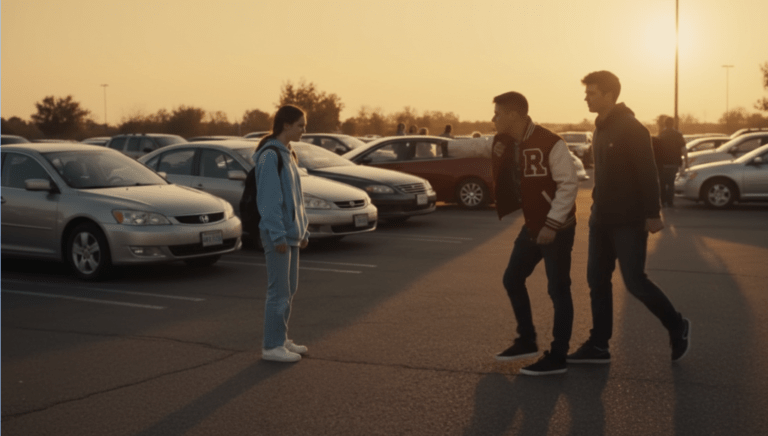
“Well, well, well,” Jake said, loud enough to slice through morning chatter. “Look who decided to show her face today.”
Emma kept walking, earbuds in, fingers tightening on her backpack straps. “Please, leave me alone,” she mouthed to herself.
“What’s wrong, Rodriguez? Cat got your tongue?” Jake stepped closer, sneakers squeaking against the polished floor. His friends snickered.
“I don’t want any trouble,” Emma said, quietly, without looking up. “Just let me be.”
“Trouble?” Jake mocked. “I’m being friendly. Tell us about Phoenix. Why’d you run off anyway?” He leaned in, cologne and arrogance filling the air.
Emma turned the locker dial like it was a ritual—15 right, 22 left, 8 right—keeping her hands busy. “That’s private,” she said. “Please.”
Jake grinned. “Your cousin told me stuff. Apparently you sent three guys to the hospital. What’s the real story, Phoenix?”
A hush fell. Phones appeared like lightning, screens pointed like shutters. “No way,” someone whispered. “She doesn’t look like that.”
“It wasn’t like that,” Emma said. Her voice stayed calm, voice small but steady. “I never wanted to hurt anyone.”
Jake pushed his palm into her shoulder, a deliberate shove meant to humiliate. “Step back, Phoenix,” he said, pressing harder.
“You have three seconds to remove your hand,” Emma replied. Her voice was flat, measured: one, two, three.
“Or what?” Jake scoffed. He pushed harder.
“Time’s up,” Emma said.
Her left hand closed on his wrist. “Let go,” she said, like a command.
His skin felt normal under her fingers. Then, in one fluid motion, she used his momentum against him. Jake’s feet left the ground; he rotated through the air and hit the linoleum with a sound that made the hall go still.
“Did you see that?” someone shouted. “She just threw him.”
Emma stepped back, adjusting her backpack straps, eyes steady. “I asked you to step back three times,” she said. “You didn’t.”
Jake lay blinking up at the fluorescent lights, stunned and suddenly, painfully small. His hair was a mess. His grin had evaporated.
“This isn’t over,” he muttered as he scrambled up. “You can’t do that to me.”
Emma looked at him like she was reading a ledger and closing an account. “Yes,” she said. “It is.”
Phones buzzed and trembled with clips. Within minutes the hallway had become a web of whispers and reposts. Teachers hurried but missed most of it.
“Where did you learn that?” Sarah Chen called from the crowd, genuine curiosity. “You trained?”
“My mom signed me up when I was seven,” Emma said. “Sensei Martinez. Eleven years. Discipline. Control.”
“Why didn’t you use it before?” Marcus asked, voice shaking between admiration and guilt. “If you could defend yourself, why let him pick on you?”
“Because fighting is last resort,” Emma replied simply. “Because I hoped he’d move on. Because adults often see ‘teenage nonsense’ and look the other way.”
A memory slid into her mind—Desert Vista High, the three seniors who cornered her. “They didn’t want to embarrass me,” she told them. “They wanted to hurt me.”
“Did you send them to the hospital?” Tyler asked, eyes wide.
“One dislocated shoulder. One broken wrist. One concussion. Police said self-defense,” Emma said, flat and factual. “Administration opted I transfer. My mom and I started over.”
Murmurs rose. “That’s heavy,” someone said. “Why didn’t you tell us?”
Emma set her sandwich down at lunch and met the group’s eyes. “Because it wasn’t about boasting,” she said. “Because I didn’t want to be defined by a fight.”
The second escalation came like tidewater shifting. Jake’s followers shrank away. The social pressure around him inverted almost overnight.
“People laughed before,” Marcus admitted, voice thin. “We went along with it.”
“You knew,” Emma said, not accusing but honest. “And the loudest thing bullying buys is silence.”
Jake boarded on being ostracized. He kept to himself, lunch alone, head down. A clip of his fall swam across social feeds, unverified and messy, but the pulse of the school changed.
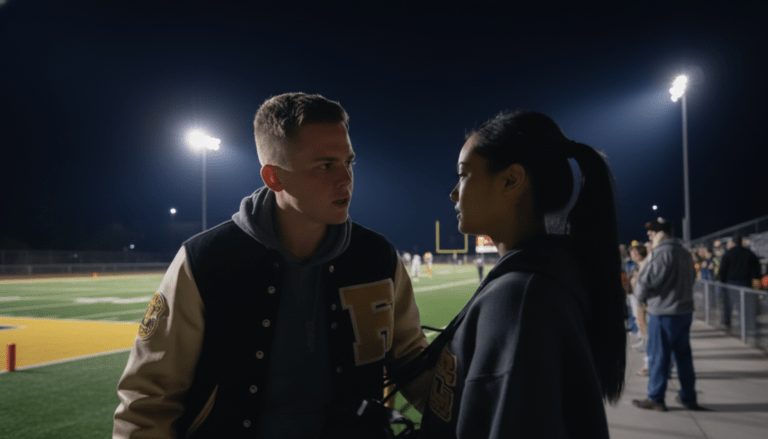
Two days later Jake found Emma at her locker. “I owe you an apology,” he said, shoulders bent as if carrying a weight. “I’m sorry.”
Emma’s fingers hovered over her books. “Why?” she asked.
“Because I… I never thought of it as assault,” Jake admitted, voice small, unfamiliar. “I thought it was normal. I thought it made me—” He stopped. “I thought it made me safe.”
“How do you feel now?” Emma asked.
“Small,” Jake said. “Really, really small.”
Then things shifted again—escalation three. Teachers began to talk in faculty rooms. Students started naming what they’d seen. The administration couldn’t pretend this was “just high school” anymore.
At a student panel, people spoke. “We didn’t want to rock the boat,” one senior confessed. “But watching you that day changed something for me.”
Emma listened to other voices. She didn’t relish her moment in the hall; she resented the need for it. “I didn’t want attention,” she told the panel. “I wanted safety.”
“Did you ever regret coming here?” Sarah asked.
“No,” Emma said. “I regret we had to learn this by watching someone get hurt.”
Jake volunteered for peer mediation. “I want to understand why I did that,” he told the counselor, honest and raw. “I want to fix it.”
The fourth escalation rippled outward—policy change. The principal announced mandatory bystander training and a clear reporting path. “No more letting it slide,” she said at a staff meeting. “We will not hide behind ‘teenage behavior’ anymore.”
“That should have happened years ago,” Marcus said. “But at least it’s happening now.”
Emma found herself sitting at a lunch table she hadn’t imagined. Sarah, Marcus, Tyler, and others circled around. “We’re making a club,” Sarah said, brisk and excited. “Peer support. Bystander training. A place to bring stuff before it gets to violence.”
Emma’s hands folded on the table. “I don’t want to be a mascot,” she said. “I want people to be safer.”
“You are—” Marcus started.
“I’m not a symbol,” Emma interrupted softly. “I’m a student who wants peace.”
The next escalation arrived in a public way. At a school assembly, Jake stepped to the mic. “I owe apologies,” he said, voice cracking. “To Emma and others I hurt. I thought power was making people smaller. It’s not.”
“Real strength is protecting people,” he told the packed auditorium. “I’m trying to change.”
The auditorium was a wash of faces. Some still rolled their eyes. Some were weeping. There were more teachers in the audience than usual. Phones were muted out of respect.
Emma sat near the back, hands in her lap. For a long time she didn’t clap. She watched Jake struggle through each sentence.
“I’m doing peer mediation,” he said, head down. “I volunteer. I listen. I’m trying to be accountable.”
A teacher leaned over. “That’s a start,” she murmured.
“Starts matter,” Emma thought. “They can be the anatomy of change.”
A week later, Jake walked by Emma in the hallway and didn’t look away. He nodded once, clean and brief. “Thank you,” he said.
“For what?” Emma asked without turning.
“For not making it worse,” he said. “For letting me see what I am.”
Emma folded her fingers around her locker. “You had a choice,” she said. “You chose poorly. Now choose better.”
That choice unlocked a different kind of karma. The same students who’d filmed the fall were now organizing workshops. The school board approved a new anti-harassment policy. Administrators met with parents, offering clear steps if incidents occurred.
“Accountability,” the principal said during an Instagram Q&A. “Clear consequences and pathways to repair.”
Emma’s mother met her that night in the driveway. “I thought we’d have to stay hiding forever,” she said, pulling Emma into an embrace.
“People can change,” Emma replied, resting her head against familiar shoulder. “Sometimes they have to fall to learn how to stand.”
The fifth escalation tightened the closure. A parent who had a teen on Jake’s team contacted the school. “I want my kid in the peer mediation program,” she said. “If Jake is learning what not to do, I want my kid learning how to intervene.”
“That’s exactly it,” Emma told a reporter who asked what she wanted to see. “I want students to have the tools to say no when someone crosses a line.”
Weeks passed. Jake attended mediation sessions, apologized to a few students in private, and wrote a reflective essay for the school’s newsletter. “I learned,” he wrote, “that being powerful doesn’t mean making others small.”
Emma read it at a kitchen table with a mug of tea. “He wrote some honest stuff,” she said.
“Did you feel vindicated?” her mother asked.
Emma smiled without bitterness. “No. Validated maybe. But most of all relieved.”
The school reached a policy milestone: mandatory bystander training for incoming freshmen, and a clearer disciplinary ladder for physical aggression. There was community talk about protecting the vulnerable, about privilege and how cruelty often wears a letterman jacket.
At a small ceremony in the auditorium, the student council announced a new initiative—Peer Protect: trained students who could step into situations or report safely. “We’ll start in September,” Sarah told the crowd. “We did this because of Emma.”
Emma stood in the back, arms crossed, eyes scanning faces. She wanted to look away from her own name being used like a banner. She didn’t protest. She didn’t need to.
“You’re making more than rules,” Marcus said. “You’re making a culture.”
Emma’s reply was soft. “I’m making sure no one else has to be invisible the way I was.”
There were hard conversations too. Parents asked why Emma had never told them more sooner. Friends debated where bystander lines were. Teachers reevaluated classroom management.
Jake’s friends drifted. Some apologized privately. Some left school early. Social circles realigned like tectonic plates. Some students who’d been complicit faced quiet shame; others stepped up to lead change.
One afternoon, Emma found herself in the gym with Sensei Martinez on a school visit. “You used more control than power,” the sensei said, proud and precise. “You followed the lesson that every defeat can teach.”
“I wish it didn’t have to be like this,” Emma said.
“It rarely is,” the sensei replied. “But you turned it into a lesson for others.”
The final escalation was public but personal. At graduation, Jake gave a short speech to his friends, not to the school. “I messed up,” he said. “I owed apologies. I think I owe them again. Thank you, Emma.” He didn’t ask for forgiveness; he offered it by way of accountability, of change, and of service.
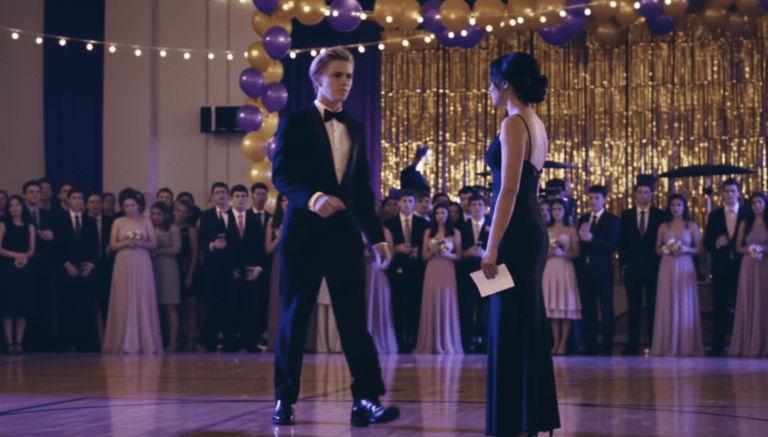
Emma walked across the stage months later, diploma in hand, and the applause that followed was not just for her grades but for something she had helped change. Jake was in the crowd, not triumphant but attentive.
After the ceremony, Emma and her mother hugged. “This is closed,” her mother said. “You did it without losing your footing.”
Emma exhaled. “It isn’t just about me,” she said. “It’s about making sure other quiet kids aren’t left to fight alone.”
Jake found her by the cafeteria exit. “I keep helping,” he said. “At the mediation office. With younger kids. I still have a lot to do.”
“You do,” Emma agreed. “And you’ll keep doing it if you mean it.”
He nodded, shame softened into resolve. “I do.”
That was the karmic payoff: Jake humbled and made to repair where he broke, the school changing rules and culture, students learning to intervene, and Emma no longer erased. The ledger closed with consequences and a real attempt at repair.
“You okay?” Sarah asked Emma later that week, as a small group gathered in the corner table that had once been an island.
Emma looked around at the faces—new friends, tentative allies, kids who had chosen differently. “I’m okay,” she said, and meant it.
The crowd at Lincoln High had witnessed a reversal: the loud predator rendered small, the quiet one stepping into a voice that built rather than destroyed. The school found a way to convert one hallway humiliation into a curriculum of care.
Emma kept training, not out of fear but to stay disciplined. Jake kept volunteering, not for applause but to be accountable. The policies stayed, the programs started, and a few students who would have been silent before now raised their hands.
“Sometimes the quietest person in the room has the loudest story,” a teacher said in a closing ceremony. “Today we listened.”
Emma smiled, for real this time, and the applause that followed felt less like spectacle and more like justice.