She Married a Widower… What She Found in His Bedroom Changed Everything
A bride screamed on her wedding night… But the truth she uncovered inside her husband’s old bedroom was more heartbreaking than anything supernatural. Full story in the comments.
My father’s wedding was supposed to be a quiet beginning—a gentle step into a new chapter for a man who had spent half his life alone and never once complained about it. But barely an hour after the celebration ended, the peace inside our Portland home shattered like glass.
A woman’s scream—sharp, terrified, primal—ripped through the hallway and stopped every heartbeat in the house.
My sister and I ran toward the master bedroom, the same room my father and his new wife, Hannah, had slipped into earlier that evening. When we burst through the door, the scene didn’t make sense at first.
Hannah—still wearing the soft cream gown she’d floated through the ceremony in—was curled on the floor, trembling violently. Mascara streaked her cheeks, her arms wrapped tightly around her head as if protecting herself from something unseen. Beside her lay a torn silk shawl and the ripped remains of a photograph—my mother’s photograph.
Dad stood rigid in the corner, pale, motionless, as though something inside him had snapped loose.
We had never been dramatic people. We didn’t do hysteria. Our lives were peaceful, predictable, stitched together by small routines and shared strength. After my mother died of cancer, Dad never once tried to replace her. He devoted himself to raising my sister and me. He used to smile softly and say, “I’ll think about myself when you two are settled.”And he kept that promise for twenty years.
So when he announced he was getting married at sixty, we were stunned. And when we met Hannah, we were disarmed.
She was thirty. Gentle. Soft-spoken. A woman whose past carried pain but whose presence felt warm. A divorcée with a quiet smile, she treated Dad with a tenderness that felt natural. The age gap startled us, but suspicion faded as we watched their easy connection grow.
The wedding that afternoon had been simple and lovely. Dad glowed. Hannah blushed every time he reached for her hand. It wasn’t glamorous—it felt real.
Until that scream.
That night, as Hannah finally gasped her way back to calm, she whispered what she had seen.
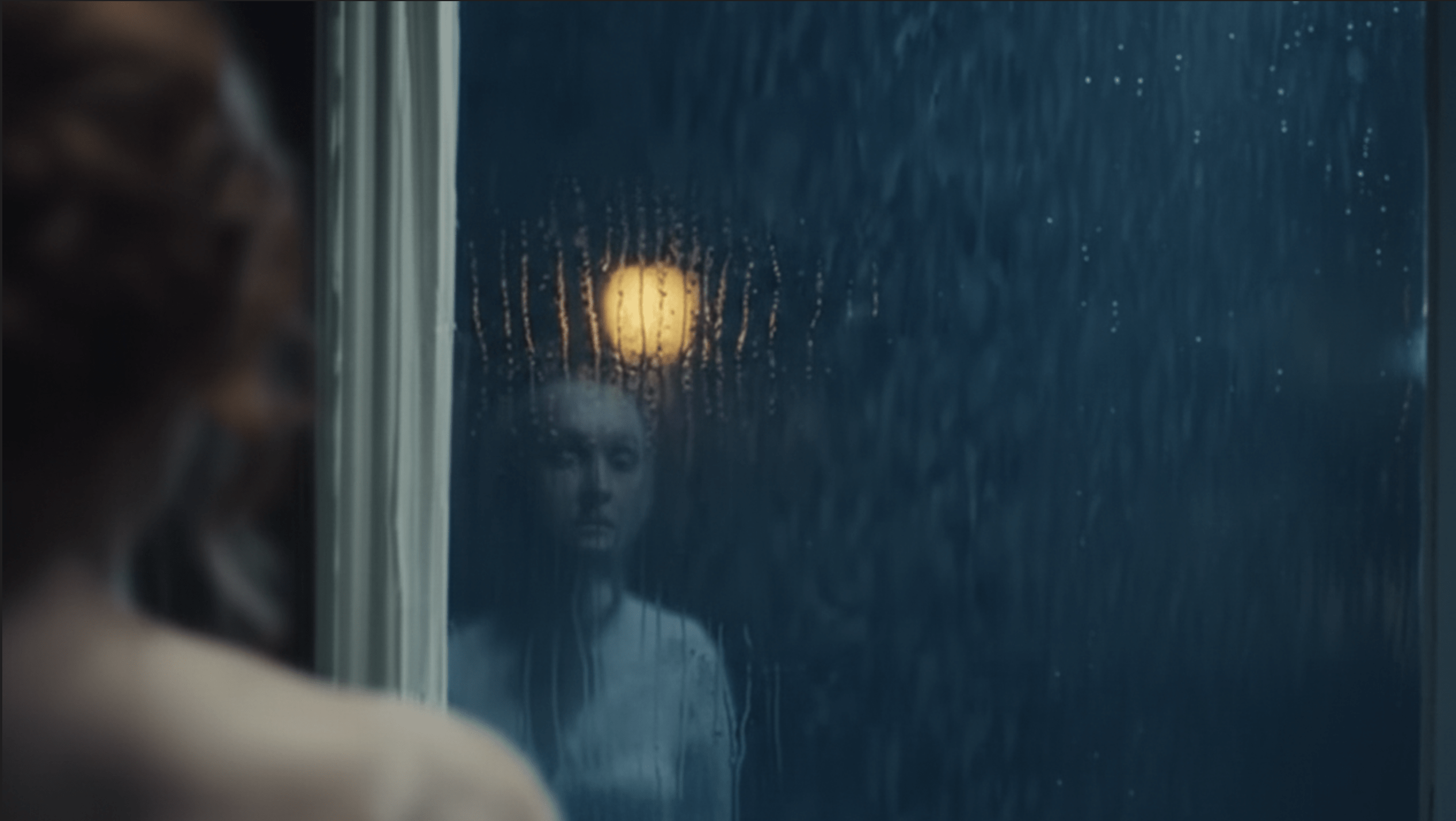
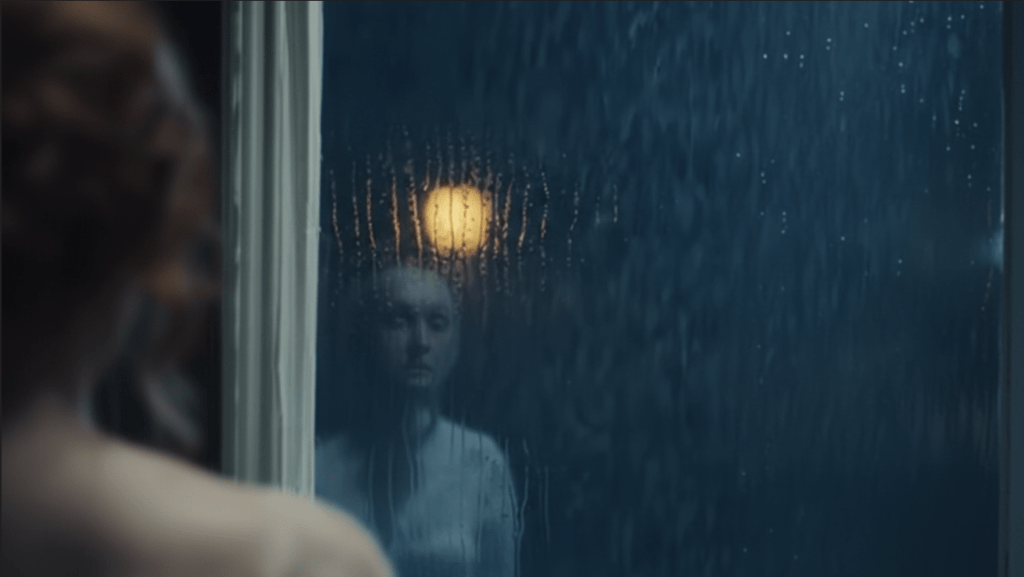
“A woman… standing by the window. Pale blue dress… long hair. She looked at me and said, ‘This is not your place.’”
Not a ghost story. Not really. The room had belonged to my mother. Dad had kept it exactly as she left it—same wallpaper, same curtains, same lavender scent woven into the bedspread.
The memory of her still lived in that room, thick as fog.
After the incident, Dad spent the whole night sitting on the porch, staring at the horizon. The next morning he barely spoke, his eyes hollow. When I found him in the garden watering my mother’s lilies, he finally broke.
“It’s not Hannah’s fault,” he whispered. “It’s mine.”
He told me he’d never let go of Mom’s room. He slept there every night since she passed, clinging to the lavender scent, her books, her dresses. He said sometimes—on quiet nights—he thought he heard her breathing.
“I know it wasn’t real,” he said. “But forgetting her felt like betrayal. Moving on felt worse.”
I spent that night gently clearing the room—airing it out, letting sunlight in, removing the old photographs so it no longer felt like a shrine. Not to erase Mom, but to give Dad’s new life a chance.
The next morning, Hannah told me she never meant to cause trouble. She simply felt like an intruder. Like she was stepping into grief that didn’t belong to her.
“You don’t have to replace anyone,” I told her. “Dad doesn’t need a replacement. He needs someone to walk with him through the rest of his life.”
Slowly, things softened. Hannah and Dad began sharing their days more easily. The house warmed. And yet, she never went back into the old bedroom.
It wasn’t fear—it was respect.
Two months later, on a rainy Sunday, Hannah decided to tidy the bedroom while Dad ran errands. The old oak dresser groaned when she tugged the drawer. It stuck, then came loose—and something small slid out from behind the back panel.
An envelope.
Yellowed, fragile, sealed with cracked wax.
On the front, in delicate handwriting, were the words:
“For whoever loves him next.”
Hannah sat on the bed for a long moment before opening it.
Inside was a letter—written by my mother.
“If you’re reading this, it means you’re standing where I once stood. I hope you love him. Not the way I did, but in your way.”
The words were tender, trembling with life despite the years that had passed.
“Robert is a good man. He hides his grief in the smallest corners—behind lilies, quiet mornings, gentle smiles. When I’m gone, he’ll shut himself away in this room. Please, open it for him. Laugh here. Sleep here. Let him breathe again.”
“And if you ever feel me near—the curtains moving, or the faint smell of lavender—don’t be frightened. It means I’m grateful. Because someone finally came to stay.”
At the bottom was a pressed white lily.
When Dad returned, rain in his hair, he found Hannah sitting quietly with the letter in her lap. His hands shook when he recognized the handwriting.
“I thought I was betraying her,” he whispered.
“She loved you enough to make room,” Hannah replied.
The next morning, they opened every window in the room. Sunlight poured in like forgiveness. They replaced the curtains with soft white ones. The heavy old bedding was stored away. Dad framed the letter and placed it next to a photo of Mom in her favorite blue dress.
Not as a warning.
As a blessing.
Weeks passed, and the household found its rhythm again. Laughter returned. Hannah planted blush-pink lilies beside my mother’s white ones. Sometimes I caught Dad standing quietly in the garden, touching a lily petal, whispering something we couldn’t hear.
Maybe gratitude. Maybe memory. Maybe both.
The room remained open now—not as a museum, but as a place where the past and present coexisted gently.
One evening, as the sun dipped behind the Portland pines, Hannah rested her hand on the window frame and smiled softly.
“You know,” she said, “I think she’s still here. Not haunting—just watching.”
Dad looked at the photo. His eyes softened.
“She always wanted the house to stay full.”
And for the first time in decades, it was.
Not perfect. Not without shadows. But full.
Full of voices. Full of warmth.
Full of love that knew how to honor what came before without being trapped by it.
Sometimes healing isn’t about forgetting.
It’s about learning to live with memory sitting gently beside you—
like a presence you don’t fear anymore.